How to Wear Cufflinks: Refined Styling Steps for Any Suit

To wear cufflinks, pair them with a French-cuff or convertible shirt, align the cuff holes, insert the fastening and secure it with the decorative face outward. The most reliable starting point is a shirt designed to accept cufflinks.
A refined detail can make a familiar suit feel more personal. Cufflinks fasten a shirt cuff and add a considered finish to professional or formal dress. If you are wearing them for the first time, the process is straightforward, and a little practice helps it feel natural.
We will help you choose a shirt, handle the fastening and style the result with confidence. A well-chosen pair can feel just as at home at work as it does at a formal event.
Key Takeaways
- French cuffs and convertible cuffs are designed to accept cufflinks.
- Align the holes before passing the post through the cuff.
- Point the decorative face outwards when your arms rest at your sides.
- Choose a fastening you can close with ease.
- Keep the cuff comfortable and the design in tune with the occasion.
- Wipe and store your pair with care after wearing it.
Which Shirt Cuffs Can Take Cufflinks?
French cuffs are the classic choice for cufflinks, while convertible cuffs offer a practical button-or-link alternative. French and convertible cuffs have holes made for cufflinks; a standard barrel cuff does not. A convertible cuff is a single shirt cuff designed to fasten either with its button or with a cufflink through an additional hole.
Here is how the main shirt cuffs differ in construction and use. The right choice depends on the fastening you want and the level of formality you have in mind.
| Cuff type | Construction | How it fastens | Best use |
|---|---|---|---|
| French cuff | Double layer, folds back | Cufflinks through aligned holes | Formal and professional dress |
| Convertible cuff | Single layer, extra hole beside button | Button or cufflink | Flexible work and social wear |
| Barrel cuff | Single layer, standard button fastening | Button | Everyday shirts |
A convertible cuff can be worn with cufflinks by aligning its extra hole with the cuff opening. The button remains useful when you prefer a simpler finish, making this cuff a flexible option for regular wear.
A standard barrel cuff is not designed to take cufflinks without modification.
The cocktail cuff has a folded shape, but its turned-back edge leaves a triangular gap. It usually fastens with buttons rather than cufflinks, giving the shirt a distinctive look without using a link.
For more help choosing a shirt and handling the cuff, see our steps for wearing cufflinks correctly. Check both sides of the cuff opening for a matching link hole before choosing a pair.
How to Wear Cufflinks: The Step-by-Step Method
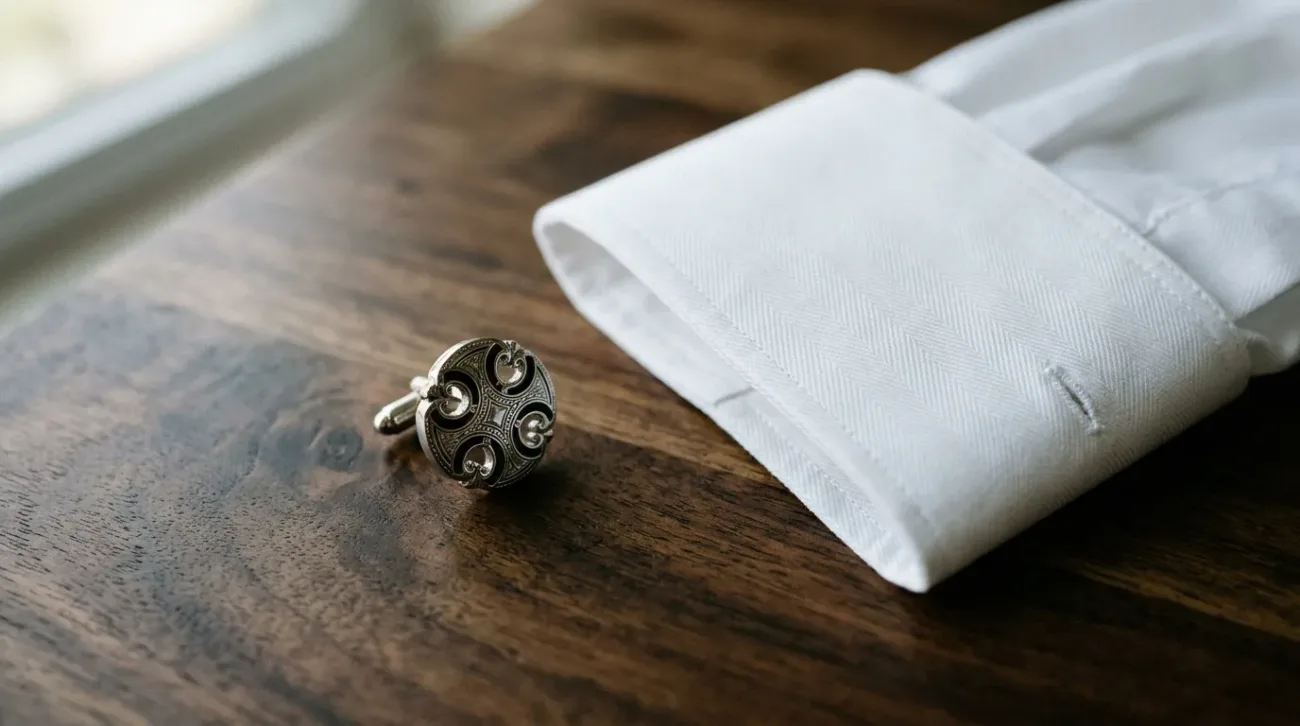
A French cuff takes four neat layers of fabric around the wrist, so begin by folding it evenly and bringing its holes into line. Cufflinks attach by passing the post through aligned cuff holes and securing the backing. The decorative face should point outwards when your arms rest at your sides.
A flat surface can help while you get used to the movement. Inserting the link one fabric layer at a time may also feel easier for a new wearer.
- Fold the French cuff back evenly, keeping the edge smooth around your wrist.
- Align all four holes and hold the cuff edges together.
- Position the face on the outside and pass the post through the aligned holes.
- Close or turn the toggle, then check the fit around your wrist.
The steps stay much the same across common cufflink styles, though the backing may move in a different way. Keep the cuff steady as you guide the post through, rather than pushing against the fabric.
A bullet-back toggle aligns with its post for insertion, then turns across it to secure the cuff. Once it is closed, look at the face from the outside to check that it sits the right way up.
Try the fastening at home before an important day. This gives you time to find a comfortable hand position and spot any twist in the cuff before dressing fully.
The cuff should feel secure without pressing uncomfortably against your wrist. A link that feels tight can make movement unpleasant, while a loose cuff may shift as you move.
For a beginner-friendly look at the basic process, read our beginner’s guide to cufflinks. Before leaving home, move your wrist gently to confirm that the fastening stays secure without pinching.
Which Cufflink Fastening Suits Your Routine?
The easiest fastening to begin with is usually a movable toggle, while chain links and silk knots offer a softer, more flexible feel. Choose a style that you can handle neatly and comfortably, rather than assuming one backing suits every wearer. A quick fastening can be useful when you dress in a hurry.
The table compares common choices by the way they close and feel in use. Each has a distinct character, so your hand comfort and the occasion can guide your choice.

| Style | How it closes | Practical character | Suitable moment |
|---|---|---|---|
| Bullet-back | Capsule turns across the post | Movable toggle, easy to handle | Daily office wear |
| Whale-back | Tail flips across the post | Movable closure with a broad tail | Work or social dress |
| Chain-link | Two heads join by a chain | Flexible connection | Relaxed formal dress |
| Fixed-back | Post passes through the cuff | No moving parts | Simple, regular use |
| Silk-knot | Soft knots sit on both sides | Flexible and less formal | Casual social settings |
Locking cufflinks use a hinged closure, while reversible styles offer a decorative face at either end. Ball-return cufflinks have a rounded backing, which can give the cuff a neat finish on both sides.
Think about how often you will wear the pair and how easily you can guide its backing with one hand. A mechanism that feels simple at home is more likely to feel natural when you are getting dressed for an event.
Our guide to cufflink styles for beginners explores more design choices. Choose a backing you can close neatly with one hand before wearing it for a long occasion.
Can You Wear Cufflinks with Buttons or No Hole?
A regular button cuff cannot accept a cufflink securely unless it has a second hole or is adapted. Never force a link through fabric without a proper hole, as this can stretch or damage the shirt. There are three practical ways to wear a favourite shirt with cufflinks.
The best option depends on whether you want to adapt one shirt or choose a purpose-made cuff. A tailored or convertible cuff will generally sit more cleanly than an adapter.
- Choose a convertible cuff shirt for reliable regular wear.
- Ask a tailor to add a through-hole if the cuff construction and fit allow it.
- Use a cufflink adapter for occasional wear.
A standard barrel cuff has one button and no opposing cufflink hole by default. A tailor can assess whether the cuff has enough space and suitable fabric for a through-hole opposite the button.
A cufflink adapter passes through the existing buttonhole and gives the link a way to fasten. It can suit an occasional outfit, though the result may not sit as smoothly as a purpose-made cuff.
Some shirts have one button and still lack the second hole needed for a link. The button alone does not make the cuff compatible, so check the construction before dressing.
Forcing a cufflink through fabric may leave stretched fibres or a visible pull. If the fabric pulls or the cuff no longer sits flat, stop and choose a properly made cuff instead.
How Do Cufflinks Work with a Blazer or Suit?
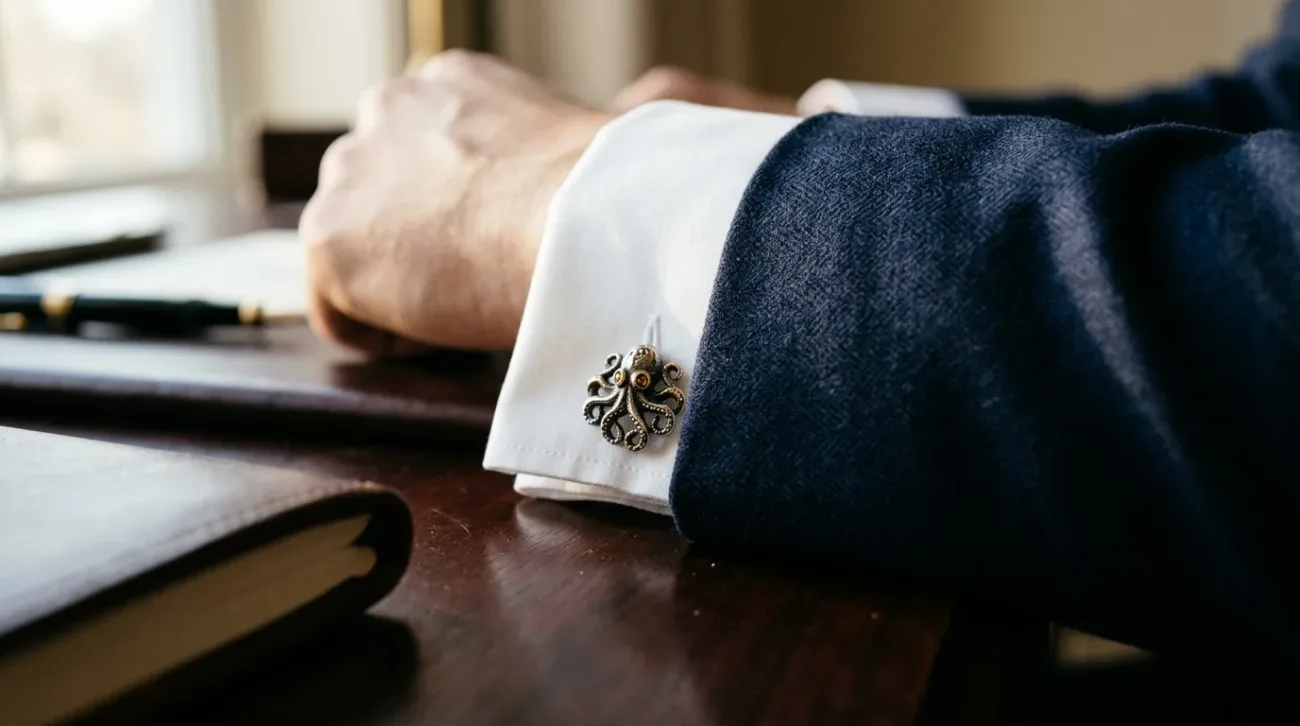
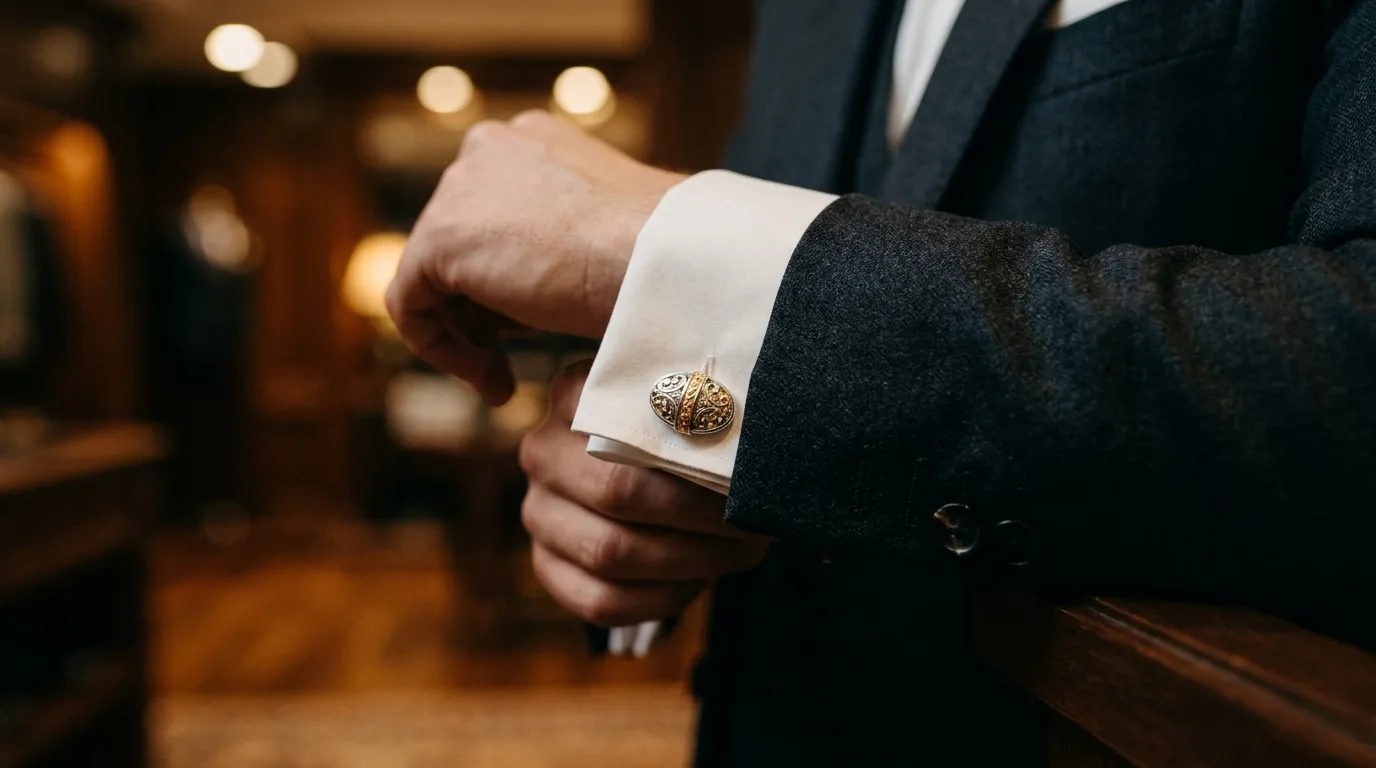
A blazer can frame cufflinks elegantly when its sleeve leaves a clean edge of shirt cuff visible. About half an inch of shirt cuff should show below a jacket sleeve, creating a clear line without crowding the wrist. Cufflinks can suit a blazer or suit when the shirt and outfit share a similar level of formality.
They are not reserved for formal events. Men’s cufflinks follow the same shirt and fastening principles as cufflinks worn by anyone.
- Check that the jacket sleeve ends at a balanced point on the arm.
- Leave a visible edge of shirt cuff beneath the sleeve.
- Move your wrist to confirm the shirt and jacket feel comfortable.
- Keep the cufflinks’ metal finish coherent with your accessories.
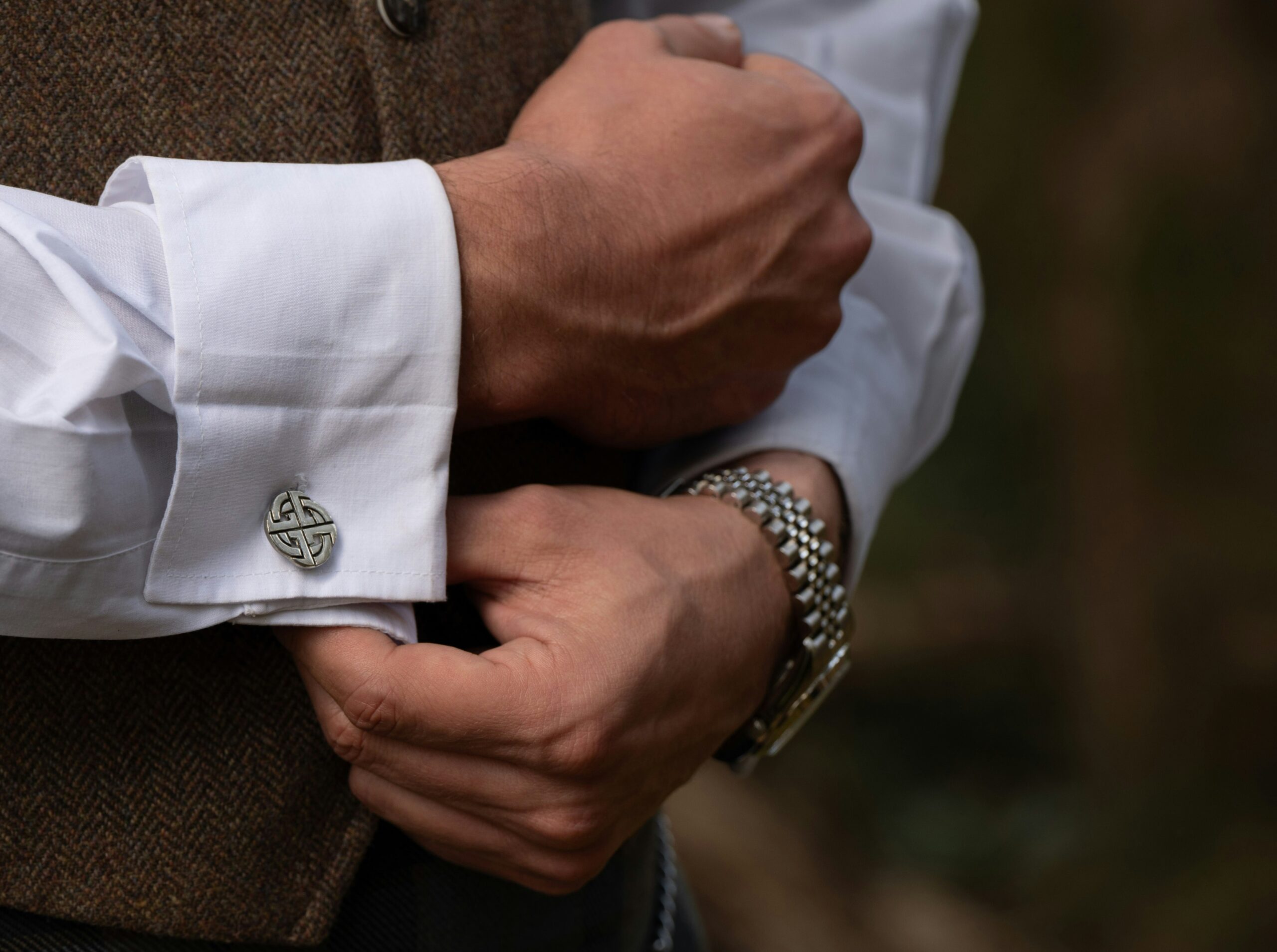
A silver-toned pair works well with a stainless-steel watch. Gold-toned cufflinks can complement other gold-toned accessories, creating a considered finish without requiring every detail to match exactly.
The face should remain visible when your arms rest naturally, not only when you extend them. A restrained design can look at ease with a work blazer, while a more striking pair may suit a social outfit.
Fit matters more than the label on the jacket. A blazer can look relaxed or formal, so consider the shirt, trousers and occasion together before choosing a pair.
Check the sleeve line while standing naturally, rather than judging it with your arm held out.
When Do Cufflinks Suit Formal Dress?
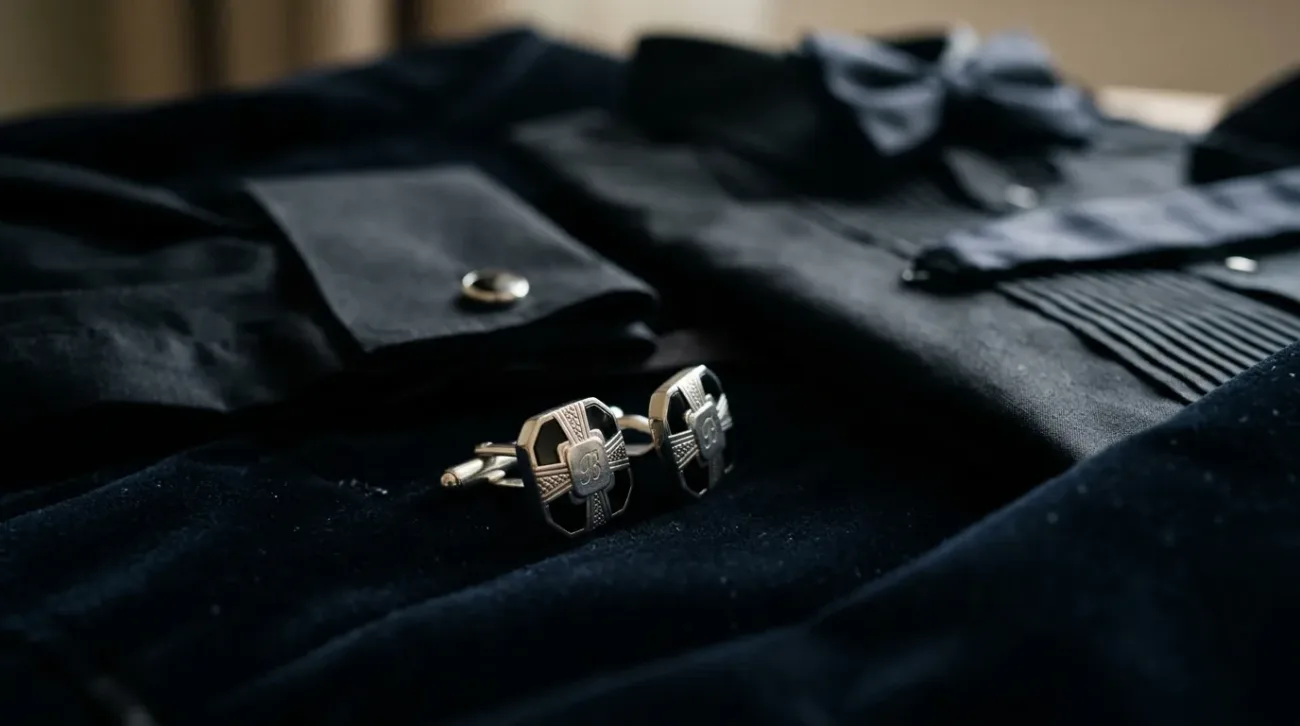
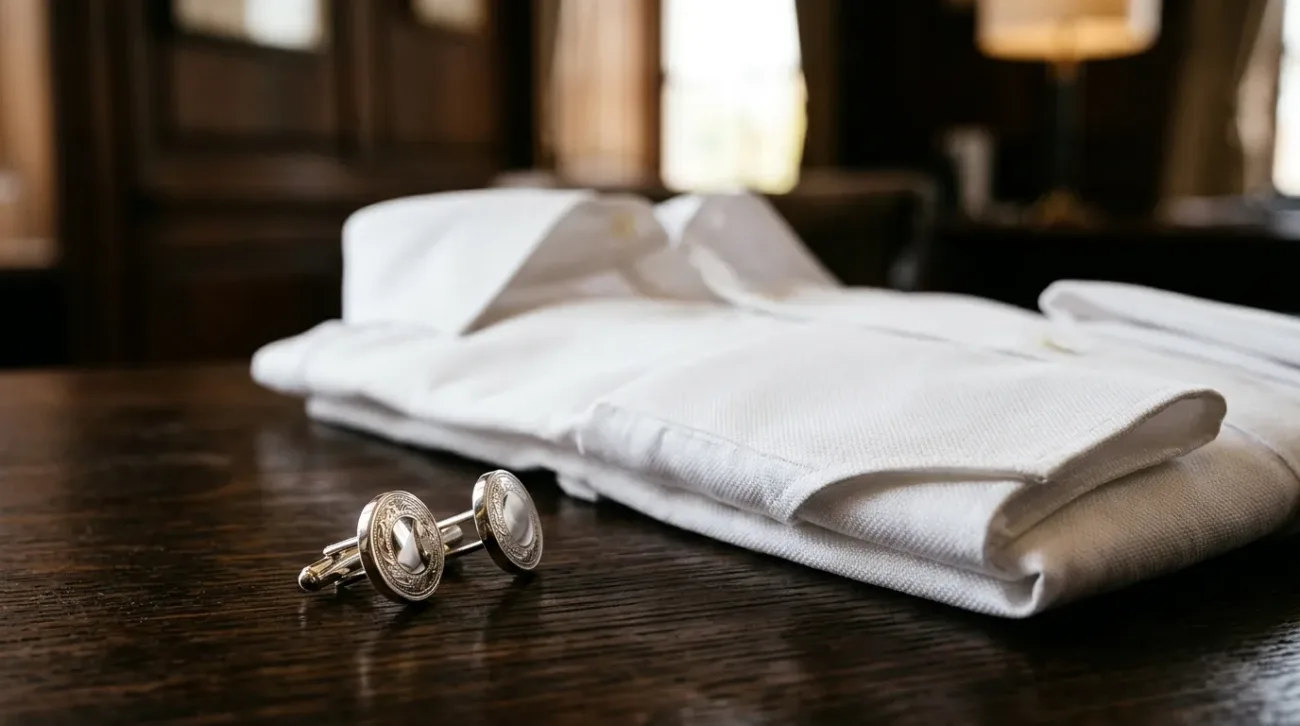
For black tie, the traditional pairing is a white dress shirt with French cuffs and classic cufflinks. French cuffs are designed to be secured with cufflinks, so wearing them without links leaves the cuff unsecured and misses the traditional formal finish. This classic choice keeps the shirt in step with the occasion.
Formal evening dress also gives shirt studs a separate role. They fasten the front of a formal shirt in place of buttons, while cufflinks secure the cuffs.
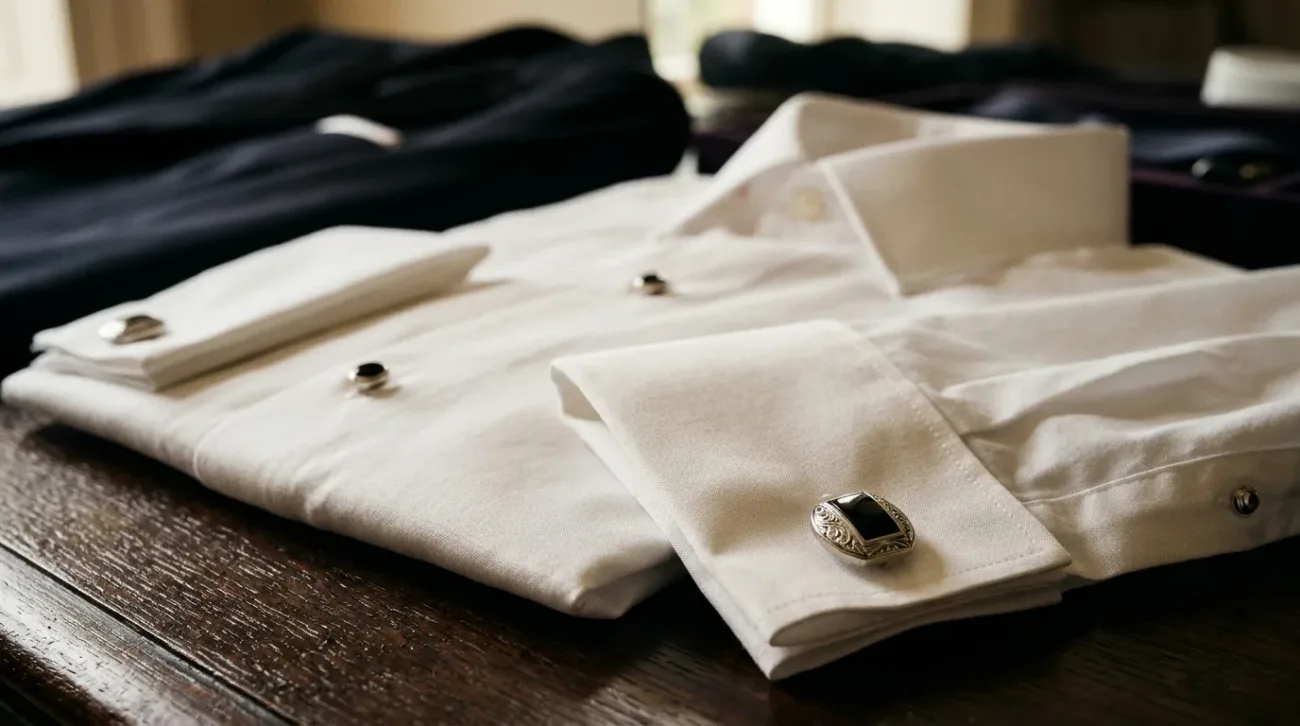
Black tie calls for a classic cuff
A white French-cuff shirt and classic cufflinks remain the traditional black-tie choice. The traditional black-tie pairing keeps the shirt clean and refined beneath evening dress.
French cuffs worn without cufflinks cannot hold their folded shape securely. Choose a shirt with the proper cuff fastening when the dress code calls for a formal finish.
How shirt studs work with cufflinks
Shirt studs replace the front buttons on a formal evening shirt. Cufflinks do not fasten the shirt front when studs are required, so the two pieces serve distinct purposes.
A formal set can include both studs and cufflinks. Dress studs may also be worn with a formal evening shirt, giving the front a coordinated finish without changing how the cuffs fasten.
Formality beyond evening dress
Office, semi-formal and social settings allow more room for personal taste. An understated pair can suit a business shirt, while a more expressive design may bring character to a less formal outfit.
Cufflinks remain wearable by men and are not limited to black tie. The same shirt and fastening rules apply, with the design adjusted to suit the setting.
When the dress code is formal, let the shirt and occasion set the level of decoration.
How Should Cuffs Sit, and What Do Cufflinks Express?
A polished cuff sits evenly at the wrist, with its edges meeting cleanly rather than twisting around the link. Both kissing and overlapping positions work when the cuff lies neatly; the choice is a matter of fit and preference. Neither position should pull the fabric out of shape.
Cufflinks also carry a long history as useful fastenings. They developed from 17th-century sleeve fastenings and became useful with starched cuffs in the Victorian era.
Choose between kissing and overlapping cuffs
In the kissing position, the two cuff edges meet with their inner faces touching. This gives the cuff a balanced look when you view it from the side.
In the overlapping position, one cuff edge lies over the other. Both are wearable choices; aim for an even line rather than a twisted edge around the link.
Personal meaning and the gift of cufflinks
Cufflinks can show attention to detail or personal taste, but wearing them carries no single fixed meaning. A simple metal face may feel discreet, while a distinctive design can reflect an interest or memory.
Their practical purpose is to fasten compatible shirt cuffs while adding a personal finishing detail. As a gift, the meaning depends on the giver, recipient and occasion.
The Hagen History Center’s formal menswear collection includes cufflinks from different periods and with varied designs. For a gift, a design connected to the wearer’s interests can make the gesture feel personal.
What Mistakes Undermine a Polished Cuff?
Most untidy cuffs come from a rushed fastening, not from an unsuitable design. Check the fit and closure before you leave, since a small error can spoil the neat line of a shirt. Each common mistake has a simple check to prevent it.
Care continues after the cufflinks come off. A few gentle habits help protect the fabric and the finish of the pair.
Protect the fabric and fastening
Forcing a link through a button cuff without a proper hole can harm the fabric. Misaligned holes can also twist the cuff and make the fastening feel awkward.
Bullet-back and whale-back fastenings use movable closures that must sit across the post to lock. An unsecured backing may shift during wear, leaving the cuff less secure than it should be.
Ornate cufflinks can compete with a bold watch, tie or other accessories. Give a detailed face room to stand out by keeping the rest of the outfit considered.
Never leave a movable backing open across the post, even when the cuff feels snug.
Try the closure once more if it feels loose, rather than trusting the weight of the cufflink to hold it in place. A secure fastening should remain set as you move your arm.
Care for the finish after wearing
Apply cologne and hair products before putting on cufflinks. This helps keep residue away from the face and backing while you finish dressing.
After wear, wipe the pair with a soft cloth to remove fingerprints and oils. Store each pair separately to help prevent scratches from other accessories.
Check a moving closure from time to time for looseness. A backing that no longer stays in place needs attention before the next long day or event.
Before storing a pair, close its backing and give the face a final gentle wipe.
Conclusion
A refined cufflink choice begins with a secure fit and a design that feels naturally yours. When a cuff sits comfortably, the detail brings quiet polish to a suit without taking over the outfit.
We can make the first attempt at home, when there is time to adjust the fit and see how the face sits. Choose a compatible shirt and practise once before the occasion, then wear the pair with quiet confidence.