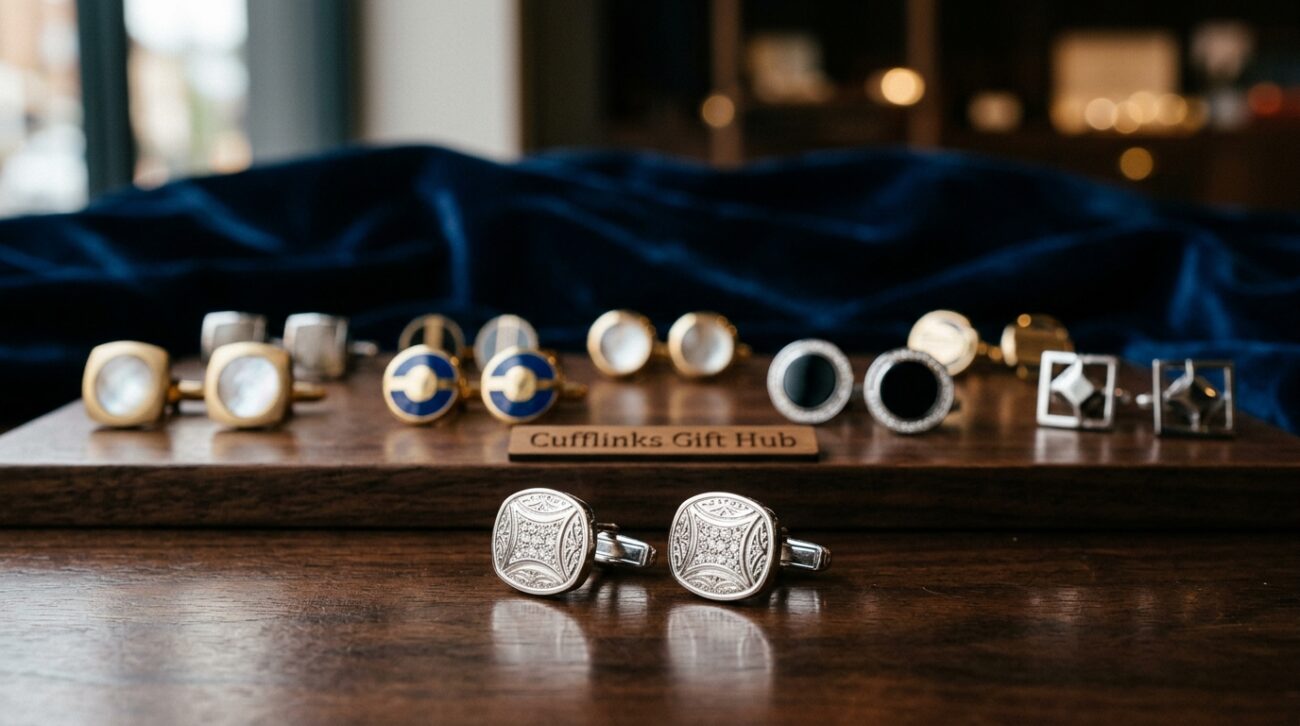
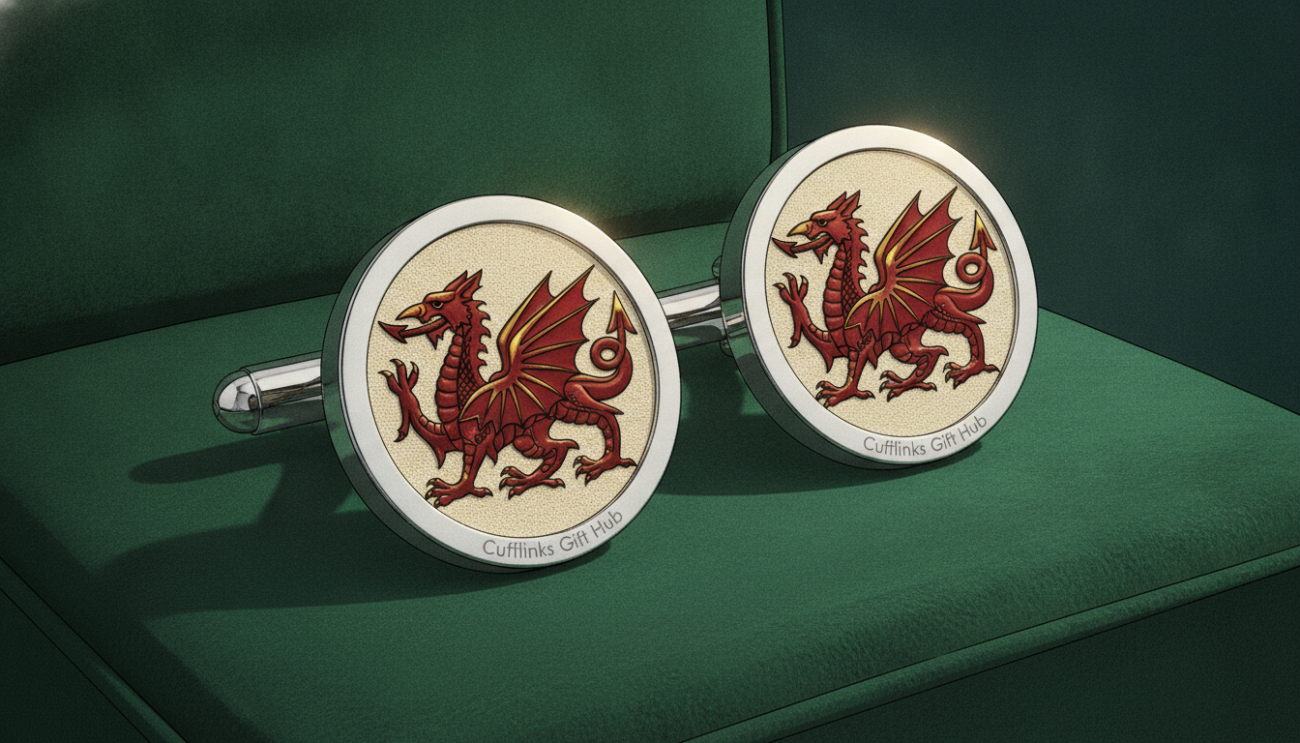
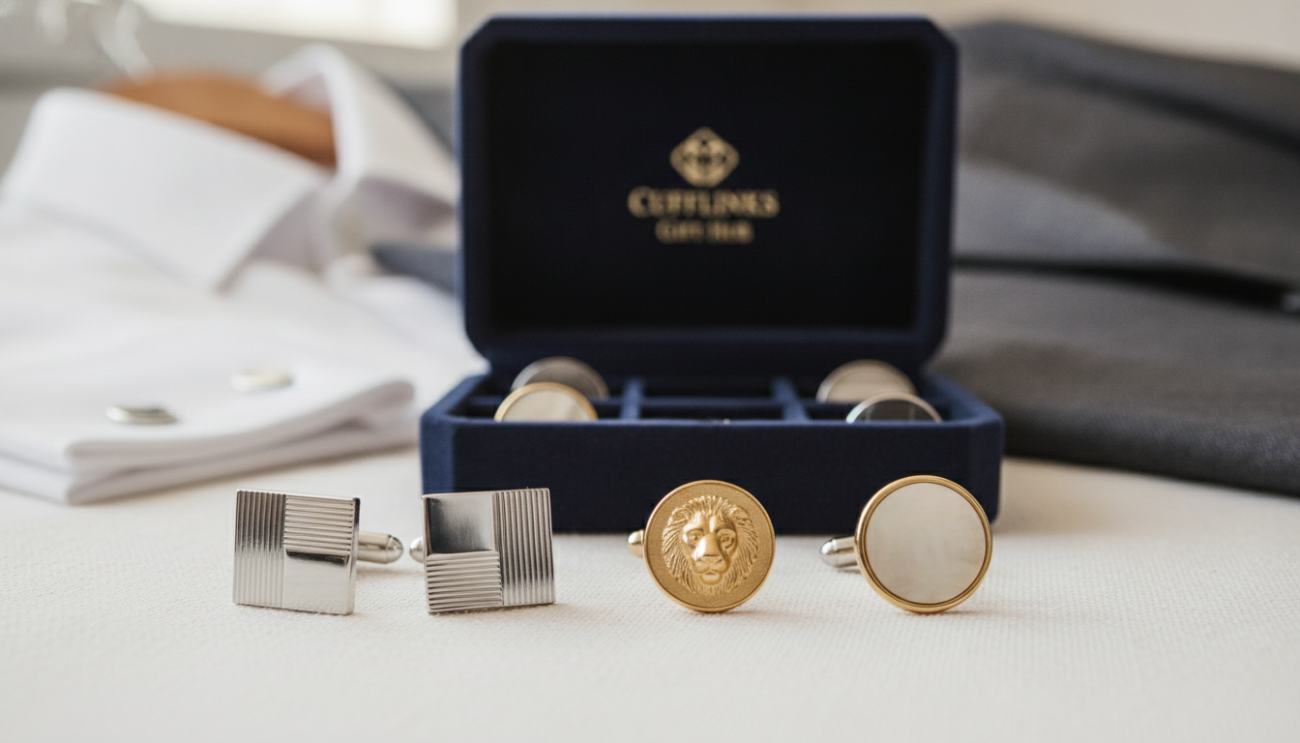
The main types of cufflinks are distinguished by how they fasten, while material and design give each pair its character. A considered pair can bring polish to a suit and tie, or make a quieter outfit feel more personal. Choosing well starts with the shirt, then turns to the fastening, finish and face that suit your style. The right detail can make getting dressed feel less routine and more like your own. We’ll help you compare the main choices, so your cufflinks feel at home at an event or during an ordinary day.
Start with the shirt you plan to wear, then choose a pair that feels true to your style.
Key Takeaways
- Check that the shirt cuff accepts cufflinks.
- Choose a fastening that feels easy to use.
- Let material and face design reflect your taste.
- Match the level of detail to the event.
- Keep each pair clean and safely stored.
Which Shirt Cuffs Work with Cufflinks?
Cufflinks belong on shirts with cuff holes made to accept them, most commonly link cuffs and French cuffs. Check the construction first, since ordinary button cuffs lack the holes needed for a cufflink.
A link cuff is a shirt cuff with holes on both sides, designed to be joined with cufflinks. Link cuffs may have one layer, or a double layer folded back on itself.
Link Cuffs and French Cuffs
A single cuff uses one layer of fabric. A double cuff folds back on itself and is also called a French cuff. French cuffs typically have four holes per cuff, though some makers use six.
The edge can be straight, rounded, angled or mitred. These small details change the shirt’s line, while the cuff still works with cufflinks. French cuff hole layouts can help us identify the right construction.
French cuffs have a long link with formal suits, but they are not limited to them. The choice of cuff shape can be as individual as the shirt itself.
Check for cufflink holes before choosing a pair, since the shirt construction determines whether it can be fastened as intended.
Convertible Cuffs and Button Cuffs
A convertible cuff offers two options: it can fasten with a button or a cufflink. This makes it useful when we want one shirt to work in different ways.
Ordinary button cuffs are made to close with a button, not cufflinks. Cufflinks versus buttons is a question of both function and shirt construction, rather than taste alone.
Traditionally, French cuffs suit formal suits, while button cuffs became standard on sports coats and casual garments. Modern dress allows more flexibility, so personal style can guide the choice.
Check for cufflink holes before choosing a pair, since the shirt construction determines whether it can be fastened as intended.
What Are the Types of Cufflinks?
A cufflink’s visible face, connecting post and fastening make up its basic construction. The fastening varies, and the name of the style often describes the back rather than the face.
Men can choose from the same main cufflink mechanisms; personal preference, not a separate functional category, guides the choice. The design may be traditional or modern.
Swivel Backs: Bullet and Whale Styles
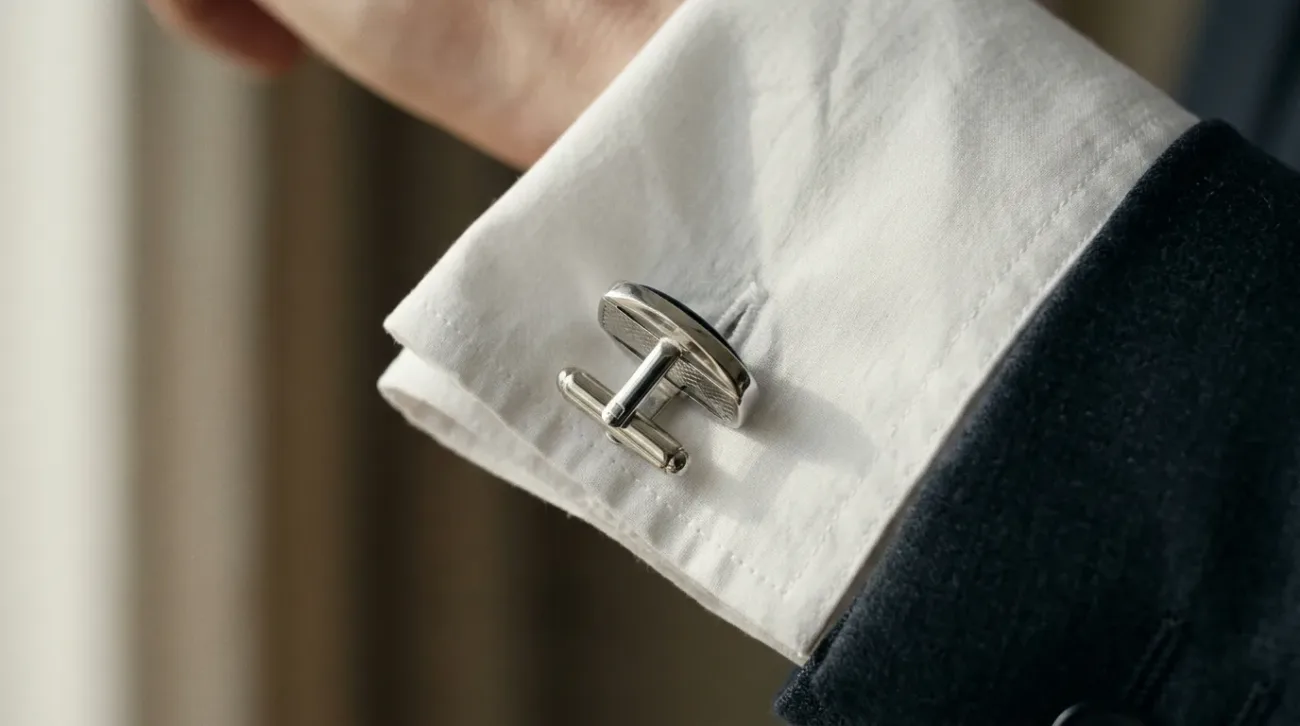
Bullet-back and whale-back cufflinks use a hinged swivel that turns to hold the cuff closed. A bullet back has a narrow toggle that moves across the post. A whale back uses a hinged tail.
Both styles are widely recognised types of cufflinks for men, though anyone can wear them. Their visible faces may look alike, so the back reveals how each pair fastens. Compare bullet-back and whale-back cufflinks when the hinge matters to your choice.
Fixed, Chain, Ball-Return and Knot Styles
Fixed-back cufflinks have a rigid post and no moving toggle. Stud or button styles use a small head at each end, joined by a post. Ball-return styles have a rounded back rather than a hinge.
Chain link cufflinks join two decorative faces with a short chain. That construction gives them two visible ends. Silk knot cufflinks use two knots joined by a cord, often in a simple, colourful finish.
These types of cufflinks differ in construction, not in who may wear them. When comparing link cufflinks, describe both the face and the back so the fastening is clear.
Name the mechanism as well as the face design when comparing different styles, because the back determines how the pair fastens.
Which Cufflink Fastening Is Easiest to Use?
For a first pair, hinged bullet-back or whale-back cufflinks are usually the simplest to fasten. Their familiar swivel makes threading and securing the post easy to learn.
Choose a hinge for straightforward fastening, or a fixed style when you prefer fewer moving parts. Each option has a different feel once the cuff is closed.
| Type | How it closes | Handling | Practical trade-off |
|---|
| Bullet back | Toggle turns 90 degrees | Simple to thread and secure | One decorative face |
| Whale back | Hinged tail turns across post | Simple to thread and secure | One decorative face |
| Chain link | Flexible chain between two faces | More movement while fastening | Can sit looser |
| Fixed or stud style | Rigid post, no hinge | Secure once threaded | Takes more care to insert |
| Dual-action | Hinged clasp like a watch fastening | Secure after learning the motion | May have a short learning curve |
Bullet-back and whale-back cufflinks use toggles that turn 90 degrees to secure the cuff. Fixed-back and stud styles have no moving parts, while chain link styles move more freely between their two faces.
Dual-action cufflinks use a hinged clasp similar to a watch fastening. They may take a little practice, but the clasp closes firmly once the movement feels familiar.
Use these points to narrow the choice:
- Ease of fastening
- Presence of moving parts
- How firmly the cuff should sit
- Whether a decorated reverse is desirable
If a pair will be worn often, weigh the convenience of a hinge against the simplicity of a design with no moving parts.
Which Materials Make the Right Cufflinks?
Material is what gives a pair of cufflinks its first impression, from the cool brightness of silver to the warmth of gold. Finish shapes the mood, while the chosen face can add colour or texture.
Sterling silver, gold and platinum are precious metals used for cufflinks. Enamel and mother-of-pearl offer different ways to give the face a distinct look.
Precious Metals and Their Finish
Sterling silver has a bright, cool appearance that feels classic and versatile. Gold brings a warmer, more luminous tone. Platinum has a silver-white look with a refined, restrained presence.
In the UK, precious-metal items sold as gold, silver or platinum must meet hallmarking rules. The UK hallmarking guidance explains the marks used to show the sponsor, metal fineness and Assay Office.
Enamel, Mother-of-Pearl and Other Inlays
Enamel adds glossy colour to a cufflink face, from a small accent to a more vivid design. Mother-of-pearl has a natural iridescent surface, with soft shifts of light across it.
Onyx and glass are other decorative choices. Each material can change the character of a design without changing how the cufflink fastens.
| Material | Appearance | Character | Considered use |
|---|
| Sterling silver | Bright and cool | Classic and versatile | Formal or regular wear |
| Gold | Warm and luminous | Distinctive and traditional | Milestone or evening dressing |
| Platinum | Silver-white | Refined and restrained | Formal dressing |
| Enamel | Glossy colour | Expressive and precise | Subtle colour accent |
| Mother-of-pearl | Iridescent and soft in tone | Understated and elegant | Crisp shirts and formal dress |
Choose a finish you will enjoy wearing with the clothes already in your wardrobe.
Which Cufflink Designs Express Personal Style?
The face of a cufflink can remain quietly geometric or become a small expression of the wearer’s interests. Its design is personal, while the fastening remains a separate choice.
Classic shapes and clean patterns give a restrained look; colour and motifs bring more individual character. Neither approach changes the way the cufflink works.
Classic Shapes and Patterns
Round, oval and geometric faces are enduring choices. A clean line, fine border or simple pattern can bring detail without drawing too much attention.
These designs suit a wearer who values a composed look. They also leave room for the shirt, suit or tie to carry the stronger visual note.
Colour, Motifs and Individual Expression
Enamel can add a small flash of colour, while gemstone inlays offer depth and texture. Onyx, lapis lazuli, malachite and carnelian each bring a distinct hue to the face.
A playful motif can reflect a hobby, a place or a private interest. Women can wear cufflinks wherever the shirt and outfit suit them; today’s jewellery choices are not bound by traditional menswear categories.
Traditional ideas about cufflinks for men do not set a rule for who may wear them. Personal taste matters more than a label, and the face design remains distinct from its fastening type.
Let one expressive detail lead, rather than asking several competing motifs to speak at once.
What Occasions Call for Cufflinks?
A formal invitation is a natural moment for cufflinks, while a considered pair can also bring distinction to the working day. The occasion sets the tone, but personal taste still has room.
Choose a level of detail that suits the event and the rest of the outfit. Cufflinks for men are shaped by dress code and individual style, not a fixed rule.
Black Tie, Weddings and Formal Events
Black tie is traditionally worn for events after 6 p.m. and is less formal than white tie. A traditional black-tie outfit includes a white dress shirt with link cuffs and a black bow tie.
Restrained cufflinks sit naturally with this dress. A polished face in a simple design adds interest without competing with the bow tie or the shirt.
Weddings and milestone events can welcome more personal designs while keeping the overall look refined. Gold cufflinks or a distinctive face may suit the moment, provided the design feels considered.
For more ideas on black tie cufflinks, we can look at the balance between a formal dress code and a personal detail.
The Working Day and Everyday Dressing
For professional wear, simpler, versatile designs work well across a range of shirts and suits. A pair can add personality to a work outfit without taking focus from the whole look.
Everyday dressing allows room for a little more colour or an unusual face. The key is to keep the scale and mood in keeping with the clothes and setting.
Let the event’s dress code set the level of formality, then use the design to add a personal note.
How Do You Wear Cufflinks Comfortably?
A well-worn cufflink sits flat, with the cuff edges aligned and the decorative face turned outwards. A smooth fit matters, because the cuff should hold its shape without straining the fabric.
Fasten the link through aligned holes, then check that it lies flat and feels secure. A convertible cuff follows the same process when worn with a cufflink.
- Fold a double cuff back on itself.
- Align the cuff holes.
- Guide the cufflink through the aligned layers with its face outward.
- Secure the toggle or clasp and check that the link lies flat.
Take a moment to check the fit after fastening. A double cuff should sit snugly around the wrist in a horseshoe shape, without strain or sliding over the thumb.
A well-fitted barrel cuff should leave room for 1-2 fingers between the cuff and skin. This gives the wrist room to move without leaving the sleeve loose.
Move your wrist naturally before leaving home, checking that the cufflink stays secure without pulling at the fabric.
How Should Cufflinks Complement a Shirt, Suit and Tie?
The easiest way to make cufflinks feel considered is to connect one detail, such as their metal tone, to the rest of the outfit. One clear link is often enough to make the look feel joined up.
Silver suits cool palettes and navy suits, while yellow gold pairs naturally with warmer cloth and evening settings. Use the tie and other accessories to support that choice.
| Outfit | Cufflink direction | Tie or accessory relationship | Overall effect |
|---|
| White shirt with navy suit | Silver-toned or restrained enamel | Echo a cool-toned tie or tie bar | Crisp and composed |
| Pale blue shirt with dark suit | Silver or discreet blue detail | Keep the tie pattern more prominent | Balanced and professional |
| Warm-toned cloth | Yellow gold | Repeat warmth in a watch case or tie bar | Cohesive and considered |
| Patterned shirt | Simpler neutral face | Let the shirt pattern lead | Polished without competition |
A cufflink need not match every accessory. It can simply pick up one colour or finish, leaving the rest of the outfit room to breathe.
- Align metal finishes where practical.
- Repeat one colour rather than several.
- Keep cufflink scale in proportion to the shirt and suit.
If the shirt or tie already carries a strong pattern, choose a quieter cufflink face.
What Do Cufflinks Symbolise, and How Did They Evolve?
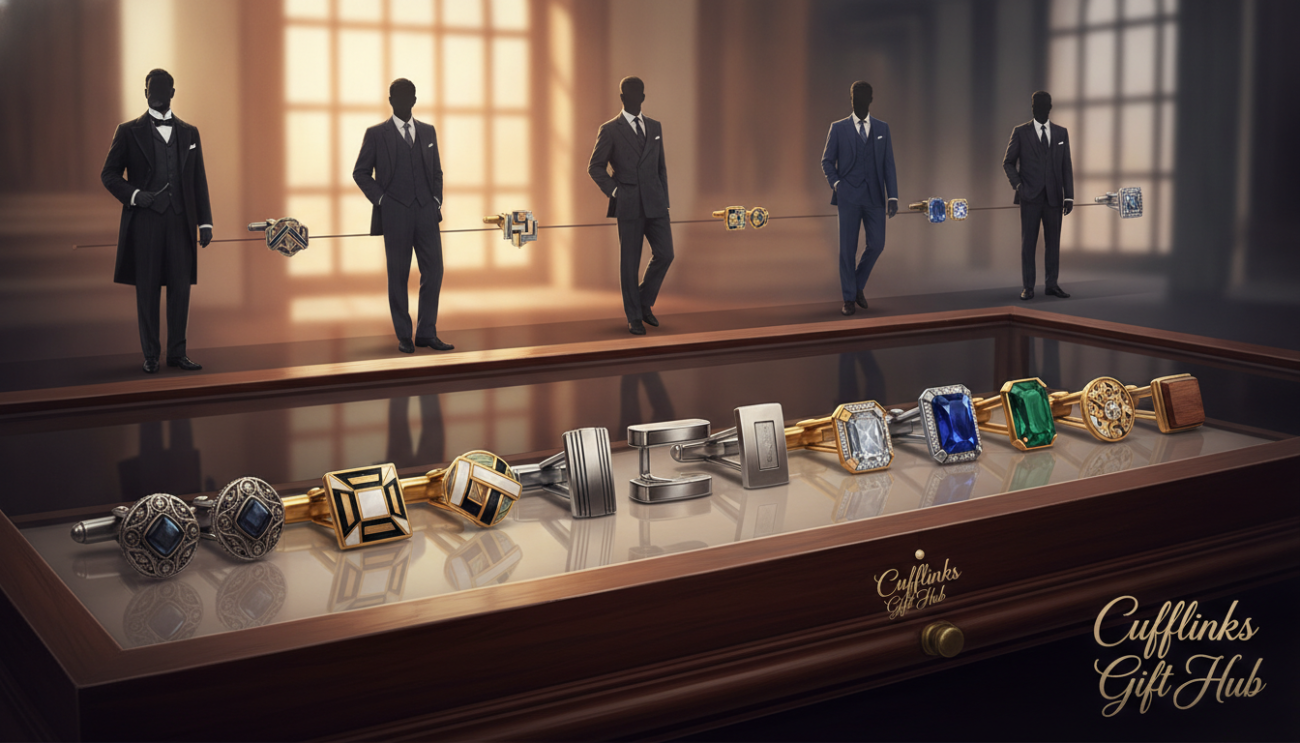
Cufflinks have moved through centuries of changing dress, yet they remain a compact way to make an outfit personal. Their meaning can shift, from a useful fastener to a treasured gift.
Evidence of cufflinks dates back to the 15th century, and they became common by the end of the 18th century. Their place in dress has changed over time.
A Brief History of Cufflinks
Early examples appear in the 15th century. By the end of the 18th century, cufflinks had become common in dress, as people used them to fasten shirt cuffs with care.
They became less popular in the 1970s as dress grew more casual. In the 1980s, cufflinks returned to traditional menswear, where they added a small mark of polish.
Across those changes, materials and designs have shifted with taste. The basic appeal remains clear: a small piece can lend a personal note to formal dress.
Their Meaning as a Personal Gift
A pair can mark affection, appreciation or a milestone when given as a gift. The meaning comes from the giver’s intention and the thought behind the design, rather than a universal code.
For one person, a pair may recall a wedding or promotion. For another, it may carry a family link or a shared memory. The object stays small, but its story can feel lasting.
The meaning of a gifted pair is best read through the occasion and the thought behind its design.
How Do You Choose, Gift and Care for Cufflinks?
A lasting pair is chosen for more than its face, with the fastening, finish and likely use all in mind. Good choices begin with use, then balance quality with the wearer’s style.
Choose a durable mechanism, a design that suits the wearer’s wardrobe and a material that feels right for the occasion. A gift can carry extra meaning through discreet personalisation.
Choosing a Pair to Keep
Think about how often the pair will be worn and which clothes it should suit. Sterling silver, gold and other precious metals offer different looks, while silk knots bring a softer finish.
For a gift, a discreet engraving of initials or a date can make the pair more personal, where the design allows it. A thoughtful detail should not crowd the face.
Personalisation, Care and When to Leave Them Off
Cufflinks are better left at home during hands-on work, where they could catch, scratch or be damaged. Keep them for settings where the cuff can move freely and stay protected.
For routine care, use these four habits:
- Wipe with a soft cloth after wearing.
- Store each pair separately in a soft-lined box or pouch.
- Avoid perfume, cleaning agents and excess moisture.
- Use a jeweller familiar with precious metals for occasional specialist cleaning.
A soft, lint-free cloth can remove fingerprints and moisture. Avoid ultrasonic cleaning for enamel or mother-of-pearl pieces, since these materials need gentler care.
Before storing a pair, make sure it is clean and dry, then keep it protected from scratches.
A little care after each wear helps the face stay bright and the fastening work as intended.
Conclusion
A well-chosen pair brings function and personal expression together in one considered detail. The most refined choice begins with a cuff that accepts cufflinks, then balances a fastening you can manage with a material and design you enjoy.
When choosing for yourself, start with a shirt already in your wardrobe. For a gift, think about what the wearer would reach for often, rather than what makes the boldest first impression.
For your next outfit, begin with the shirt cuff and choose a pair that feels natural to wear and unmistakably your own.
FAQ
Are there different shirts for cufflinks?
Yes, link cuffs and French cuffs are designed for cufflinks, while convertible cuffs offer the choice of a button or cufflink. Ordinary button cuffs are not made for cufflinks because they lack the needed holes. Check the cuff before dressing, since even an elegant pair cannot fasten securely through a standard button cuff.
What can you wear cufflinks with?
Wear cufflinks with a shirt that has link or convertible cuffs, then pair it with a suit, dinner jacket or another outfit suited to the occasion. A crisp shirt and restrained pair can work for formal dress, while a more individual design may suit a relaxed look. The cuff must be made to take the fastening.
When not to wear cufflinks?
Leave cufflinks off when the shirt has no cufflink holes or when hands-on work could snag or damage them. A standard button cuff needs its button, not a cufflink. Practical tasks can also expose a pair to knocks, scratches or catches, so a safer choice is to store them until the work is done.
How should cufflinks look?
The decorative face should point outwards, the cuff edges should align, and the fastener should sit flat without pulling the fabric. A comfortable cuff stays secure as the wrist moves. If the fabric puckers or the clasp presses into the wrist, adjust the layers before leaving home.
What are the different styles of cufflinks?
Common styles include bullet-back, whale-back, chain link, fixed or stud, ball-return, dual-action and silk knot cufflinks. These names describe how each pair is built or fastened, while the face can take many shapes and finishes. When comparing options, check the back as well as the visible design to understand how it closes.
What does it mean when someone gives you cufflinks?
A pair can mark affection, appreciation or a milestone, but the occasion and giver’s intention shape its meaning. An engraved date might recall a wedding or a shared achievement, while a familiar design may reflect a private interest. There is no single meaning that applies to every gift.
Who makes the best cuff links?
No single maker suits every wearer. Assess the material, finish, secure fastening and whether the design fits the recipient’s wardrobe. For precious metals, look for the relevant UK hallmark, which identifies the sponsor, metal fineness and Assay Office. The best choice is one the wearer can use comfortably and enjoy for years.