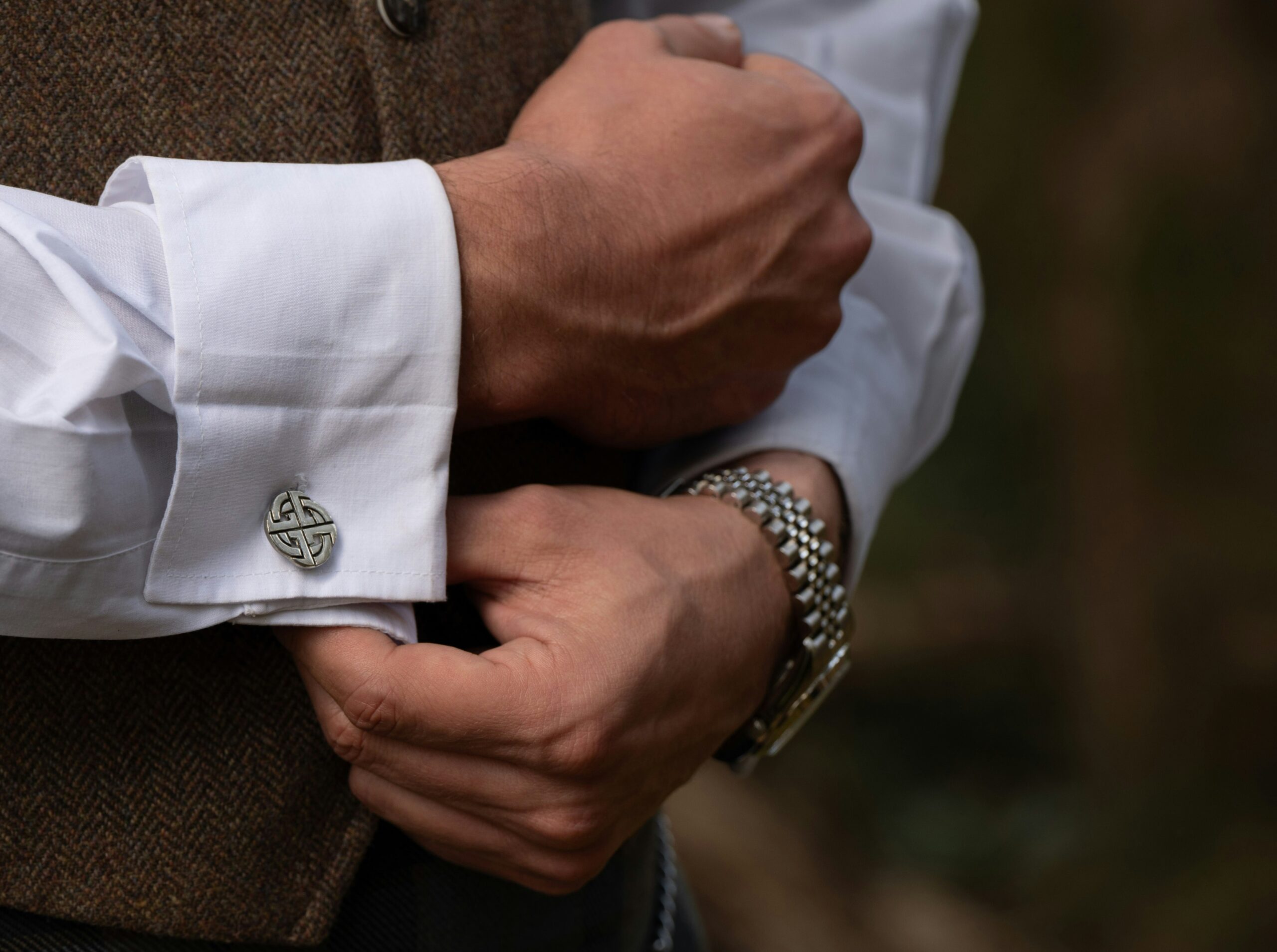
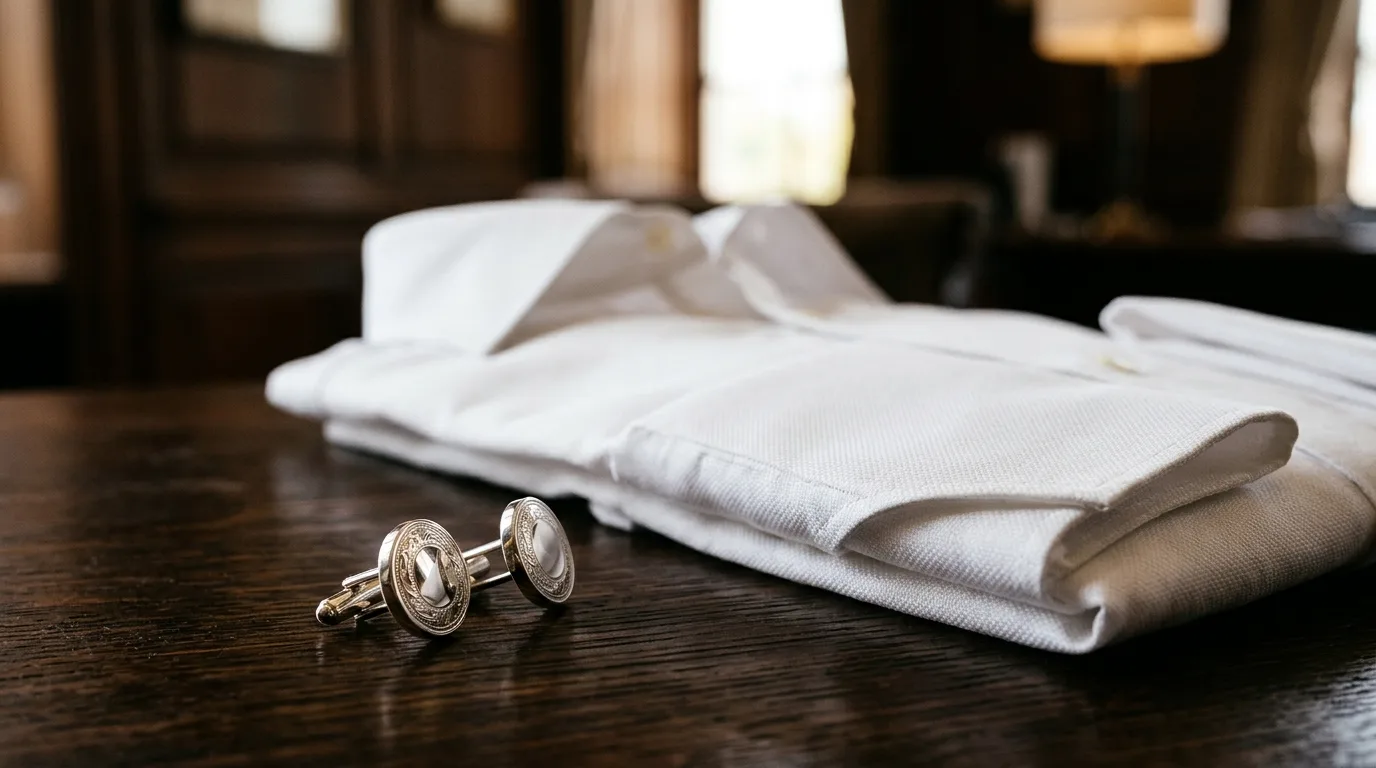
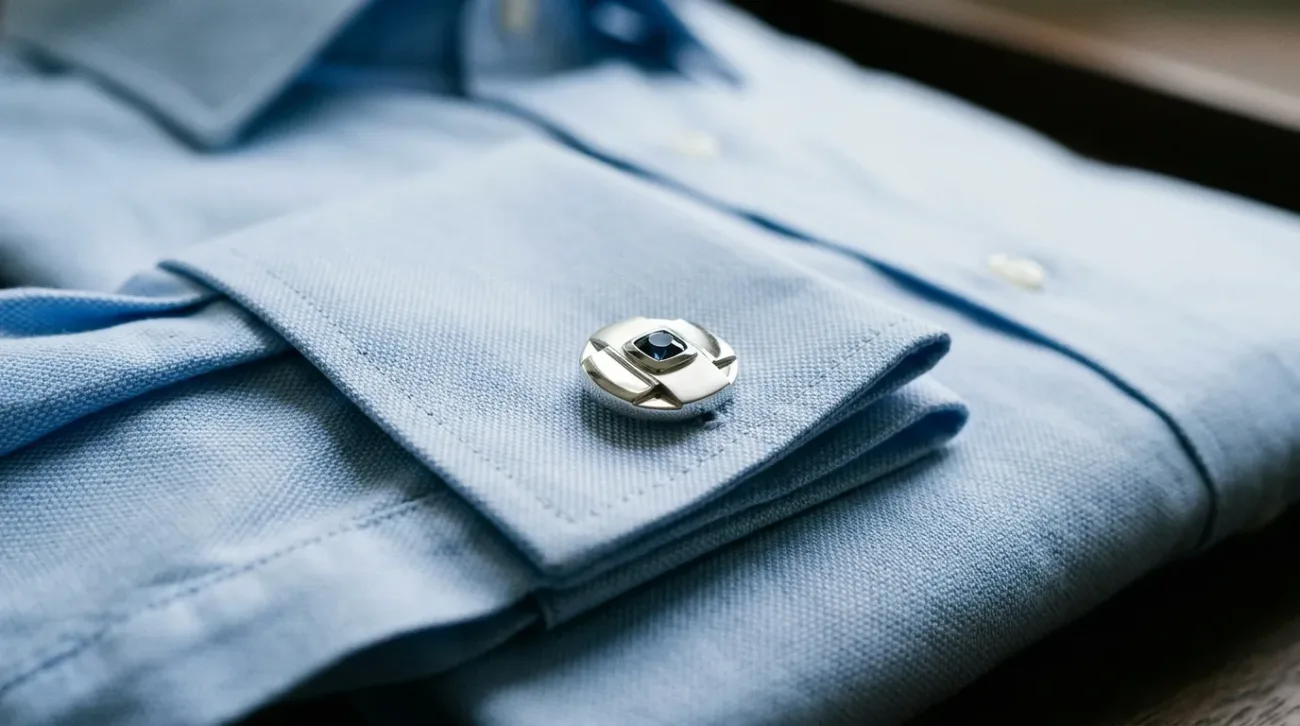
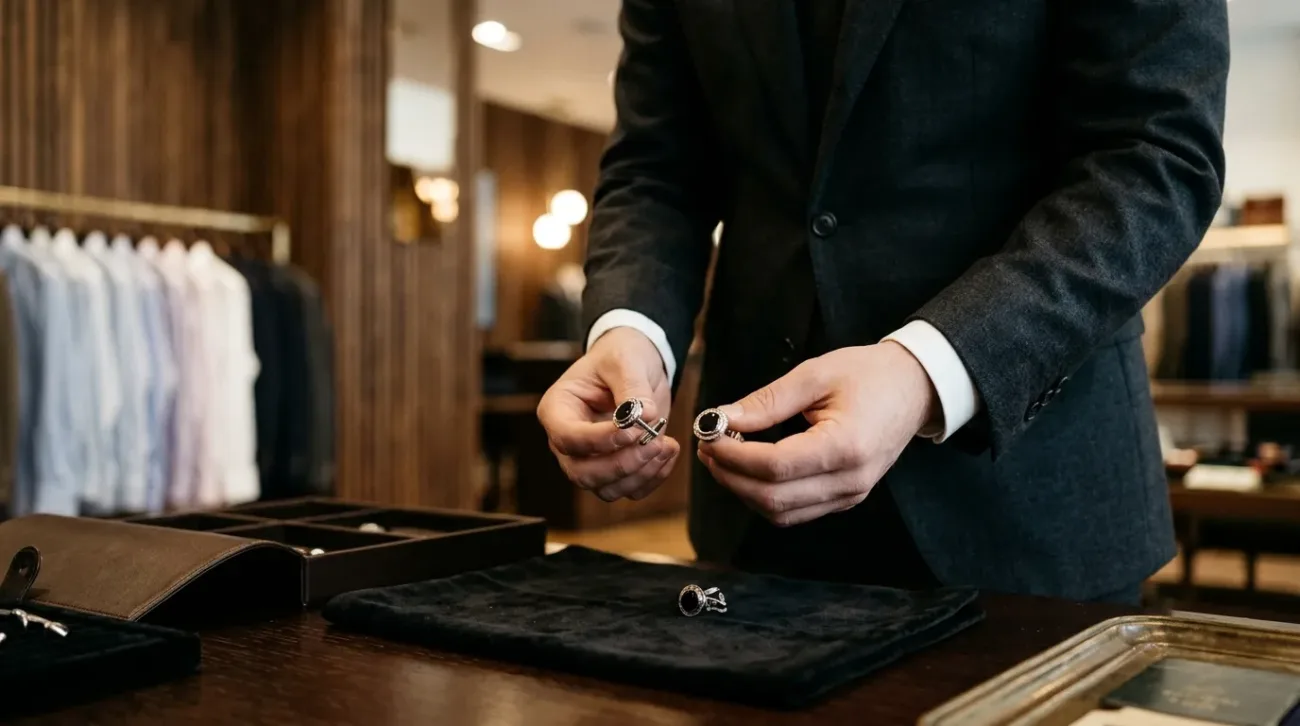
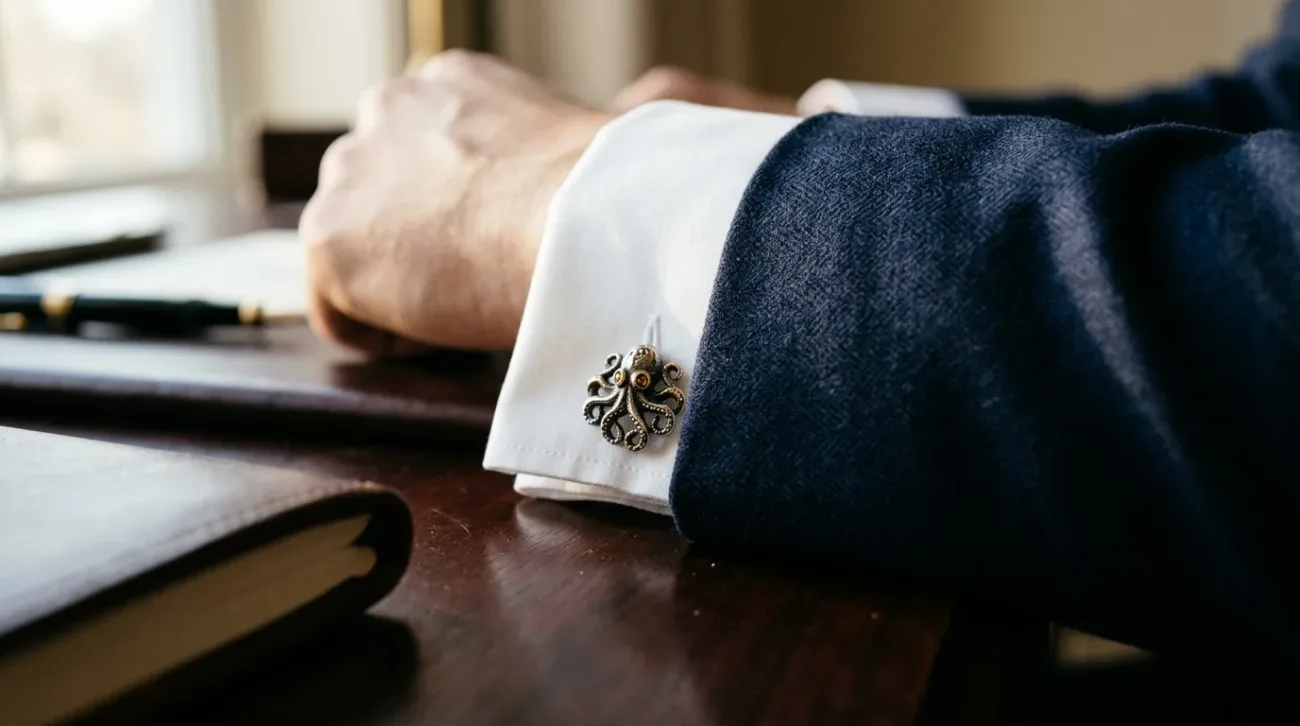
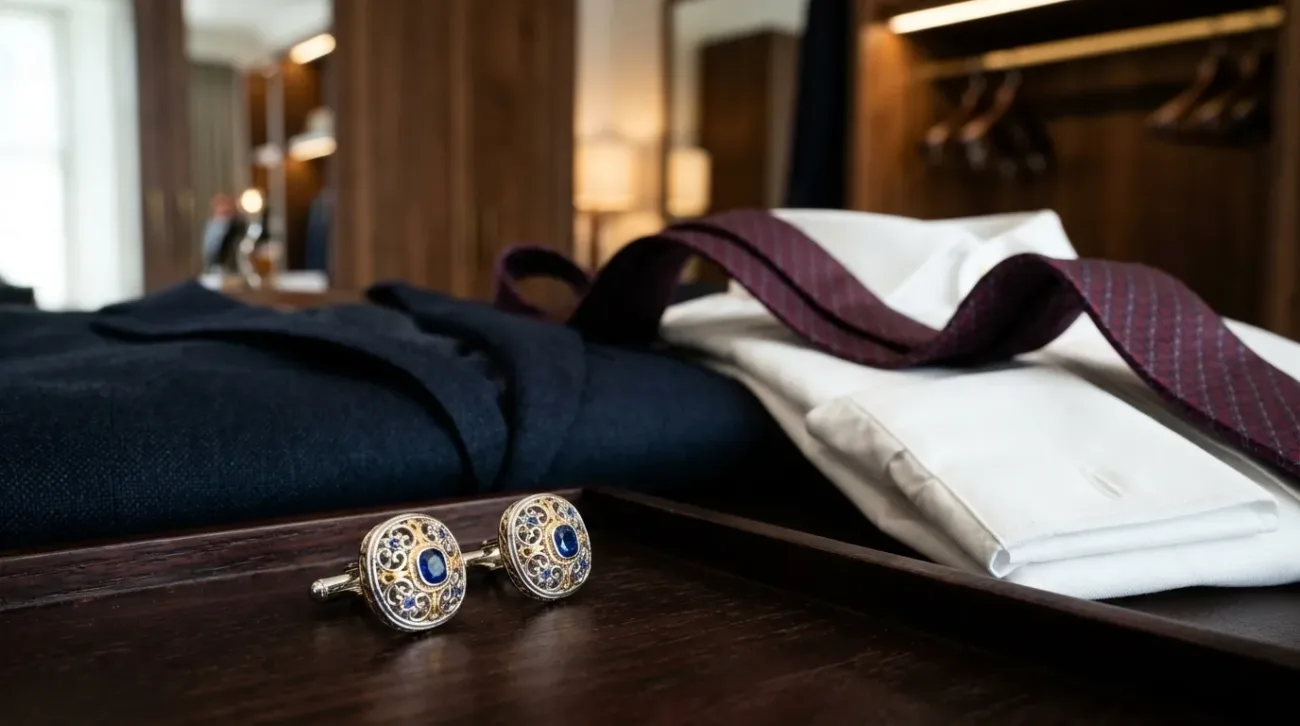
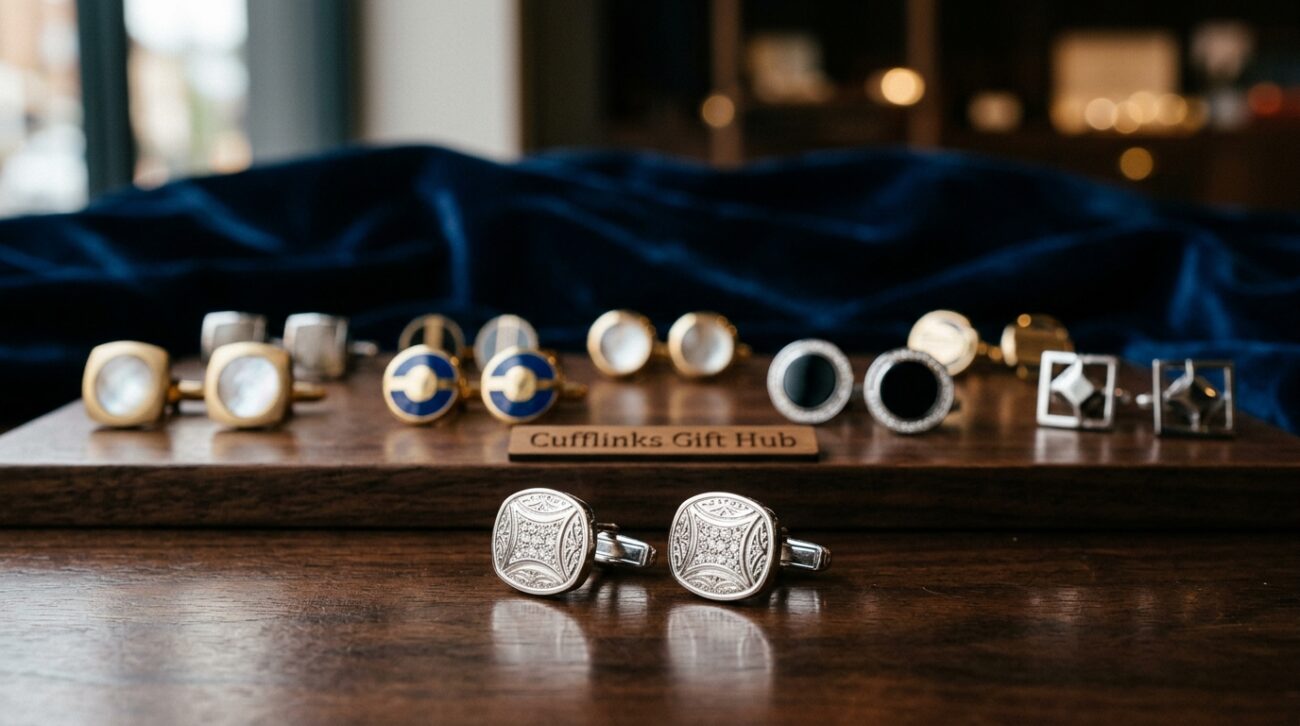
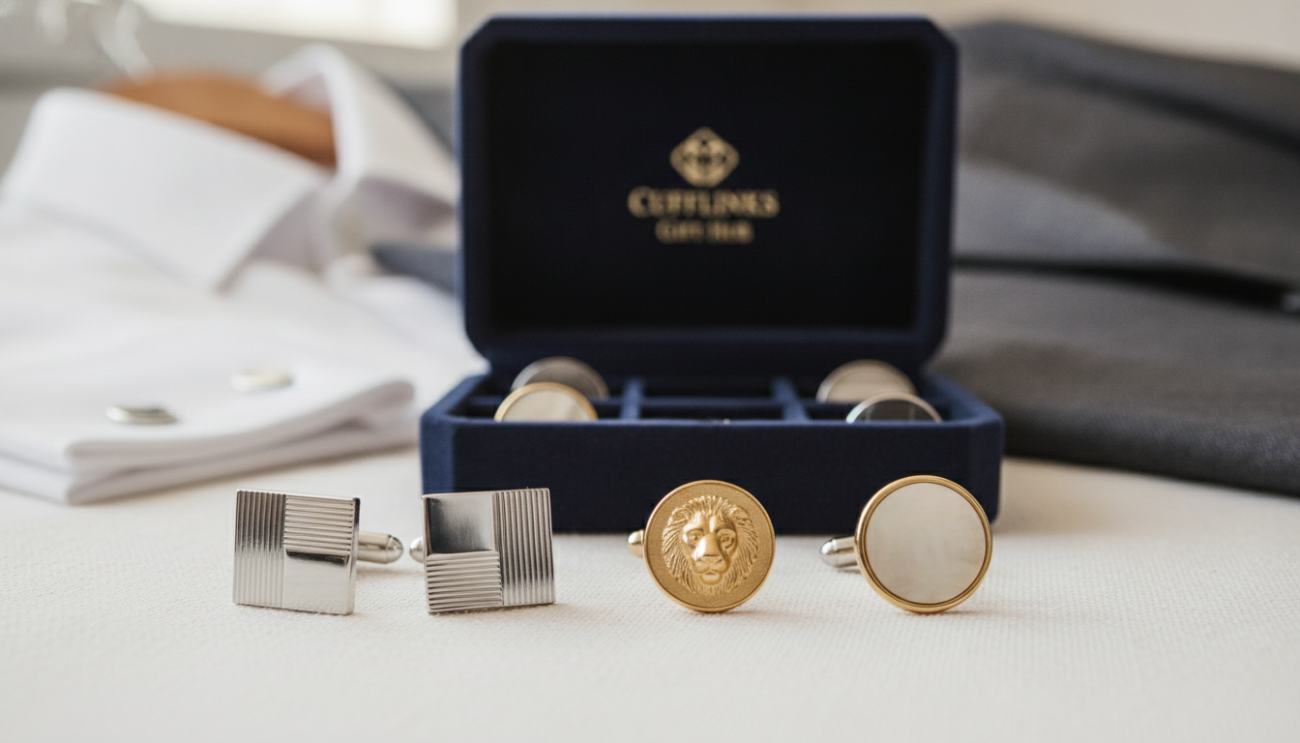
For a first pair, we recommend a refined, easy-to-fasten design that suits your shirt and the occasions you dress for. A small detail can bring welcome confidence when you dress for a wedding, a formal workday or your first occasion in cufflinks.
We can start with a versatile design that feels at home in your wardrobe, rather than a pair chosen for one outfit alone. The right choice should feel comfortable to wear and easy to make your own. Choose a shirt made for cufflinks before choosing the accessory. A little attention to proportion and finish can make a small detail feel distinctly your own.
Key Takeaways
- Start with a shirt designed for cufflinks.
- Choose a versatile shape for your first pair.
- Keep the design in step with the occasion.
- Consider comfort and ease as well as appearance.
- Let one detail reflect your personal style.
What Do Cufflinks for Beginners Need to Know First?
Cufflinks fasten compatible shirt cuffs while adding a small, deliberate expression of personal style. They can bring a sense of care to formal dress, and suit men who want an accessory with a clear purpose. That useful role helps explain why they remain part of both traditional and modern wardrobes.
A typical cufflink has a decorative head, a post and a toggle or clasp. The head is the visible part, while the post passes through the shirt cuff. The fastening holds the fabric together. Cufflinks do not suit every shirt, so the cuff must have openings made for them.
Cufflinks are both a working fastening and a considered finishing detail.
Their history reaches back to the 16th century, when cufflinks were already in use. King Charles II helped make them popular in the 17th century. Their form has changed over time, yet their mix of function and decoration has kept them relevant.
As an accessory, a pair can add a quiet point of interest without changing the whole outfit. A plain design can feel timeless, while a more individual choice can show something about the wearer. We can treat the first pair as a practical part of dressing, not merely a display piece.
A cufflink’s visible face may be simple or detailed, but its job remains the same. The design should feel at ease with the clothes around it, rather than compete for attention. Think of them as both a working fastening and a considered finishing detail.
Which Shirt Cuffs Can You Wear Cufflinks With?
Look at the cuff before choosing a pair: cufflinks need aligned holes, not an ordinary button fastening. Dress shirts with cufflink holes have paired openings through which a link can pass, while an ordinary barrel cuff uses buttons. Use cufflinks with single-cuff shirts only when the cuff has purpose-made holes.
A link cuff has holes on both sides and closes with cufflinks. The terms can be confusing because “French cuff” commonly means a double cuff. A double cuff is twice the length of a single cuff and folds back on itself.
| Cuff style | Cuff construction | Fastening | Appropriate use |
|---|
| Barrel cuff | Buttonholes on one side, buttons on the other | Buttons | Everyday shirts; not made for cufflinks |
| Single cuff | One fabric layer with paired link holes | Cufflinks | Standard with white tie; also acceptable with black tie |
| Double or French cuff | Longer fabric folds back; holes pass through the layers | Cufflinks | Standard with black tie; also worn for business |
| Convertible cuff | Holes allow either a button or a cufflink | Button or cufflink | Useful when the wearer wants both options |
Most French cuffs have four holes per cuff, with each hole passing through all fabric layers. This gives the cufflink a clear path through the folded fabric. The exact look varies, but the openings must line up for the link to pass through cleanly.
A cufflink hole is not the same as a buttonhole on a standard barrel cuff. The two sides of a link cuff have openings that align when the cuff meets. For a closer look at shirt styles and how to spot them, see our guide to cufflink-compatible shirts.
Convertible cuffs can close with buttons or cufflinks because they have both a button and a matching hole. A barrel cuff has buttons on one side and buttonholes on the other, so it cannot take a cufflink as designed. Do not force a link through a button opening or cut holes into a finished shirt. For a first shirt, choose a cuff with purpose-made cufflink holes.
How Do You Put Cufflinks On Securely?
Start with the shirt on or laid flat, and bring the cuff edges together before threading the link. Careful alignment helps the cuff sit neatly and keeps the fabric from twisting. Keep the decorative face on the outside of the cuff.
Follow these steps when wearing cufflinks with a compatible shirt:
- Fold the double cuff back so its edges meet.
- Line up the holes through all layers of fabric.
- Pass the cufflink through with its decorative face outward.
- Secure the fastening so it lies flat, then check comfort.
Align the cuff and insert the link
A cuff can shift while you thread the link, so hold its edges together without pinching the fabric. If the openings do not line up, adjust the fold rather than pushing the cufflink through at an angle. A smooth path helps the finished cuff lie evenly beneath a jacket sleeve.
With a swivel bar, turn the bar lengthwise to pass it through the aligned holes. Once it is through, turn it across the post so it lies flat. A chain link passes through the aligned holes as one connected piece, with a decorative face on each side.
Secure the fastening without twisting the fabric
The answer to how do you put cufflinks on with buttons is that cufflinks with buttons work only on a convertible cuff with cufflink holes. An ordinary button cuff cannot be fastened with a cufflink. Check the cuff’s design before trying to put on a pair.
Once the fastening is closed, move your arm gently and see whether the cuff stays in place. The fabric should meet without pulling, and the cufflink should not press uncomfortably against your wrist. Check that the cufflink lies flat and the fabric is not pulled tight.
Which Cufflink Fastening Is Easiest for a Beginner?
For most beginners, a swivel or toggle back is the simplest metal fastening to learn. The hinged bar turns to pass through the cuff, then lies across the post to hold it in place. Its clear action makes it a straightforward choice for regular wear.
Pick the fastening you can handle with ease, rather than the one with the most complex look. The different styles offer distinct feels, from a firm metal link to a soft knot. Their ease depends on how each one feels in your hands.
| Fastening | Fastening action | Feel or appearance | Beginner consideration |
|---|
| Swivel or toggle | Hinged bar turns through the holes, then lies flat | Metal, neat and secure | Simple action for everyday use |
| Chain link | Short chain passes through aligned holes | Two decorative faces with movement | Traditional look; may take practice to align |
| Fixed back | Solid post has no moving parts | Firm, simple shape | No hinge to manage; fit may feel less flexible |
| Silk knot | Two knots joined by cord pass through holes | Soft, colourful and informal | Easy to handle, though less formal in feel |
Chain links offer a traditional look and a little movement between their two faces. Fixed backs have no hinged part to open or close. Their solid form can make them feel less forgiving as they pass through the cuff, so choose one that moves through without strain.
Bullet-back and whale-tail designs are other moving-bar mechanisms. Each uses a bar that shifts to lock the post, with small differences in shape and handling. We can choose based on the action that feels most natural, rather than assuming every mechanism works the same way.
Silk knots are made from two knots joined by cord, giving them a softer, less formal appearance. They can suit a relaxed outfit, while metal designs often feel more suited to formal clothes. Choose a mechanism you can secure comfortably, not just one that looks appealing in the box.
What Makes a Good First Pair of Cufflinks?
A first pair earns its place when it fastens easily and works with more than one outfit. Versatility matters because it lets us reach for the same pair across regular formal and business wear. A classic oval or bar-shaped swivel-back pair is the most adaptable first choice.
The best cufflinks for beginners are comfortable, easy to wear and in step with the shirts in your wardrobe. Men’s cufflinks for beginners do not need to follow a particular trend. The right choice depends on the wearer’s shirts and dress habits.
- Choose an easy fastening you can manage without strain.
- Look for a restrained shape that works with several outfits.
- Check that the scale feels comfortable on the cuff.
- Pick a personal design that still feels versatile.
A classic oval gives a soft, balanced outline, while a bar-shaped design feels clean and precise. Both can sit quietly beneath a jacket sleeve, without drawing attention away from the rest of the outfit. A modest scale helps the cufflink feel in proportion, rather than heavy or oversized.
Silk knots offer a relaxed, colourful accent if polished metal feels too formal for the wearer’s style. They bring a softer look and can add a touch of colour without changing the shape of the shirt cuff. We can choose them as a second option or as a first pair for less formal dressing.
“Best” is a personal choice, shaped by the shirt styles and occasions the wearer returns to most. A trend may look appealing now, but a refined design can stay useful for longer. Our reasons to make cufflinks part of your style offer more ideas for finding a pair with character.
Look for a design that feels like the wearer, not simply one that matches a photograph or a passing trend. A familiar shape can still carry a detail that feels personal, such as a subtle colour or an unusual finish. Choose a design you can imagine wearing again, rather than one bought for a single photograph.
Which Materials and Finishes Suit Your Style?
Material changes the character of a pair, from the cool clarity of silver to the warmth of gold. Start with the colours you enjoy wearing, then consider whether a smooth metal, coloured finish or natural surface feels right. Precious-metal fineness marks show the amount of precious metal in an item.
Sterling silver is marked 925, which means it contains 925 parts silver per thousand. A 9ct gold item is marked 375, meaning 375 parts gold per thousand. These marks help us identify metal content, but the overall finish and design still shape how a pair looks.
Sterling silver for a cool, versatile finish
Sterling silver cufflinks have a cool tone that sits easily with many wardrobes. Their clean finish can feel quiet and classic, especially in a simple shape. Polished silver catches the light, while a softer finish can make the same metal feel less bright.
Silver can work well for someone who prefers cool shades in shirts, suits and other accessories. A plain design may be a natural first choice, while a textured surface adds detail without relying on a bold shape. The finish should feel right beside the fabrics and colours worn most often.
Gold for a warmer, more formal accent
Gold brings warmth and a more noticeable glow to the cuff. A simple gold design can look refined, while a larger face or bright polish may draw more attention. The 375 mark identifies 9ct gold by its fineness, rather than by its colour alone.
Gold can suit a wardrobe built around warmer tones, though no one finish is right for every shirt or event. A restrained design can keep the effect measured. We can compare its shade with the rest of the outfit before choosing a pair.
Enamel for colour and detail
Enamel adds colour over a metal base, allowing a cufflink to carry a small, vivid detail. It can be smooth and bold or used in a fine line across the face. A single colour can feel easier to wear than a complex design with several bright tones.
Colour gives us room for a more individual design, yet the scale of the detail matters. A neat band or small panel can add interest without taking over the cuff. For a piece worn often, choose a finish that feels pleasing beyond one season.
Mother of pearl for subtle iridescence
Mother of pearl has a naturally iridescent surface, with a soft play of light rather than a flat colour. Its subtle sheen can give a classic design more depth. Each piece has its own natural pattern, so the surface will not look exactly alike.
Different materials bring different moods, and the same design can feel quite different in silver, gold, enamel or mother of pearl. We should not assume that every finish suits every cuff or setting. Let the finish complement your wardrobe, while keeping the overall effect refined.
How Should You Match Cufflinks to an Outfit?
Begin with the shirt, suit and watch you already plan to wear, then choose a pair that sits comfortably among them. A coherent outfit gives each detail room, so cufflinks can add interest without competing with the clothes. Keep the cufflink’s size in proportion to the cuff and the suit fabric.
Use this short checklist to shape the look:
- Consider the colours of the shirt and suit together.
- Keep metal tones broadly in step with a watch case or belt buckle.
- Balance the cufflink’s scale with the cuff and fabric.
- Echo one coloured detail subtly, without matching every accessory.
Silver-toned cufflinks sit naturally beside cool colours such as navy. Gold can bring warmth to clothing in warmer tones. These are useful starting points, not fixed rules; the final effect depends on the shade, texture and light in the whole outfit.
Scale affects how the accessory sits at the wrist. A large face may look heavy on a narrow cuff, while a tiny one can disappear beside thick suit fabric. We can hold the pair against the shirt before dressing to judge its proportions.
A watch case, belt buckle and tie bar are useful details to consider when choosing a metal tone. They need not match exactly, but keeping them broadly coherent makes the outfit feel considered. A tie bar is optional, not a required companion to cufflinks.
Colour can make the look feel personal when used with a light touch. A small echo between the cufflink and a tie or pocket square can bring a quiet connection. Avoid copying every shade and finish across the outfit, as an exact set can look overly planned.
The wearer’s style matters as much as the colour of the suit. A simple pair can work with several outfits, while a stronger design may suit a more expressive wardrobe. Aim for a coherent line of detail, not a perfectly matched set.
When Are Cufflinks Appropriate to Wear?
The event’s dress code is the best guide: cufflinks feel most at home when the occasion calls for a considered finish. Formal settings usually suit restrained designs, while relaxed events leave more room for personal detail. Choose a quieter design for the most formal dress.
Weddings, black-tie events and corporate occasions are established settings for cufflinks. A simple silver or gold design can bring polish without drawing focus from the rest of the outfit. Novelty designs are better saved for less formal occasions.
| Occasion | Shirt or outfit context | Suitable design direction | Personal expression |
|---|
| Wedding | Formal shirt with a suit or wedding outfit | Restrained silver or gold | A subtle colour or personal detail can suit the day |
| Black tie or white tie | Formal evening dress with a compatible shirt | Simple, polished and understated | Keep individual details very discreet |
| Business or corporate event | Business shirt with a suit or tailored outfit | Classic shape and quiet finish | A small detail can show personal taste |
Weddings and formal celebrations
A wedding can be a good setting for cufflinks, whether we are dressing as a guest or part of the wedding party. A quiet design works well with formal clothes, while a restrained personal detail can make the choice feel more individual. The aim is to complement the day, not outshine the people being celebrated.
Parties vary in tone, so the invitation and venue can help us judge how formal to dress. A refined pair can suit a smart celebration, while a novelty design may feel more at ease at a relaxed gathering. Read the event as a whole rather than treating every party alike.
Black tie and white tie
Black-tie and white-tie settings call for a polished, restrained effect. Silver or gold designs with a simple face can sit neatly with formal dress. Strong colours and playful shapes may feel out of place when the rest of the outfit follows a strict dress code.
When the clothes are highly formal, the cufflink should support their clean lines. A subtle finish adds a point of interest without becoming the focus. This is a setting where a classic shape can feel more assured than an elaborate design.
Business and more relaxed occasions
For a business day or corporate event, cufflinks can add polish to a tailored outfit. A classic design keeps the effect professional, while one restrained personal detail can show character. We can keep a bolder design for occasions where the tone allows more freedom.
When not to wear cufflinks? Avoid them when the dress code discourages decorative accessories or the setting makes them feel unnecessarily formal. If the invitation is unclear, let its wording and the formality of the outfit guide the choice. For more ideas on occasion and dress, see our cufflink occasion guide.
The day’s setting matters as much as the wearer’s preference. A subtle pair can blend into a formal outfit, while a playful design can bring warmth to a relaxed event. When in doubt, let the invitation and the shirt determine how much formality to bring.
Can You Wear Cufflinks Without a Tie?
Yes, cufflinks can look considered without a tie, especially when the rest of the outfit stays relaxed and composed. They work with smart-casual outfits as well as more formal clothes, provided the shirt cuff is made for them. An open collar gives the look a softer tone.
Keep the shirt simple and the cufflink restrained when you leave the collar open. French cuffs are usually worn with the inside portions together, a way of joining the folded fabric called the kissing style. It creates a neat cuff shape without needing a tie to make the outfit feel complete.
Without a tie, a plain shirt helps keep attention on the overall line of the outfit. A jacket is not essential, but the rest of the clothes should still suit the setting. A clean cuff can bring a little polish to a knit, tailored trousers or a simple open-collar shirt.
Proportion matters because an open collar already makes the outfit feel less formal. A large or ornate cufflink can seem out of step with that relaxed mood. Choose a shape that looks balanced beside the shirt and feels natural with the clothes you wear around it.
Cufflinks need not signal a full formal outfit every time. A quiet design can feel intentional in smart-casual dress, especially when the shirt is crisp and the rest of the look is uncluttered. A relaxed collar and a clean cuff let the detail feel deliberate rather than overdressed.
Do Cufflinks Make a Thoughtful Gift?
A well-chosen pair can mark a milestone while becoming a wearable part of someone’s wardrobe. Cufflinks make a thoughtful gift when the design suits the recipient’s taste and the personal detail reflects the occasion. The best gift feels considered without being difficult to wear.
They suit someone who owns shirts with cufflink-ready cuffs or has a formal occasion ahead. A wedding, promotion, retirement or milestone birthday can give the gift a clear meaning. Choose for the recipient’s wardrobe first, then make the detail personal.
Choosing a pair for a milestone
Think about the recipient’s usual clothes before settling on a design. A classic pair may work well for someone who dresses formally at work, while a more relaxed style may suit a person who wears cufflinks less often. The gift should feel like a natural part of their wardrobe, not a request to change it.
A wedding gift can mark a special day, while a pair for a promotion may recognise a new step in someone’s working life. Retirement and milestone birthdays also offer a reason to choose something lasting. A simple design can remain wearable after the date has passed.
If you are unsure what they would wear, notice the colours and shapes they already favour. The gift can still carry meaning without a bold face or a highly specific theme. Thoughtful choices often feel personal because they show that we have paid attention.
Adding a personal inscription
Initials, a date or a short inscription are three concise ways to personalise a pair. A name or date can tie the gift to a particular moment, while a short phrase may carry a private meaning. Keep any wording brief enough to feel clear over time.
Personalisation works best when it does not narrow the gift to one occasion. A date can mark a wedding or another milestone, while initials remain relevant for years. Avoid a message that depends on a passing joke or a detail the recipient may soon outgrow.
A personal inscription should add meaning without taking over the design. The recipient’s taste still comes first, whether they prefer a plain face or a touch of colour. For more help weighing style, occasion and personal detail, read our guide to choosing cufflinks as a gift.
A gift feels most thoughtful when it fits the person as well as the milestone. Consider what they already wear, then choose a detail that carries the memory with care. Choose for the recipient’s taste first, and let the engraving carry the sentiment.
What Should You Check Before Buying Cufflinks?
Before buying, make sure the pair suits the shirt and that its fastening feels secure in your hands. A clear fit makes the choice easier, while a tidy finish can help a simple design feel well made. Check the cufflink’s size and fastening before deciding on its appearance.
Use these four checks when comparing a pair:
- Move the fastening and check that it closes cleanly.
- Inspect the edges and surface for a neat finish.
- Consider whether the size suits the shirt cuff.
- Check precious-metal marks when they apply.
Fit and proportion
Cufflinks should sit comfortably on the cuff without looking too large or too small. One buying guide groups examples around 16 mm as standard size and 19 mm as a larger size. These figures are useful examples, not universal standards for every design or shirt.
Compare the size with the width of the cuff and the scale of its buttons or stitching. A broad face can feel heavy on a narrow cuff, while a very small design may vanish beneath a jacket sleeve. Comfort matters too, especially if the pair will be worn for a full day.
Do not cut holes into a ready-made shirt at home to make it fit cufflinks. Ask a skilled tailor whether the cuff can be altered, or choose a shirt already designed for cufflinks. A tailor can assess the fabric and construction before any change is made.
Craftsmanship, hallmark and price considerations
A good finish should feel smooth at the edges, with no rough spots where the cufflink touches the fabric. Test the fastening several times and notice whether it moves without sticking. A firm close helps the pair stay secure during wear.
Precious-metal marks can help identify metal content. Sterling silver has a fineness mark of 925, while 9ct gold has a fineness mark of 375. Read the mark as a statement about the metal, not as a measure of the design’s quality on its own.
Price depends on material, craftsmanship, stone or enamel details and personalisation. A simple design may have fewer decorative parts, while detailed work can add to the cost. Compare the finish and build as well as the face, so the choice reflects what matters to you.
The most eye-catching design is not always the most comfortable or useful one. A smooth edge and fastening that works well can make a modest pair a pleasure to wear. A clear fit and a well-finished mechanism matter more than an elaborate face.
How Do You Care for and Store Cufflinks?
A brief wipe after wearing is the simplest way to keep cufflinks ready for their next occasion. Use a soft, lint-free cloth to remove fingerprints or moisture. Gentle care helps protect the finish without adding an involved routine.
Store each pair separately in a dry place, such as a soft-lined box or pouch. Keep cufflinks away from perfumes and household cleaning products. These items can mark a surface or affect delicate details.
Do not put enamel or mother-of-pearl cufflinks through ultrasonic cleaning.
That kind of cleaning can be too harsh for delicate inlays. If a piece needs specialist attention, ask a jeweller for advice before cleaning it. This is especially helpful when the design combines several materials or has a detailed setting.
After wearing, check the fastening for dust or residue before putting the pair away. A dry cloth is usually enough for routine care, and it avoids the need for strong products. Do not leave cufflinks loose with other jewellery, where their surfaces may rub together.
A suitable box keeps pairs easy to find and helps prevent them from rubbing against one another. A pouch can work well for travel, as long as the pair stays separate from keys or other hard objects. Keep the storage place dry, and avoid leaving cufflinks on a damp bathroom surface.
Good care is simple when it becomes part of putting an outfit away. A brief wipe and a safe place can help preserve both the finish and the fastening over years of wear. Give every pair its own protected place, and it will be easier to find and wear with care.
Conclusion
The right pair is the one that belongs naturally to your shirt, your occasions and your sense of style. We can begin with a cuff that supports cufflinks, then choose a versatile design that feels personal and comfortable to fasten. It need not be bold to feel distinctive.
A first pair should earn its place through use, not just appearance. Choose a shape and finish that sit easily with the wardrobe you already enjoy, and trust your own sense of proportion. Check a favourite shirt’s cuffs, then choose a pair that makes you feel quietly confident wearing it.
FAQ
How do I use cufflinks?
Fold back a double cuff, align its holes, pass the cufflink through with the decorative face outward, then secure its fastening. Check that the link lies flat and does not pull the fabric tight. If you are using a swivel back, turn its bar to pass through the cuff, then turn it across the post. The cuff should feel comfortable when you move your arm.
What is a barrel cuff?
A barrel cuff is a shirt cuff with buttonholes on one side and buttons on the other. It is generally not designed for cufflinks, because the openings do not form a pair of aligned holes. A standard barrel cuff closes with its buttons. If you want to wear cufflinks, choose a shirt with link-ready holes or a convertible cuff.
Should you wear cufflinks without a jacket?
Yes, you can wear cufflinks without a jacket when the shirt has cufflink-ready cuffs and the outfit suits the occasion. A neat shirt and restrained design help the cuffs look intentional on their own. Think about the formality of the setting, too. If the rest of the outfit is very casual, cufflinks may feel more dressed up than the occasion calls for.
What do cufflinks say about a man?
Cufflinks can suggest care and personal style, but their meaning depends on the wearer and the setting. A classic pair may give a quiet, polished impression, while a colourful design can show a more playful side. They do not define a person on their own. The shirt, outfit and occasion all shape how the detail comes across.
What does it mean when someone gives you cufflinks?
Cufflinks can mark a milestone or show personal appreciation. A pair may be chosen for a special day, a work achievement or a personal connection, while an inscription can make that feeling more specific. The design also says something about how well the giver knows the recipient’s taste. A thoughtful pair should feel wearable as well as meaningful.
Do men wear cuff links anymore?
Yes, men still wear cufflinks for formal, business and some smart-casual outfits when the shirt cuff supports them. They remain a useful fastening as well as a way to add a personal touch. A plain pair can work quietly with tailored clothes, while a relaxed design may suit less formal dress. The shirt cuff decides whether they can be worn.
How much should cufflinks cost?
There is no single useful budget for every pair, because material, craftsmanship, embellishments and personalisation affect the price. A simple metal design differs from one with detailed work or added stones. We can compare the fastening and finish with the look we want, rather than paying for detail we will rarely wear. The best choice should suit both the wardrobe and the wearer.
Are cufflinks a nice gift?
Yes, cufflinks can be a thoughtful gift when the recipient has cufflink-ready shirts or an occasion to wear them, and the design suits their taste. A classic pair can become a useful part of someone’s wardrobe, while an inscription may mark a special moment. Consider the recipient’s usual style before choosing. A personal gift feels more lasting when it is easy to wear.