Blog
How to Wear Cufflinks With a Suit: A Full Styling Guide

How to Wear Cufflinks With a Suit: A Full Styling Guide
A sharp suit carries a man a long way. The fit, the fabric, the colour: these things read from across the room. But the details are what people actually remember up close, and cufflinks are among the smallest details with the biggest visual return. They sit at the exact point where your jacket sleeve ends and your shirt begins, right in the line of sight during a handshake, a presentation, or a wedding photograph. And yet most men either skip them entirely, uncertain of the rules, or when they do wear them, get a few things quietly wrong. So here is the complete guide to wearing cufflinks with a suit
This is a complete guide to wearing cufflinks with a suit, covering which shirts work, how the different fastening types actually function, how to pair metals and materials to the occasion, and how to use cufflinks as a genuine style signature rather than just a formal obligation. Whether you’re dressing for a black-tie event, a board meeting, or a friend’s wedding, the same principles apply. Cufflinks Gifthub has extensive experience helping men and gift shoppers navigate these decisions, and the advice here reflects what actually works in practice.
The shirt comes first: French cuffs, convertible cuffs, and what actually works when wearing cufflinks with a suit
The most important rule in this guide: not every dress shirt can hold a cufflink, and getting this wrong creates a problem no amount of good taste can fix. Before you think about style or metal tone, confirm your shirt cuff is built for the job.
French (double) cuffs and why they’re the cufflink standard
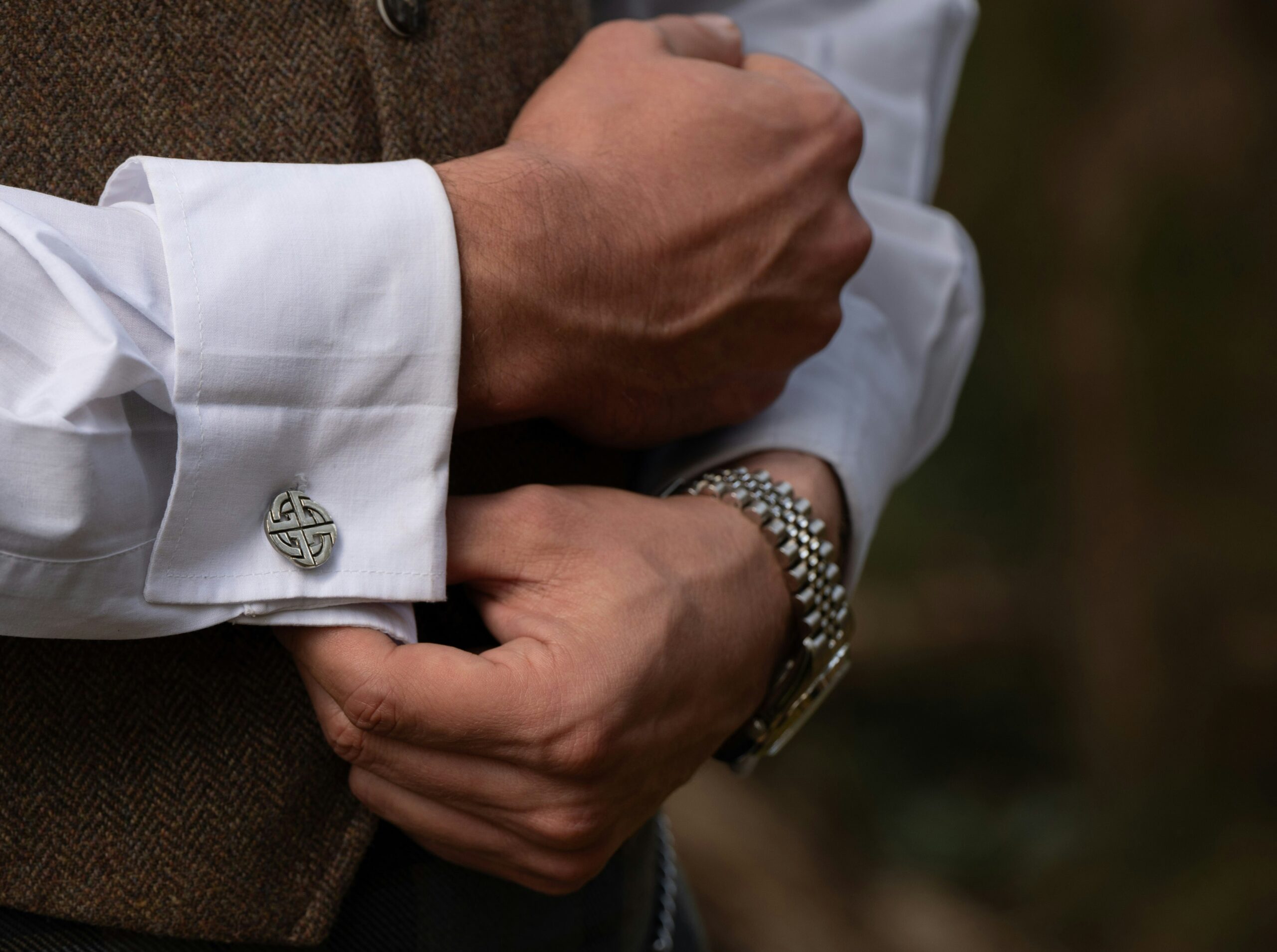
A French cuff, also called a double cuff, is longer than a standard shirt cuff. You fold it back on itself so two layers of fabric align, and the paired holes on both layers are designed specifically for a cufflink to pass through. The result is a clean, structured look with visible weight and formality at the wrist. French cuffs are commonly preferred for black-tie, business formal, and dressy weddings because the folded fabric and the cufflink face together create a more formal appearance that a standard button cuff is simply not designed to replicate.
Convertible cuffs: the flexible option
Convertible cuffs have buttonholes on both sides, giving you the choice of a button or a cufflink on any given day. They sit flat rather than folded, so the visual effect is slightly less formal and less structured than a French cuff. For men who want to wear cufflinks occasionally without building an entirely new wardrobe, convertible cuffs are a practical entry point. The formality ceiling is a little lower, but the versatility is genuinely useful.
How much cuff should show below your suit sleeve
Roughly half an inch of shirt cuff should extend past your jacket sleeve when your arms are at rest. Too little and the cufflinks disappear entirely under the sleeve, which defeats the purpose of wearing them. Too much and the proportions break down. With French cuffs, showing slightly more than half an inch is acceptable because the folded fabric and the cufflink face are meant to be visible and appreciated. Set your sleeve length with this in mind before any important occasion. For a deeper dive into the proportions and reasoning behind cuff visibility, see this article on the science of sleeve length.
How to fasten cufflinks when wearing a suit: backing types explained
The fastening mechanism is separate from the decorative face, which means you can have any design you like in any backing type. Understanding how each one works removes the fumbling and the frustration.
The four main backing types
The most common types break down simply:
- Bullet back: a small cylindrical toggle on a post. You align it parallel to pass it through the cuff holes, then rotate it 90 degrees so it sits perpendicular and locks.
- Whale back: the same concept, but the toggle is shaped like a whale’s tail. Flip it upright to insert, flip it flat to lock.
- Fixed/stud: no moving parts. You angle the cufflink through the holes and the fixed shape holds it in place.
- Chain link: two decorative faces connected by a short chain. Both faces are visible, one on each side of the cuff.
For a clear visual reference showing different styles and backings, this types of cufflinks infographic is useful when you’re comparing shapes and mechanisms.
Step-by-step: putting on cufflinks with a French cuff shirt
Unbutton the cuff and fold it back so both layers of fabric align and the holes line up. Insert the cufflink through both layers from the outside, so the decorative face will sit on top, visible above the jacket sleeve. Secure the backing using whichever mechanism your cufflinks use. The decorative face should face outward, not toward your wrist. The whole sequence takes only a few seconds once you’ve done it a couple of times.
Choosing the right cufflink style for your suit’s dress code
The dress code sets the ceiling for what’s appropriate. Working within that boundary is what separates a considered look from a jarring one. Cufflink pairing etiquette is less complicated than it sounds, it mostly comes down to reading the room.
Black tie and formal events: keep it classic
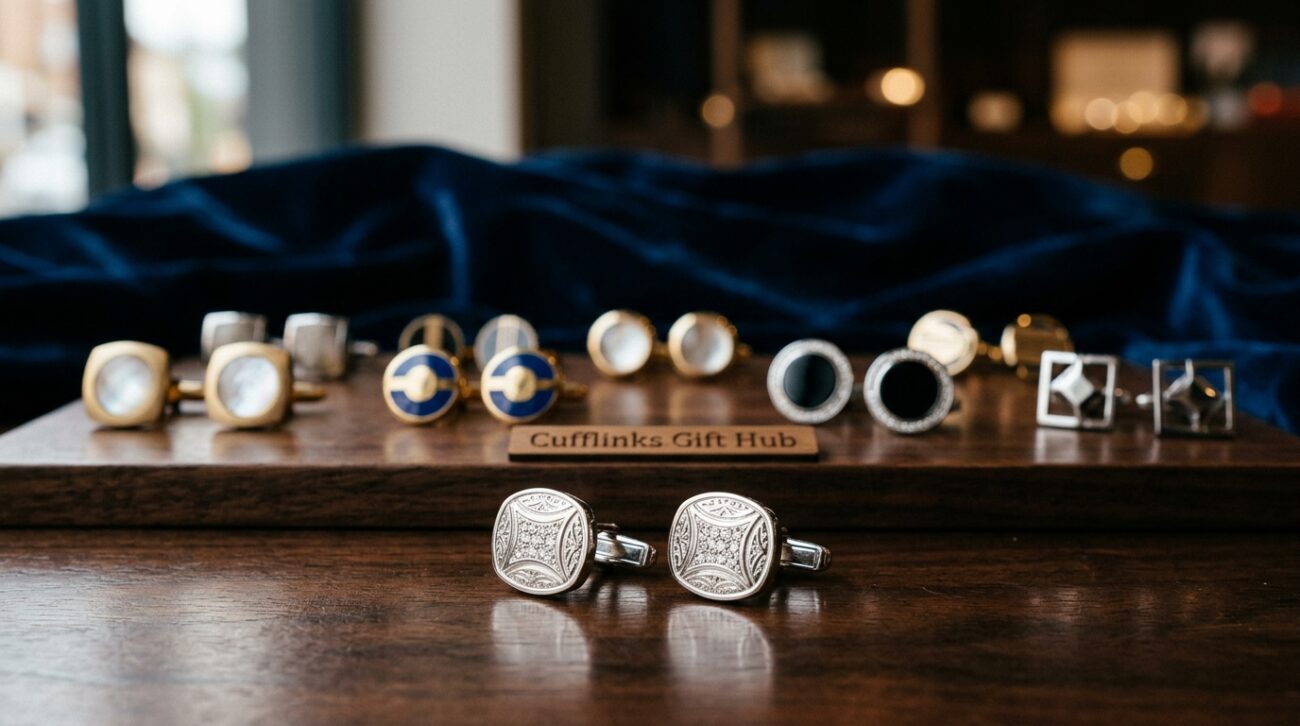
At black tie, restraint is the rule. Plain polished cufflinks in silver, white gold, or yellow gold are the correct choice, often paired with matching shirt studs for a fully cohesive formal front. Onyx inlay and dark or white mother-of-pearl are both acceptable accents. Novelty designs, bright colors, and heavily decorative pieces break the formality of a black-tie ensemble and draw attention for the wrong reasons. For a practical black-tie reference on cufflinks and studs, consult this tuxedo accessories guide.
Business formal and casual: where enamel enters
Formal calls for simple metal cufflinks, silver or gold, without heavy ornamentation. Casual opens the door to enamel, which is versatile, comes in a wide range of colors and designs, and sits comfortably in an office or professional social setting without looking out of place. This is also where subtly themed dress shirt cufflinks can start to appear without disrupting the overall polish of a well-dressed professional.
Social events and weddings: room for personality
At dinner parties, social gatherings, and weddings, there’s more creative latitude. The formality of the suit still sets the outer boundary, but within that space, more expressive designs, richer materials, and interest-themed cufflinks are entirely fair game. A guest at a summer wedding in a linen suit has far more room to play than a guest at a winter black-tie gala, and both men can dress appropriately while still showing genuine personal character.
Metal and color coordination: how to match without overthinking it
The goal isn’t to create a perfectly matching uniform. The goal is to look considered, as though these choices were made deliberately and not at random. Solid suit accessories coordination starts with one simple anchor point.
The watch-first rule for metal matching
Pick your watch, then match everything else to it. If the watch case is silver-toned, wear silver cufflinks and a silver tie bar. If it’s gold-toned, keep everything else in gold or warm-toned metals. Mixing clearly contrasting tones, gold cufflinks with a silver watch and a rose-gold tie bar, for instance, rarely looks intentional. Small differences in finish, brushed versus polished within the same metal family, are fine. Clearly different tones are not. For tips on how to match cufflinks and your watch, this short guide is practical and directly relevant to the watch-first approach.
Tie bars, suit color, and keeping the look cohesive
A tie bar should sit between the third and fourth shirt buttons and clip the tie to the shirt rather than simply holding its shape. It should run about 70 to 80 percent of the tie’s width. As a general rule, avoid wearing both a tie bar and a tie pin together, they serve the same function, and combining them looks cluttered rather than considered. On metal pairing by suit color: silver reads cooler and pairs naturally with grey, navy, and charcoal; gold reads warmer and works well with navy, brown, and earth-toned suits. Navy suits are notably flexible and work with both.
Making it personal: themed cufflinks as a style signature
The rules covered so far tell you how to dress correctly. This section is about dressing memorably. A well-cut suit in a traditional color with appropriate suit accessories signals that you understand the dress code, necessary, but not the whole story.
Why a personal detail matters in a classic formal look
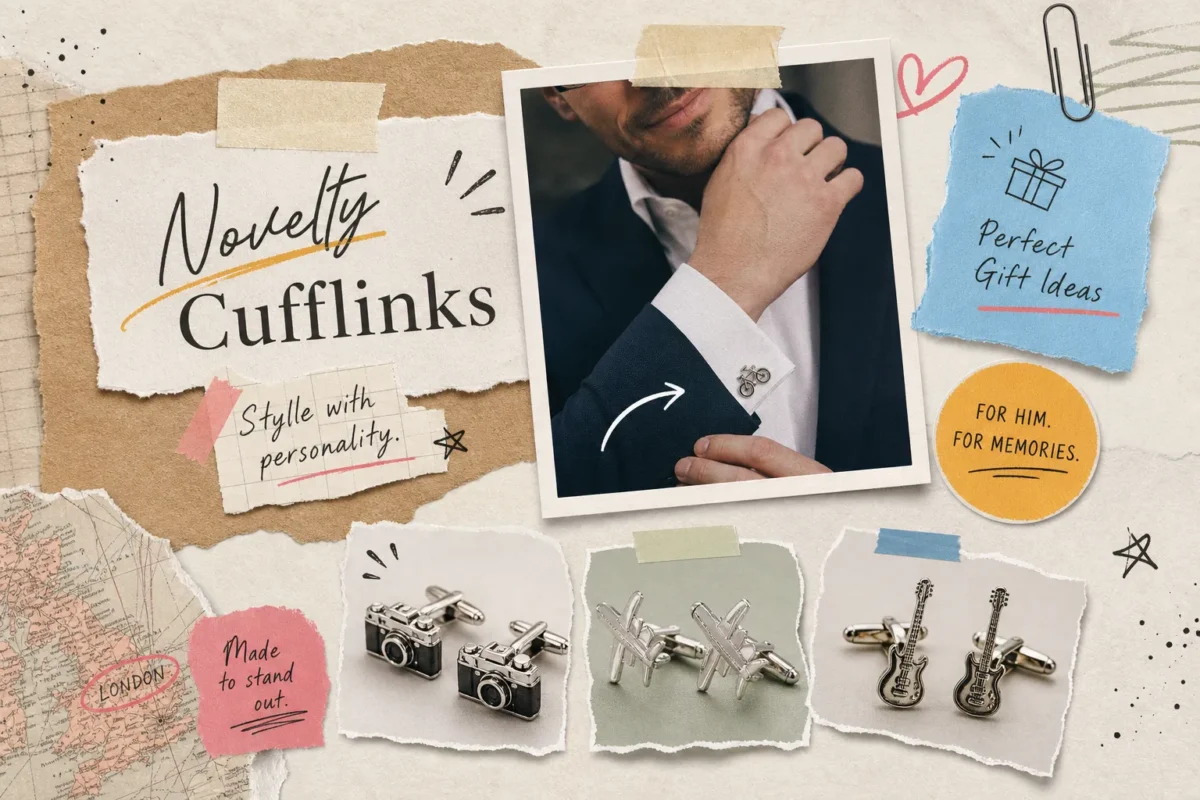
A pair of cufflinks that nods to your love of aviation, music, or sport tells people something about who you actually are. In formal contexts where almost everything is standardized, a small personal detail is memorable in the right way. This applies just as much to a groom personalising his wedding-day look as it does to a professional adding quiet character to a corporate appearance.
Where Cufflinks Gift Hub earns its place in the rotation
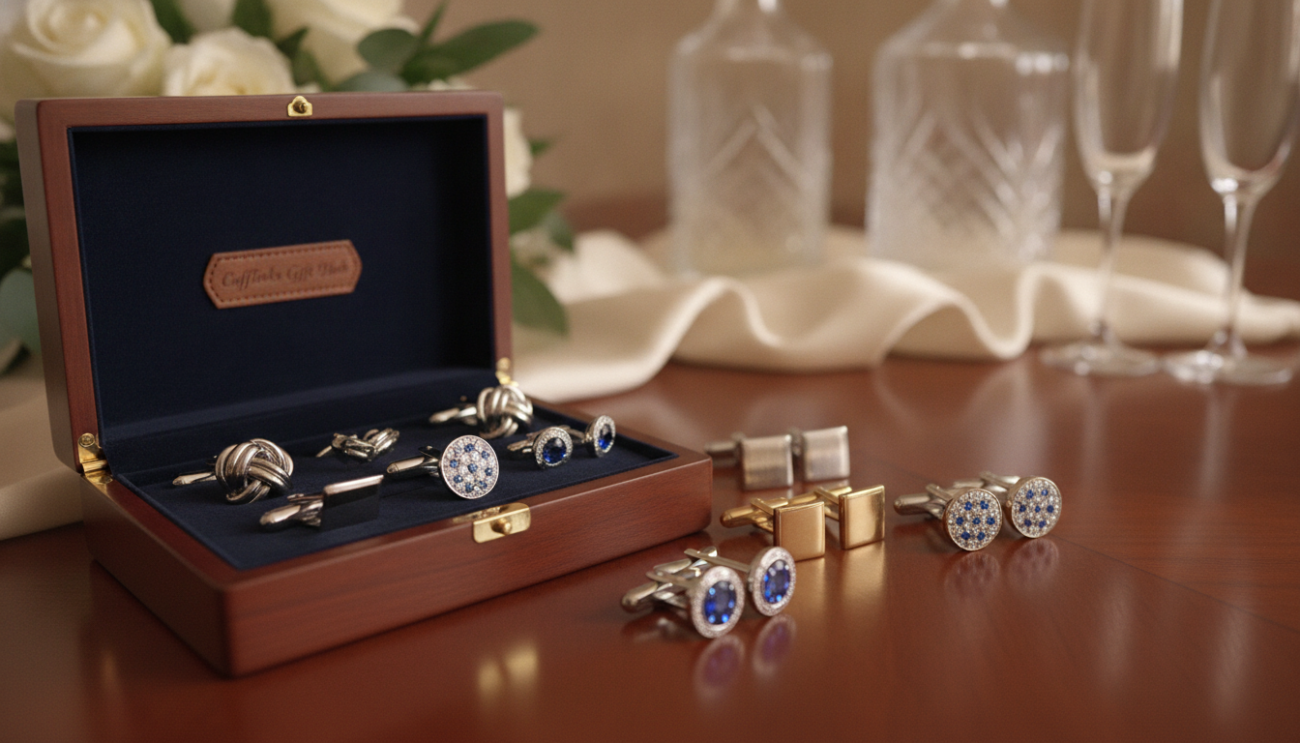
Cufflinks Gift Hub is a curated online shop built specifically around this idea. The catalog covers a wide range of themed designs across sports, music, travel, animals, novelty, and more, all at accessible price points that make building a small rotation genuinely practical. For someone who has mastered the basics of suit and shirt pairing, the next step is finding cufflinks that reflect a genuine interest rather than defaulting to the same plain silver rounds. Cufflinks Gift Hub is organised to make that search straightforward, whether you’re dressing for yourself or choosing a gift that will actually mean something to the man receiving it.
Common mistakes that quietly undermine an otherwise strong look
Getting the fundamentals right is half the job. Avoiding these errors is the other half.
Wearing cufflinks with the wrong shirt or letting them disappear
Barrel cuff shirts with sewn-on buttons aren’t designed for cufflinks and won’t hold them securely. Equally, if your jacket sleeves are too long, the cufflinks will sit entirely hidden underneath, which removes any reason for wearing them. Both problems are easy to avoid once you understand the shirt cuff requirements and the half-inch visibility rule covered earlier in this guide.
Over-accessorizing and clashing metals
More accessories do not produce more style. A tie bar, cufflinks, a pocket square, a lapel pin, a bold watch, and a statement ring worn simultaneously overwhelm the eye and cancel each other out. Choose two or three focal points and let them breathe. A polished look is built on consistency and a degree of restraint, not on the quantity of items worn. The aim is to look considered, not decorated.
Putting it all together: your complete guide to wearing cufflinks with a suit
Wearing cufflinks with a suit is a skill built on a few clear principles, not a complicated set of rules. Start with the right shirt, French cuffs for formality or convertible cuffs for flexibility. Fasten correctly so the decorative face is visible above the jacket sleeve. Match the style to the occasion’s formality, coordinate your metals with intention, and then use the remaining creative space to say something personal through the design you choose.
As this complete guide to wearing cufflinks with a suit shows, the mechanics take only a few wears to feel natural. The more lasting question is which cufflinks you actually reach for, and whether they reflect anything real about the person wearing them. For those ready to move beyond the basics, the themed collections at Cufflinks Gift Hub are worth exploring. Whether the interest is sport, music, or travel, there’s a design that will be worn rather than forgotten, and the site’s range and organisation make it a practical first stop whether you’re shopping for yourself or finding a gift with genuine meaning.