How Do I Choose Cufflinks for a Black Tie Event: Key Rules

For a black-tie event, choose understated cufflinks in mother of pearl, onyx or polished metal, and wear them with a double-cuff shirt. The right pair adds a small, personal touch to an evening outfit without taking attention from the whole. When we prepare for an important event, those finishing details can help us feel settled and well dressed. We can make a refined choice by checking the shirt, the invitation and the other visible hardware first. Let the shirt and the formality of the invitation guide the choice, then express personal taste through one considered detail.
Key Takeaways
- Choose a double cuff, also called a French cuff, for a traditional formal shirt.
- Mother of pearl, onyx and polished metal suit a restrained evening look.
- Keep the face modest in size and the design simple.
- Coordinate cufflinks with removable shirt studs and visible metal details.
- Check the fastening and comfort before dressing for the event.
- Wipe the pair after wear and store it away from other pieces.
What Does a Black-Tie Dress Code Call For?
A dinner invitation marked black tie calls for evening dress, not a dark business suit with an ordinary necktie. Traditionally, black tie means formal dress for events after 6 p.m., centred on a dinner jacket and black bow tie. Formal does not mean complicated: a clean, balanced outfit gives us a clear starting point.
A standard business suit is not the same as a dinner jacket. A classic men’s outfit has four main parts:
- Dinner jacket, also called a tuxedo.
- Formal trousers.
- Dress shirt.
- Black bow tie.
A male guest at a black-tie wedding follows the same core dress code as any other guest. The invitation may add a specific detail, such as a preferred colour or a stated variation, so its wording deserves attention.
When an invitation specifies black tie, choose a dinner jacket rather than treating a dark lounge suit as equivalent.
A black tie dress code is fairly strict about the overall evening-dress shape, even when small details allow personal taste. A regular business suit usually has different lapels, cloth and proportions from a dinner jacket. The difference remains clear beside formal trousers and a bow tie.
We can keep the outfit polished without adding extra accessories. A well-fitted jacket and trousers make a stronger impression than a collection of conspicuous extras. The black bow tie is part of the expected dress, not a detail to replace with an ordinary necktie.
The GQ guide to black tie describes the dinner jacket and bow tie as central parts of traditional evening dress. That classic outline gives guests a dependable way to read the invitation.
When an invitation specifies black tie, choose a dinner jacket rather than treating a dark lounge suit as equivalent.
Does Your Shirt Have the Right Cuffs?
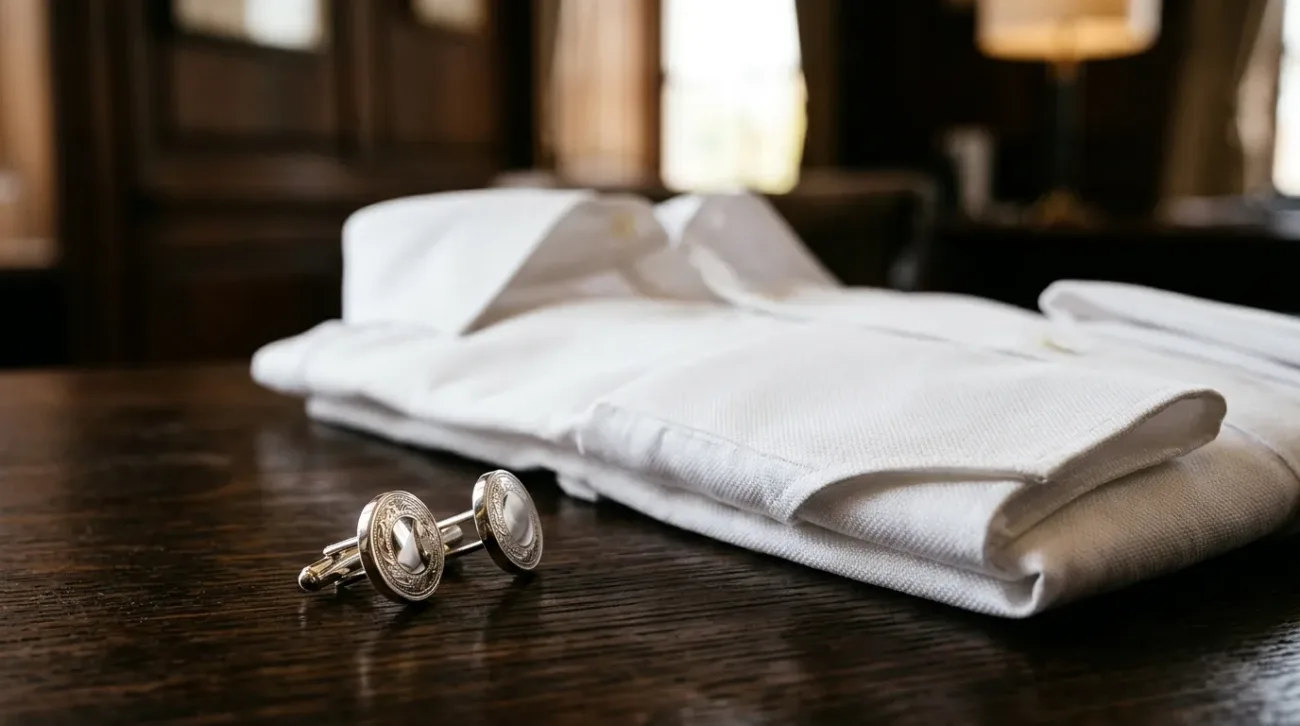
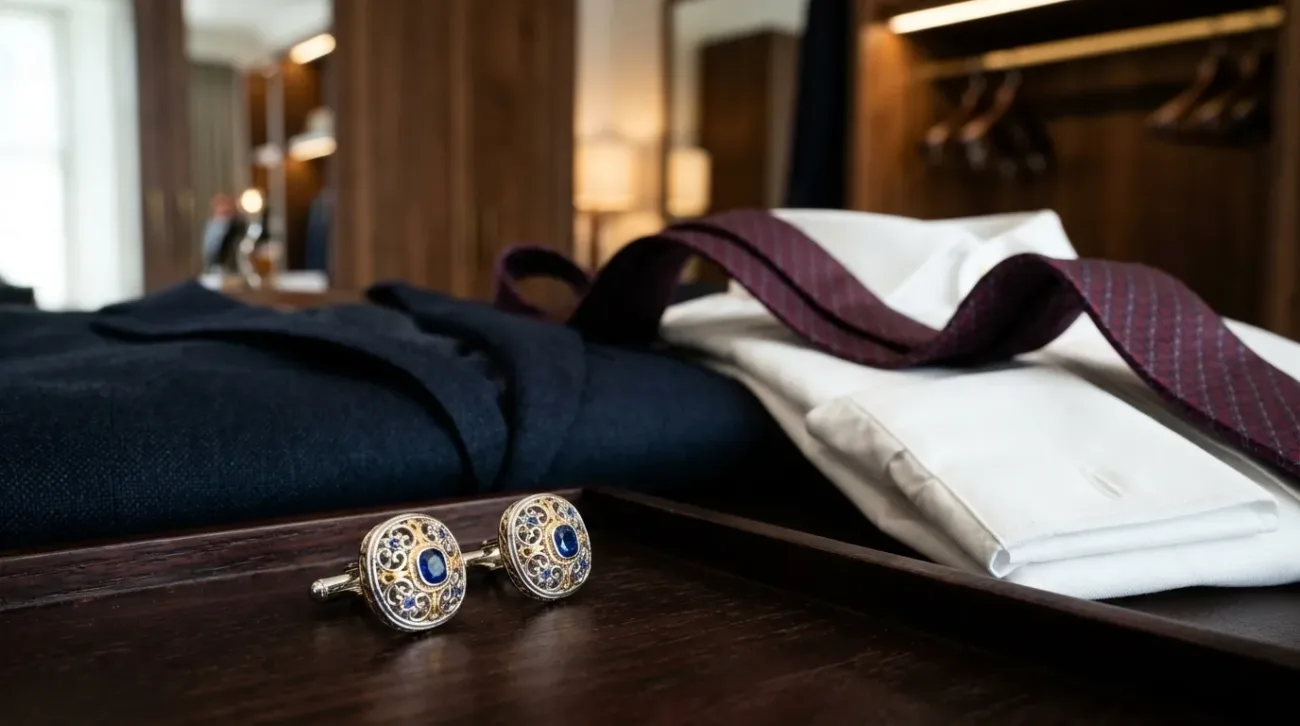
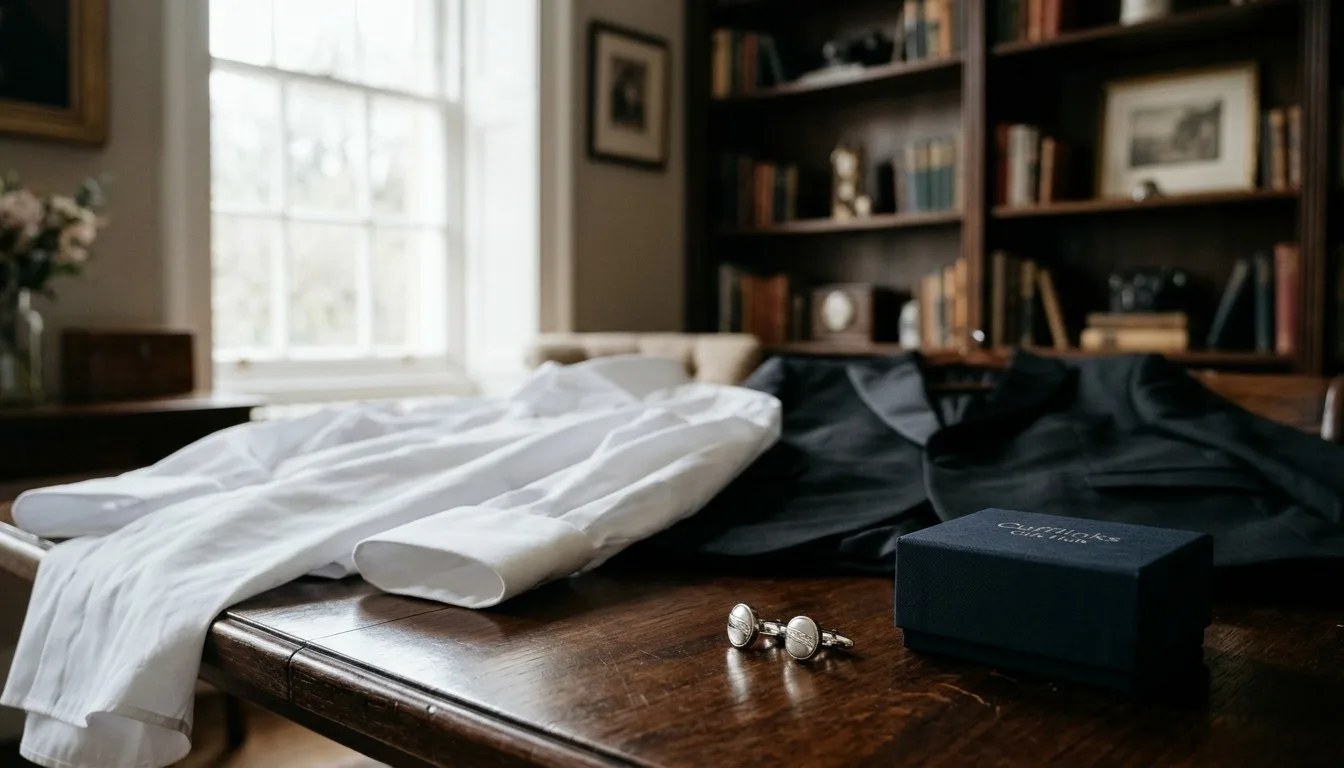
Before choosing a pair, check the shirt sleeve: black-tie shirts traditionally have double, or French, cuffs fastened with cufflinks. A double cuff is a shirt cuff folded back on itself, with aligned buttonholes on both sides for cufflinks. Four aligned holes let the cufflink pass through and hold the folded fabric closed.
Choose double cuffs for a traditional formal shirt, or convertible cuffs if you want the option of buttons. The right cuff must also sit comfortably around the wrist, without pulling or bunching.
Double Cuffs Need Cufflinks
Double cuffs use four aligned buttonholes, two on each side of the folded cuff. We pass the cufflink through all four holes to secure the layers together. This style leaves a neat, folded edge at the wrist and is a traditional choice for formal shirts.
Before dressing, check that the shirt has a hole on both sides of each cuff. The openings should line up when you fold the cuff back. If the fabric shifts or twists, the cufflink may not sit flat against the wrist.
Button and Convertible Cuffs
Standard button cuffs close with sewn-on buttons and are not made for cufflinks. A convertible cuff has a button and an extra buttonhole, so it can close with either a button or a cufflink. That choice can be useful when one shirt serves more than one kind of occasion.
Use these three checks before choosing cufflinks:
- Confirm that each cuff is double or convertible.
- Fold the cuff and check that the holes align.
- Check that the fabric rests comfortably around the wrist.
With double cuffs, the folded fabric should look smooth rather than tight. A cuff that feels restrictive may be the wrong size, even if the holes line up. We want enough room for natural movement, not a sleeve that strains when we bend the wrist.
If a shirt has ordinary button cuffs, choose a compatible shirt instead of forcing a cufflink through.
Which Materials Suit Black-Tie Cufflinks?
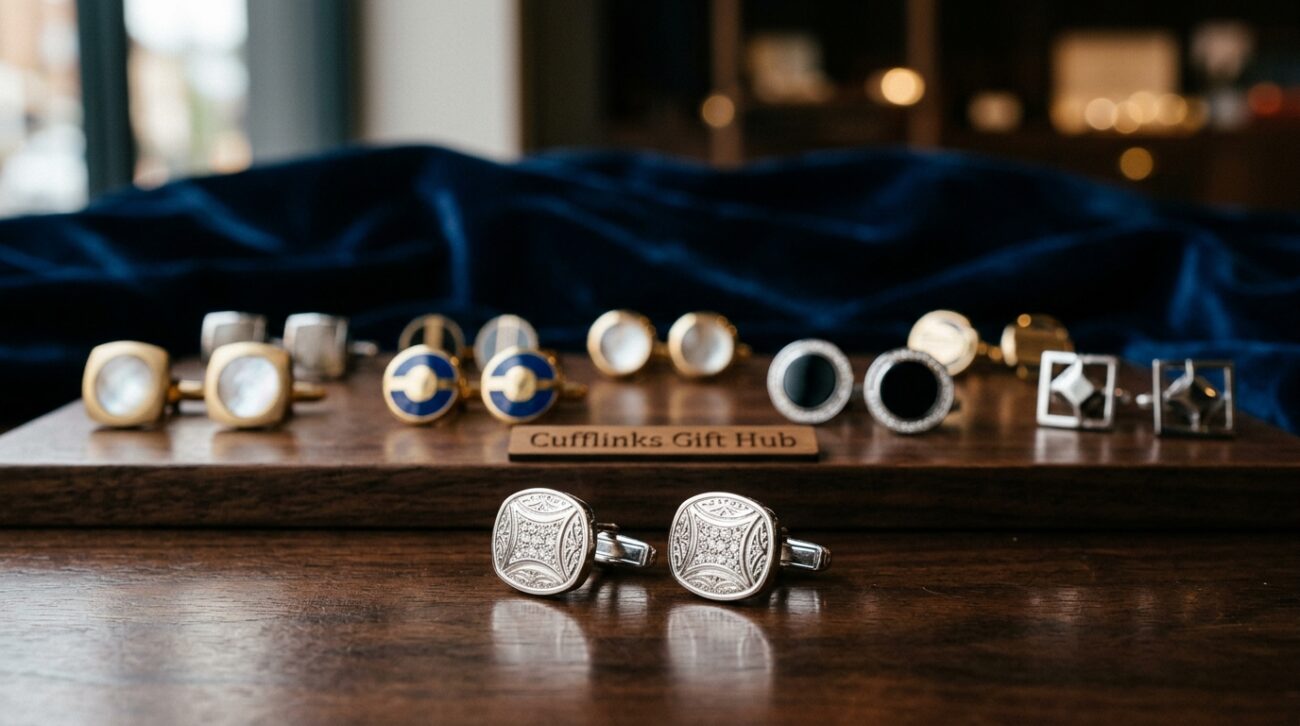
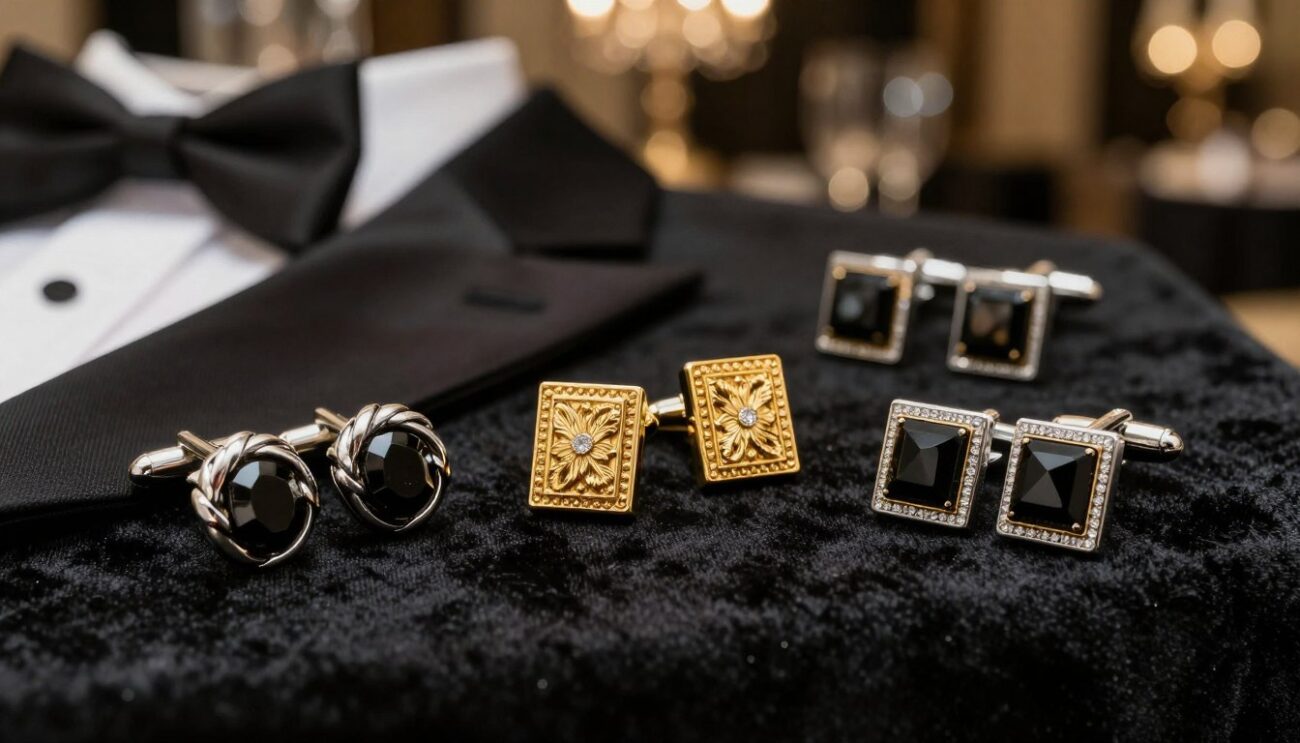
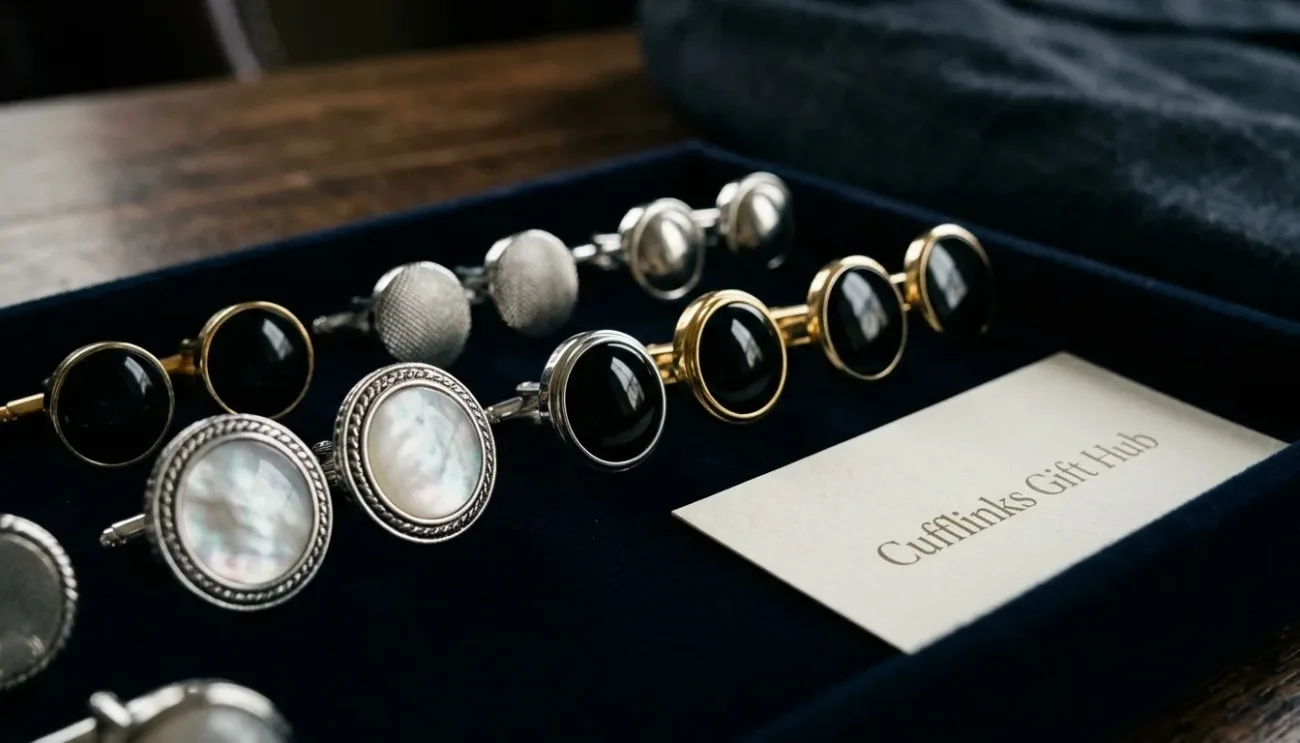
For a formal evening shirt, mother of pearl and black onyx are established decorative choices, while polished metal offers a quieter alternative. Mother of pearl has a soft, changing sheen; onyx gives the face a dark, clear contrast. Polished metal can keep the detail simple when we prefer a less decorative finish.
Mother of pearl and onyx are classic faces, while plain polished metal is the quieter choice. A silver or white gold setting suits many classic formal combinations. Gold also works when the other visible hardware has a gold tone.
| Material | Visual character | Black-tie suitability | Coordination note |
|---|---|---|---|
| Mother of pearl | Soft, iridescent face | Classic evening choice | Pairs with silver or white gold settings |
| Black onyx | Dark, high-contrast face | Classic evening choice | Works with polished silver-toned metal |
| Polished silver or white gold | Cool, bright surface | Quiet formal choice | Keep other visible hardware silver-toned |
| Gold | Warm, bright surface | Formal when restrained | Best with other gold-toned details |
The face is the decorative front of a cufflink. In mother of pearl, each face catches light differently, so the effect feels subtle rather than flat. Onyx gives a sharper outline against a pale shirt, making it a natural pick for a more graphic look.
Metal choices shape the tone of the pair. A polished silver finish looks crisp beside many evening shirts, while white gold offers a similar cool tone. Gold can bring warmth, though it should sit comfortably with the rest of the visible hardware.
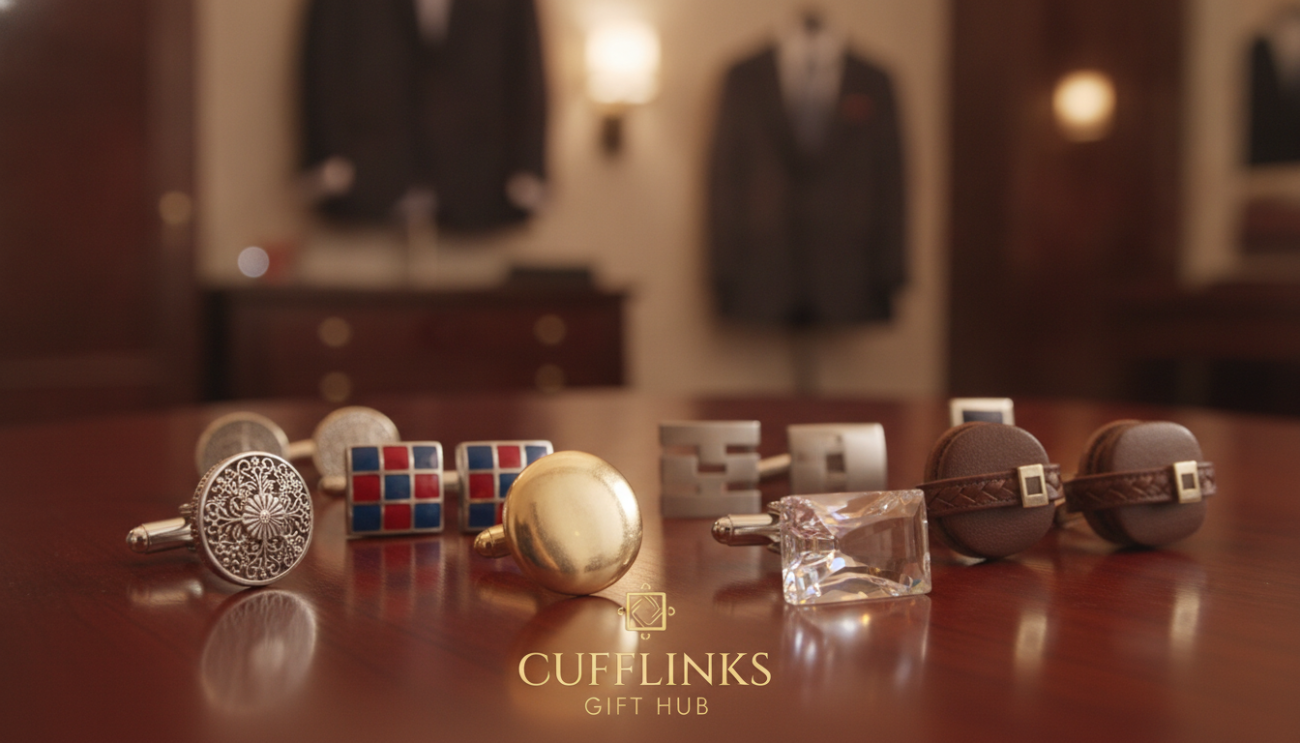
We can compare more cufflink materials and their formal uses when deciding which finish suits the occasion. The event and venue can shape how decorative a material feels, while the design remains just as important.
Choose the face for its understated character, then reserve the exact hardware match for the rest of the outfit.
How Do I Choose Cufflinks for a Black Tie Event?
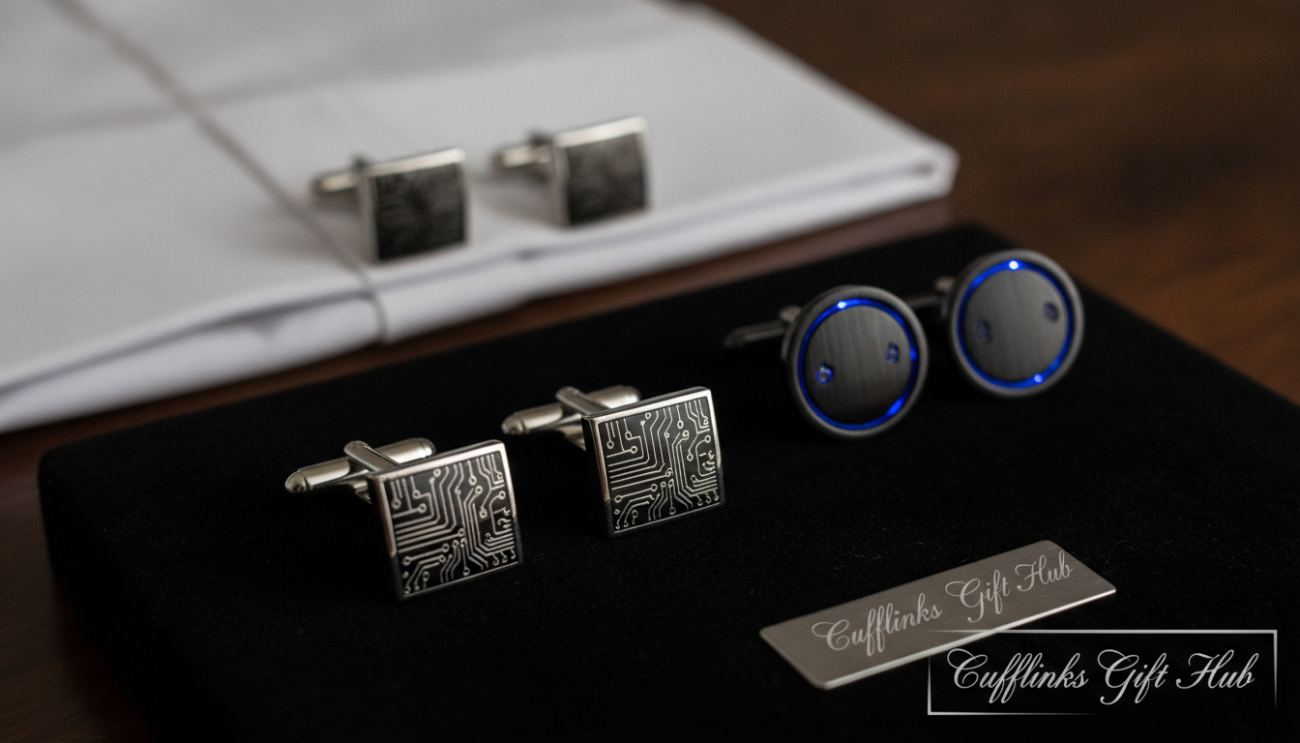
A restrained round, square or oval face usually complements evening dress better than a novelty motif or oversized sculptural shape. These classic designs give the wrist a clean line and let the rest of the outfit hold its own. Simple geometry makes a deliberate impression without looking plain.
A cufflink face about 18 mm or less helps keep the design in proportion with a dress-shirt cuff. The cufflink should sit neatly beneath the jacket sleeve, with about 1-1.5 cm of shirt cuff showing.
Choose a Classic, Restrained Design
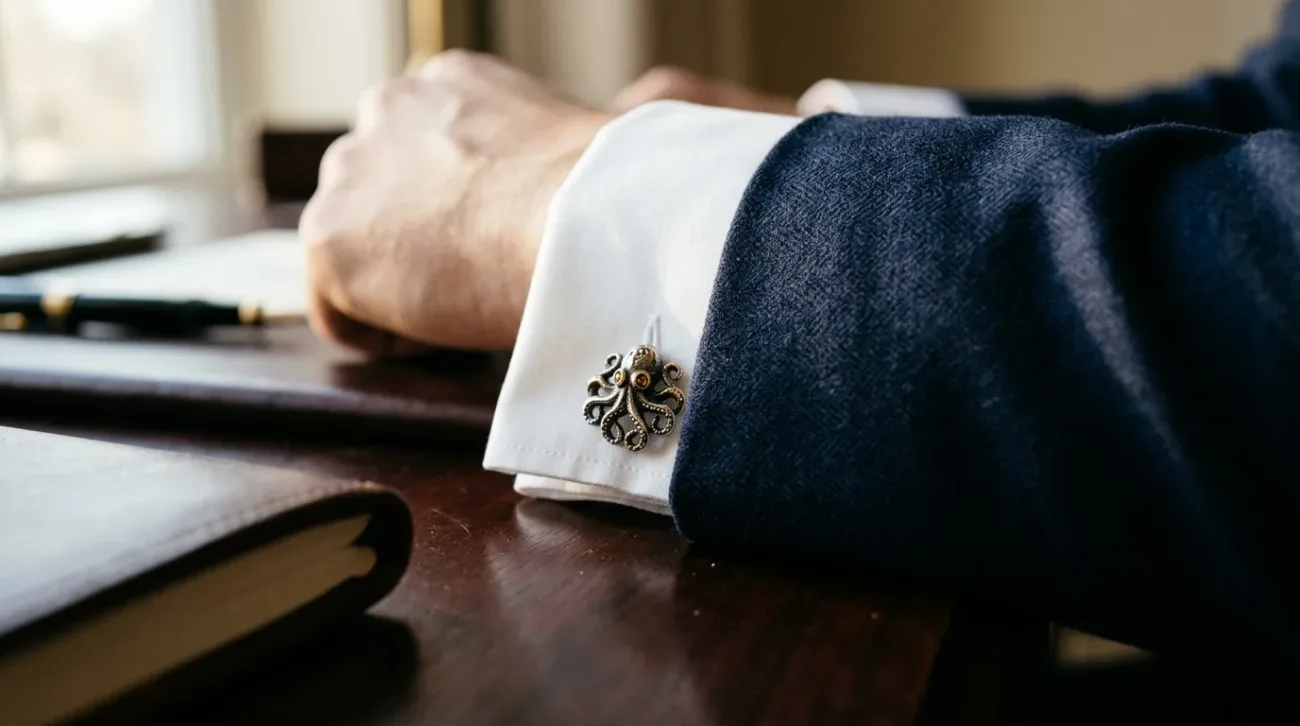
Round, square and oval faces have a lasting appeal because their lines are clear and balanced. A smooth face can feel formal without drawing the eye away from the dinner jacket. We can still show personal taste through a finish or a small detail.
For conventional black tie, avoid these designs:
- Novelty motifs.
- Bright statement colours.
- Oversized sculptural shapes.
- Finishes that appear casual.
These choices can make the accessory compete with the evening outfit. A personal detail works best when it feels connected to the whole, rather than appearing as a separate statement.
Keep the Scale in Proportion
A face about 18 mm or less is a useful guide for a dress-shirt cuff. Larger pieces may catch on the jacket sleeve or pull the eye down to the wrist. The aim is a clear glimpse of the cufflink, not a piece that takes over the sleeve.
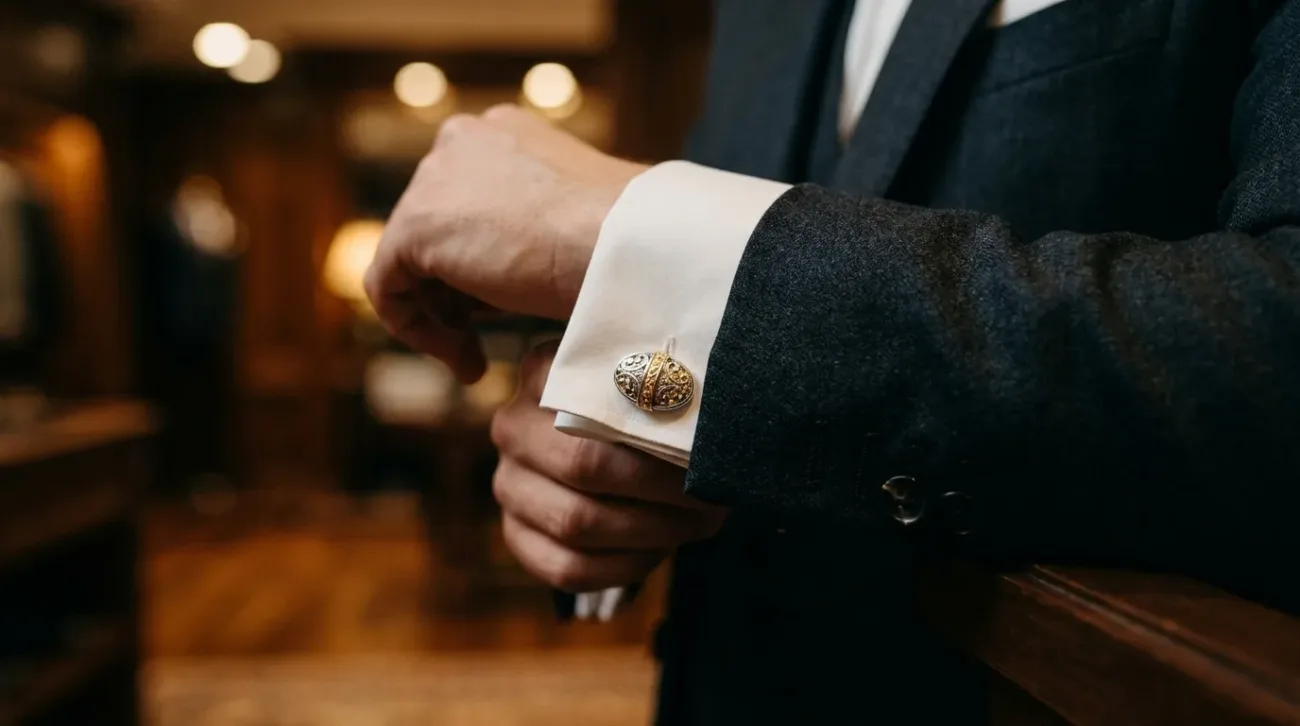
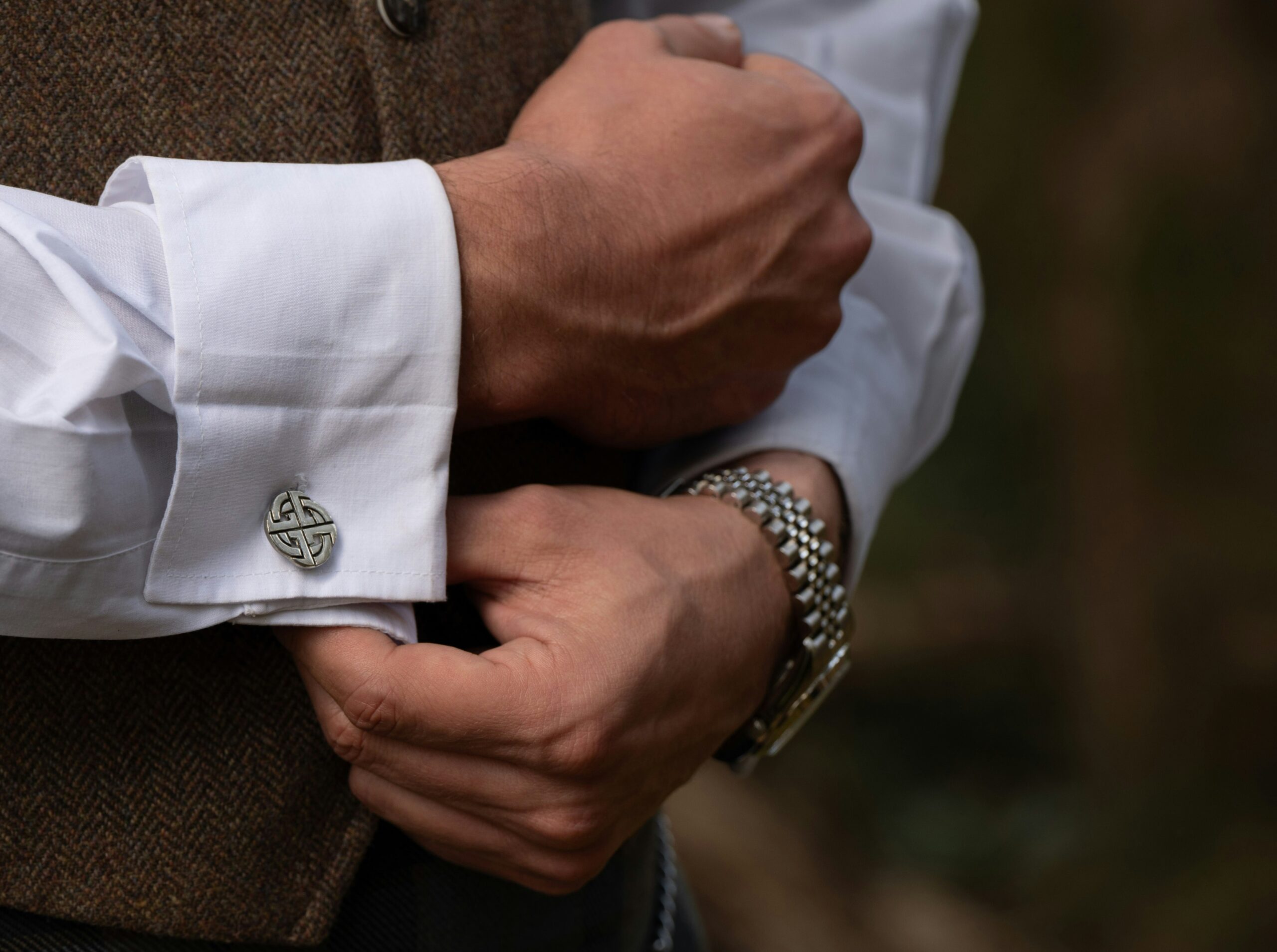
When we let our arms rest naturally at our sides, the face should be visible without sitting far beyond the cuff. About 1-1.5 cm of shirt cuff can show below a jacket sleeve. That small opening gives the cufflink room to appear as part of the outfit.
Think about scale alongside the jacket’s shape and sleeve length. A narrow sleeve can make a large face feel even bigger, while a compact design sits more quietly. We are aiming for a considered detail that feels right when standing and moving.
Keep the cufflink visible at the wrist without allowing it to become the most prominent detail.
How Should Cufflinks Coordinate with Shirt Studs and a Watch?
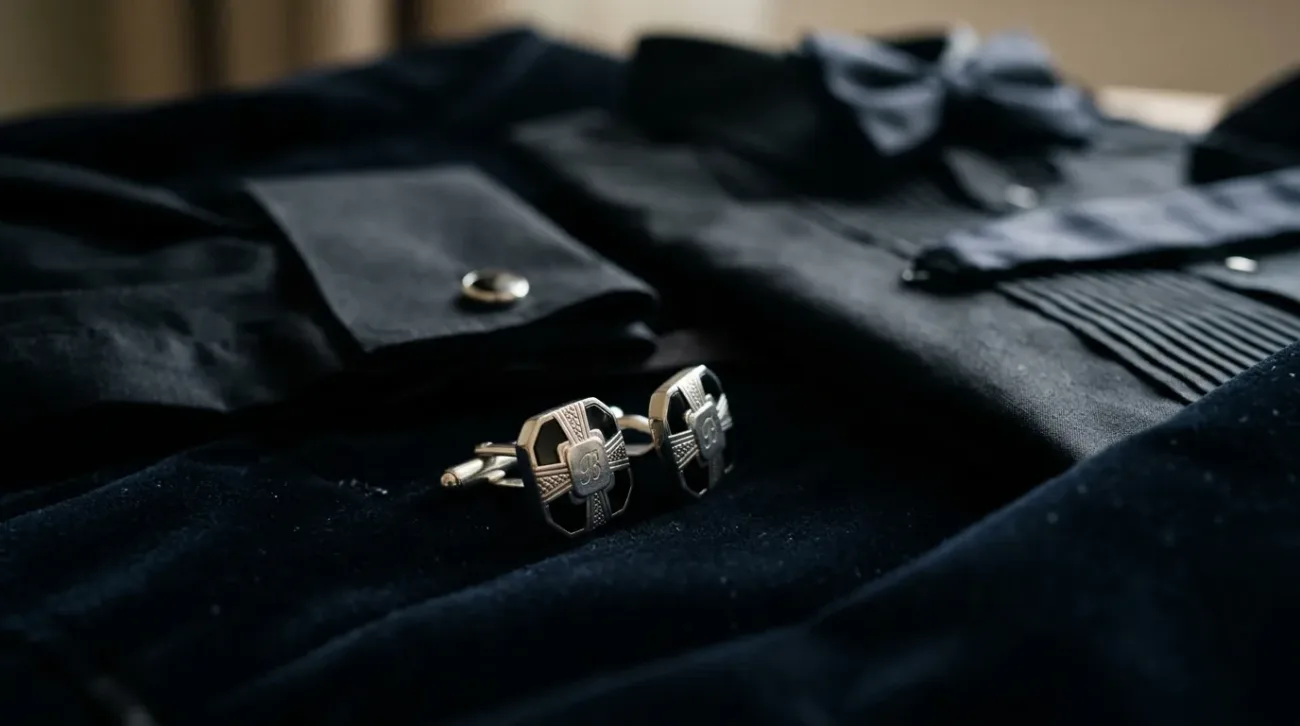
Start with the shirt front: when it uses removable studs, choose cufflinks that match them in metal and finish. A close match gives the shirt a calm, connected look. The shirt front is the natural place to begin because its studs sit near the bow tie.
Keep the visible hardware within one metal family, such as silver-toned or gold-toned. The watch case, belt buckle and tie bar can follow the same choice without requiring every accessory to look identical.
Match the Shirt Studs
Removable studs and cufflinks appear together on a formal shirt, so their metal and finish should match or coordinate closely. A set made for the shirt can make this easy. If the pieces are separate, compare them in the same light before dressing.
The shirt studs do not need to copy the exact shape of the cufflink face. A shared metal tone and similar finish are enough to create a clear link. We can keep the combination refined without making every part of the outfit a matched set.
Keep Visible Metals Cohesive
Once the shirt details feel settled, look at the watch case and any other visible metal. A silver-toned watch case can sit well with silver cufflinks and a silver tie bar. Gold-toned pieces can work together when they share a warm finish.
The belt buckle may be less visible under a dinner jacket, but it still belongs to the outfit. If several metal details show, a shared tone helps them feel planned. A single metal family is a useful guide, not a rule that every small fitting must match.
Stone colour does not need to echo every garment. A dark face can add contrast to a pale shirt while silver-toned settings tie it to the watch. The aim is a coherent outfit, not an exact colour match from head to wrist.
When the shirt has studs, a coordinated cufflink-and-stud set is the simplest route to a unified formal look.
Which Cufflink Fastening Works Best for Evening Wear?
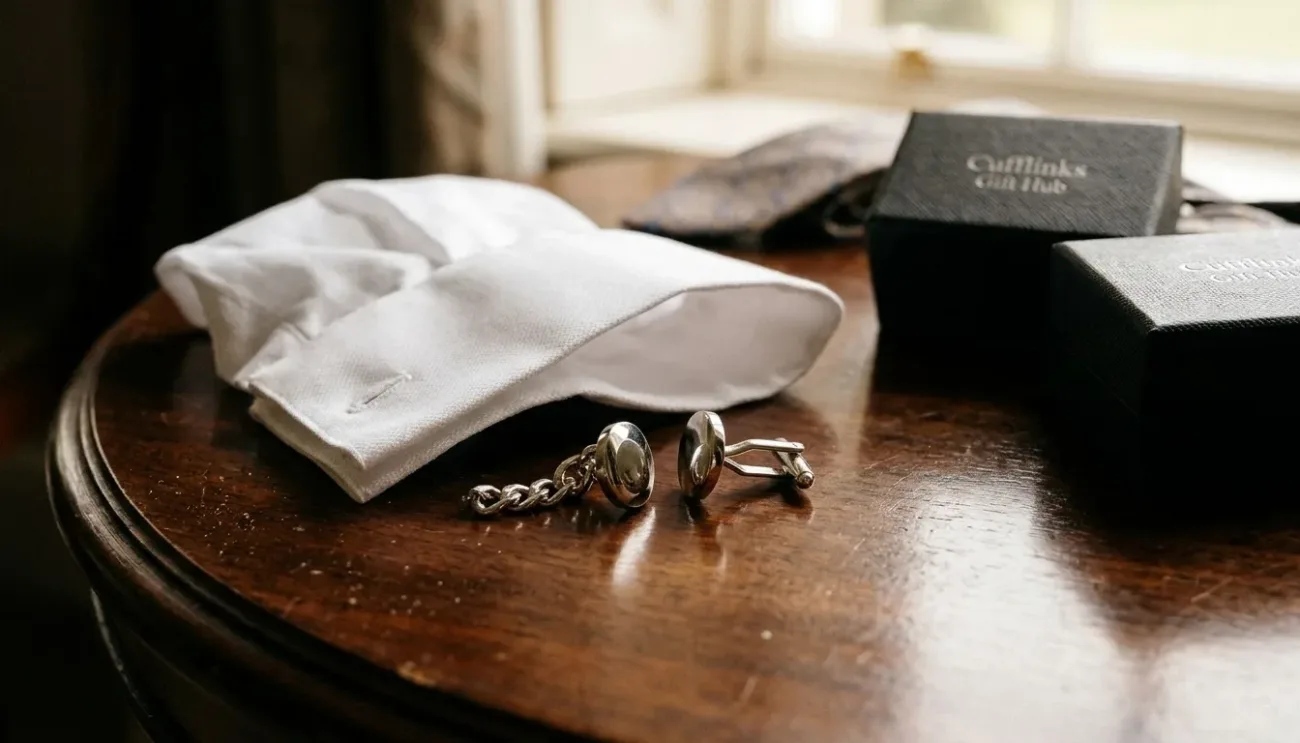
Choose a chain link for traditional character, or a bullet or whale-back toggle when straightforward fastening matters; all can suit evening wear when kept discreet. A cufflink has a decorative face, a post and a fastening. The fastening affects how the pair closes and how easy it feels to put on.
Chain links are the traditional choice, while bullet and whale backs offer convenient toggle closures. Silk knots have a softer, more informal character and suit less formal occasions best.
| Type | How it fastens | Practical character | Evening suitability |
|---|---|---|---|
| Chain link | Two faces join by a short chain | Flexible, traditional closure | Formal and traditional |
| Bullet back | Cylindrical toggle turns to lock | Straightforward to handle | Suitable when discreet |
| Whale back | Broad tail flips 90 degrees | Simple toggle closure | Suitable when discreet |
| Silk knot | Two silk-wrapped balls join by cord | Soft and informal | Less formal character |
With a chain link, two decorative faces sit on either side of the cuff, joined by a short chain. A bullet back has a cylindrical toggle that turns to lock. A whale back uses a broad tail that flips 90 degrees across the post.
To wear cufflinks, fold the cuff into position and bring the buttonholes together. Pass the post through the aligned holes, then secure the fastening. Keep the decorative face pointing outwards so it shows when your arms rest naturally at your sides.
Silk knots use two silk-wrapped balls joined by a cord. Their softer look can be a pleasant choice for a less formal shirt, but the finish feels less traditional beside evening dress. The shape of the fastening should not distract from the face.
Before leaving, confirm the decorative face points outwards with your arms relaxed.
How Can You Judge Cufflink Quality and Fit?
A well-made pair should feel solid, fasten securely and look carefully finished on both sides. A reassuring weight can suggest good construction, though weight alone cannot prove quality. Look and feel together give us a more useful first check than shine alone.
A polished appearance alone does not show that a cufflink is soundly made. Check the moving parts, the reverse and the way the pair sits in the shirt cuff.
Check the Weight and Moving Parts
Hold each cufflink in your hand and notice whether it feels solid rather than flimsy. A very light piece may still be well made, so use weight as one clue, not the only test. The two cufflinks should also feel consistent as a pair.
If the fastening has a toggle, work it a dozen times. It should move smoothly and hold its position without wobbling. A loose joint or rough movement can make the pair less secure during wear.
Take a moment to try the fastening more than once. A stiff part may feel awkward when you are dressing in a hurry, while a loose one can shift in the cuff. The motion should feel clear and controlled in the hand.
Inspect the Finish and Fit
Turn the cufflink over and inspect the reverse as carefully as the face. A well-finished pair has neat edges and a tidy back, not rough spots hidden from view. Fine work should continue around the whole piece.
Then test the fit in the shirt. The cufflink should sit securely without pulling the fabric or making the wrist feel tight. If the cloth gathers around the holes, the post or face may not suit that cuff.
Comfort matters during a long evening. Raise and lower your arms, then bend the wrist as you would while greeting someone or holding a glass. The cufflink should stay in place without catching on the shirt.
Choose craftsmanship you can feel in the hand, not simply a finish that photographs well.
A clean shine can be appealing, but it says little about the fastening or the reverse. Check how the parts move and how the piece rests against the fabric before you settle on a pair.
How Do You Care for Cufflinks After the Event?
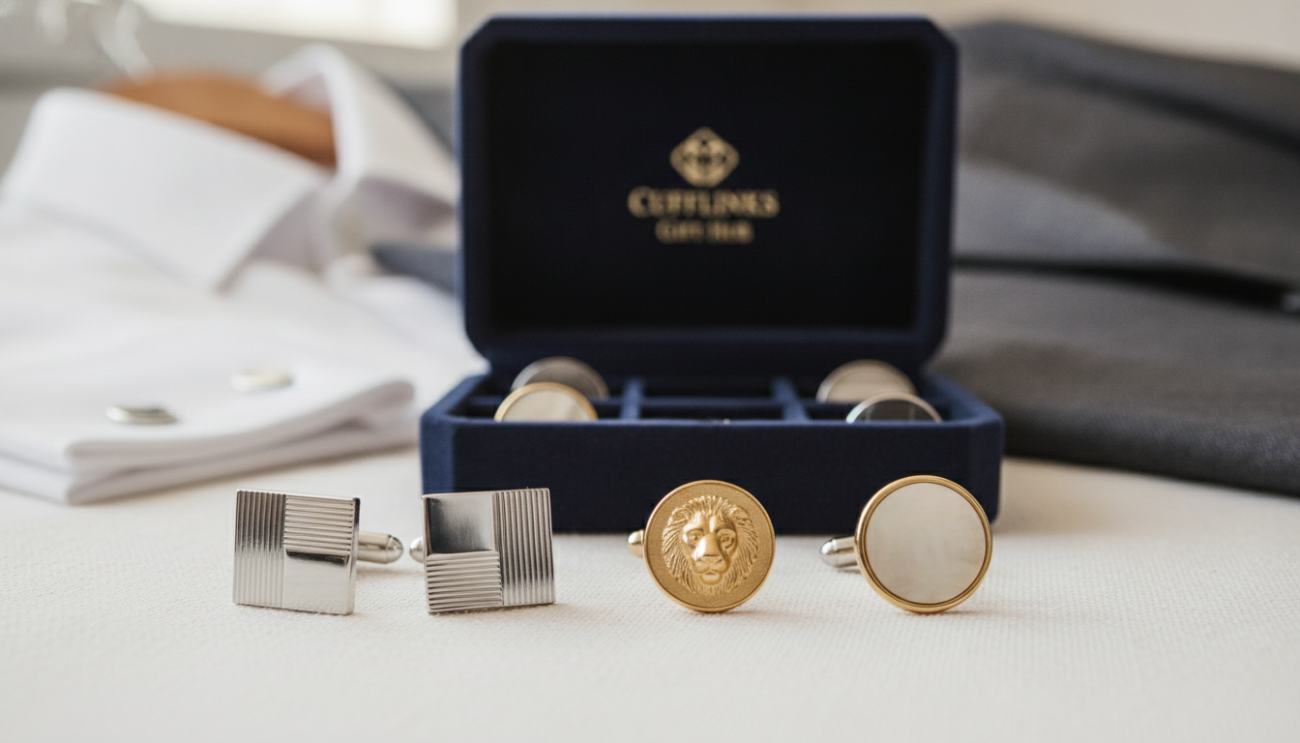
A brief wipe and protected storage after each wear help preserve a polished finish. Use a soft cloth to remove marks from the face and fastening. Gentle care is especially helpful when a pair has a delicate inlay.
Store each pair in its own lined compartment to help prevent scratches. Keep cufflinks away from fragrance, hair products and other chemicals, which can affect some metal finishes.
Make a habit of wiping the pair before putting it away. A soft, clean cloth can remove traces left by handling without rubbing the surface harshly. Delicate inlays need a light touch rather than abrasive cleaning.
A lined box or a case with separate compartments keeps each pair apart from other accessories. Loose storage can let metal pieces knock together and scratch. If you have several pairs, return each one to its own space after wear.
Apply fragrance and hair products before dressing, then put on the cufflinks afterwards. This order helps reduce contact with products that may affect some finishes. It also keeps the shirt and accessories free from stray spray.
Use a box that closes and protects the pair from dust and knocks. Keep it in a dry place, away from toiletries and cleaning products. A steady storage routine makes the next occasion easier, since each pair stays together and ready to wear.
Remove cufflinks before laundering the shirt, then return each pair to its own compartment.
Conclusion
The most assured black-tie choice is the one that feels considered rather than conspicuous. A compatible cuff and a restrained design give us a dependable base, while small details can still show personal taste.
Before dressing, lay out the shirt studs, watch and cufflinks together, then choose the pair that brings them into quiet harmony.
FAQ
What dress code is black tie?
Can you wear cufflinks with a tuxedo?
Which way to have cufflinks?
What is black tie in 2026?
What should men wear to a black tie event?
How strict is the black tie dress code?
Can you wear a normal suit to a black tie event male?
Sources
- The GQ Guide to Black Tie – It explains traditional black-tie attire, including the dinner jacket, bow tie and formal accessories.