Blog
Black-tie cufflinks: how to get every detail right


Black-tie cufflinks: how to get every detail right
At a black-tie event, every square centimetre of a man’s outfit is deliberate, especially the black tie cufflinks at the cuff. The bow tie, the shirt front, the jacket lapel: each element either confirms your polish or quietly undermines it. Black tie is a highly codified dress code, and there is very little room for improvisation.
Cufflinks sit against a white dress shirt and a dark tuxedo jacket, which means they catch both the light and the eye more than almost any other accessory you will wear that evening. The stakes are real, but the rules are clear once you know them. This guide covers the materials that work, the closure styles worth understanding, how to match everything coherently, where to shop in the UK at different budgets, and how to keep your cufflinks in excellent condition long after the event.
Why formal cufflinks carry more weight than everyday ones
Black tie is a codified dress code with a specific silhouette: a black dinner jacket or tuxedo, a pleated or marcella dress shirt, a bow tie, and formal black trousers. Every element is prescribed. Unlike business formal or smart casual, black tie leaves almost no room for personality dressing. The accessories exist to serve the look rather than express individuality, which is precisely why the black tie cufflink choice matters so much. It is one of the very few small decisions a man actually gets to make.
Against a stark white shirt and a dark jacket, cufflinks are highly visible. A novelty or casual pair will look conspicuous in a way it simply would not in a business setting. The standard is understated elegance: discreet in size, refined in finish, traditional in material. Getting this right reads as effortless. Getting it wrong is surprisingly noticeable, and in a room full of people dressed impeccably, it will be noticed.
Black tie cufflinks: the materials that genuinely work
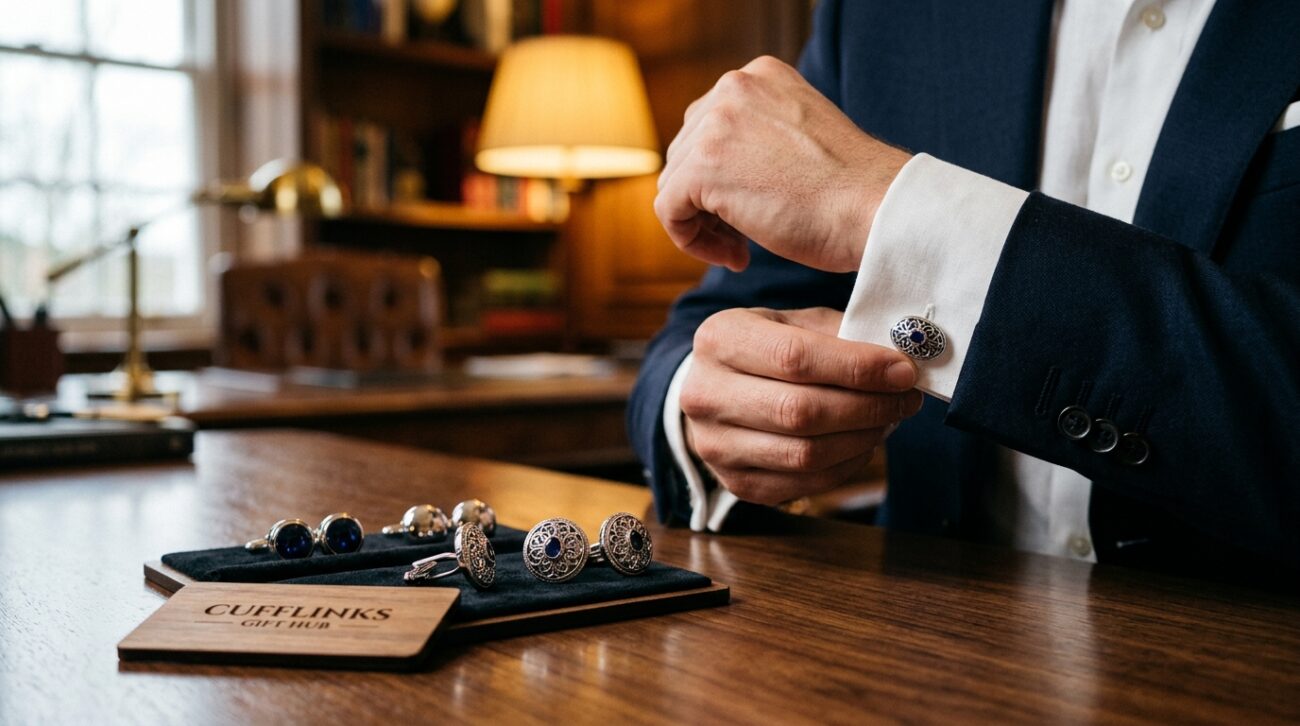
Mother of pearl is one of the most favoured choices for formal evening wear. It has a luminous, soft shimmer that catches candlelight and event lighting without ever looking garish, and it has been associated with evening dress for generations. Onyx reads as the bolder alternative: deeply black, polished, and strongly graphic against a white shirt front. It is a long-established material in formal jewellery, valued for precisely this kind of high-contrast elegance. Both materials are firmly at home at a black-tie dinner.
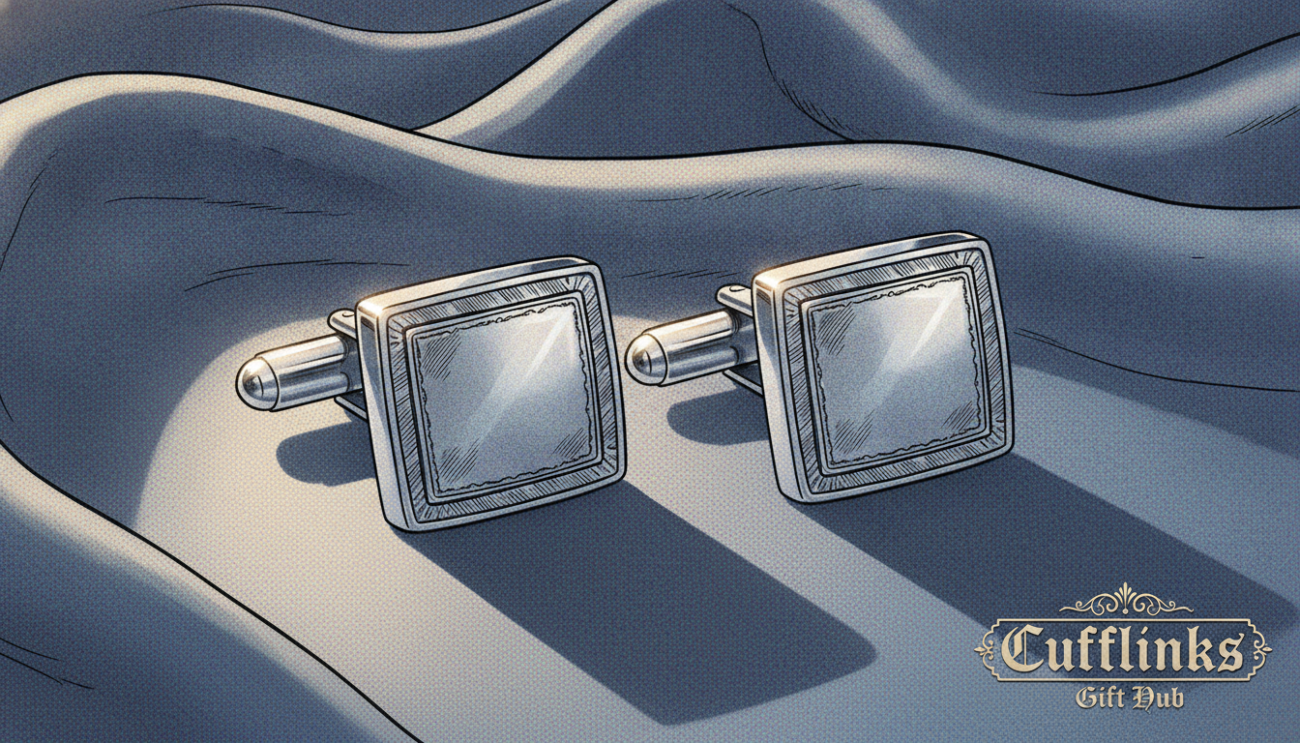
Silver and white metal are the most versatile options because they coordinate easily with other tuxedo accessories. Sterling silver or rhodium-plated cufflinks suit virtually every black tie combination. Gold works well when the rest of the accessories, including shirt studs and watch hardware, are also gold-toned; it reads warmer and slightly more traditional. Hematite and abalone are also accepted evening materials for those who want a subtle variation on the classics without straying outside convention.
Finishes and styles to avoid
Novelty designs, enamel cartoon motifs, and brightly coloured statement pieces belong at a garden party, not a formal dinner. Oversized or sculptural designs look out of proportion on a dress shirt; scale and restraint are the two guiding principles for the evening. Matte or brushed-only finishes can read as too casual for black tie. A polished finish is the safer call whenever you are uncertain.
Closure styles: which one suits you and the occasion
A bullet-back closure (also called a torpedo-back) uses a small cylindrical toggle that sits flat when fastened. It is discreet, sits close to the cuff, and is one of the most popular closure styles for formal wear. A whale-back (or swivel-back) uses a flat, paddle-shaped toggle that flips 90 degrees to lock. Both closures are fully appropriate for black tie; the choice comes down entirely to personal preference and how your shirt cuff opens.
For more traditionally minded dressers, T-bar closures use a rigid bar connected by a short post. They have a clean, architecturally simple look that suits the formality of a tuxedo very well. Chain-link cufflinks join two decorative faces with a short chain, allowing the face to sit flat regardless of cuff position. All four styles work for formal occasions, the deciding factor is whichever fastens comfortably with your particular shirt cuff.
Matching your black tie cufflinks to the rest of the formal look
French cuffs, also called double cuffs, are the standard for black tie. They fold back and require cufflinks to fasten: a button cuff is not appropriate for a proper black-tie shirt. Marcella shirts have a textured piqué front that adds visual interest; the cufflinks should be clean and formal to complement rather than compete with that texture. Pleated-front shirts already carry surface detail, so the cufflinks should stay equally restrained.
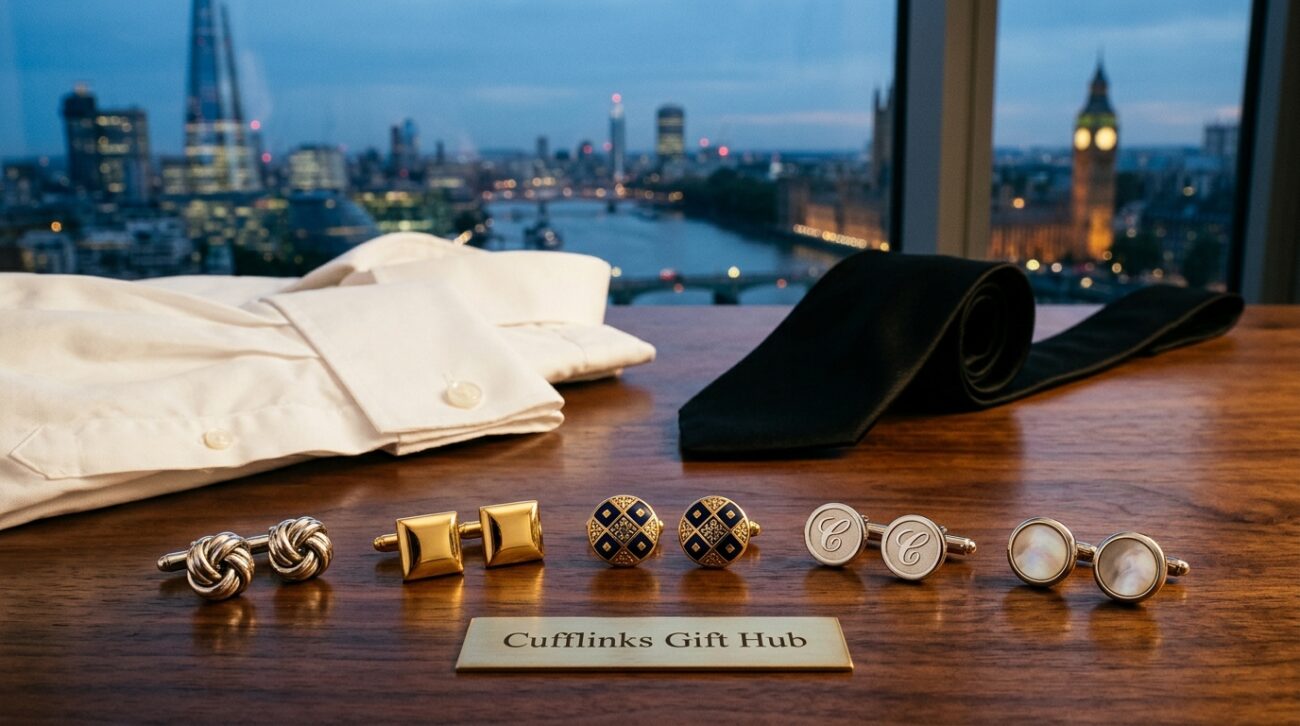
Across all three shirt types, a mother-of-pearl or onyx pair works particularly well; keep the cufflinks polished, formal, and proportional to the cuff size. The primary matching rule for black tie is that cufflinks and shirt studs should match or closely coordinate. This matters more than matching the watch. A matched set sold together as a cufflink and studs set removes the guesswork entirely and is widely considered the ideal solution for formal evenings. If you would like a practical how-to on wearing cufflinks with different shirt styles, this concise guide on how to wear cufflinks is a useful reference.
If you wear a watch, keep the metal tone consistent: silver cufflinks pair naturally with a white-dial dress watch, while gold dress studs and cufflinks coordinate with a gold-trim timepiece. The watch should sit slim under the cuff and read as a subtle, practical accessory rather than a statement piece. Avoid mixing metals unless every element of the outfit is intentionally balanced; when in doubt, stay within one metal family throughout.
Where to find black tie cufflinks at every budget in the UK
At the budget end, under £50, you will find silver-plated or rhodium-plated sets that look the part and handle a formal evening well. The trade-off is that plated finishes require more careful handling over time to maintain their appearance. The mid-range, roughly £50 to £300, is where sterling silver, genuine mother-of-pearl inlays, and onyx settings become properly accessible. Pairs at this level feel substantial in the hand, sit confidently on the cuff, and hold up well with regular wear. At luxury price points above £300, expect solid precious metals, hallmarked silver, and hand-finished gemstone settings from heritage British and international jewellers; for examples of established British makers and their formal collections see heritage British cufflink collections.
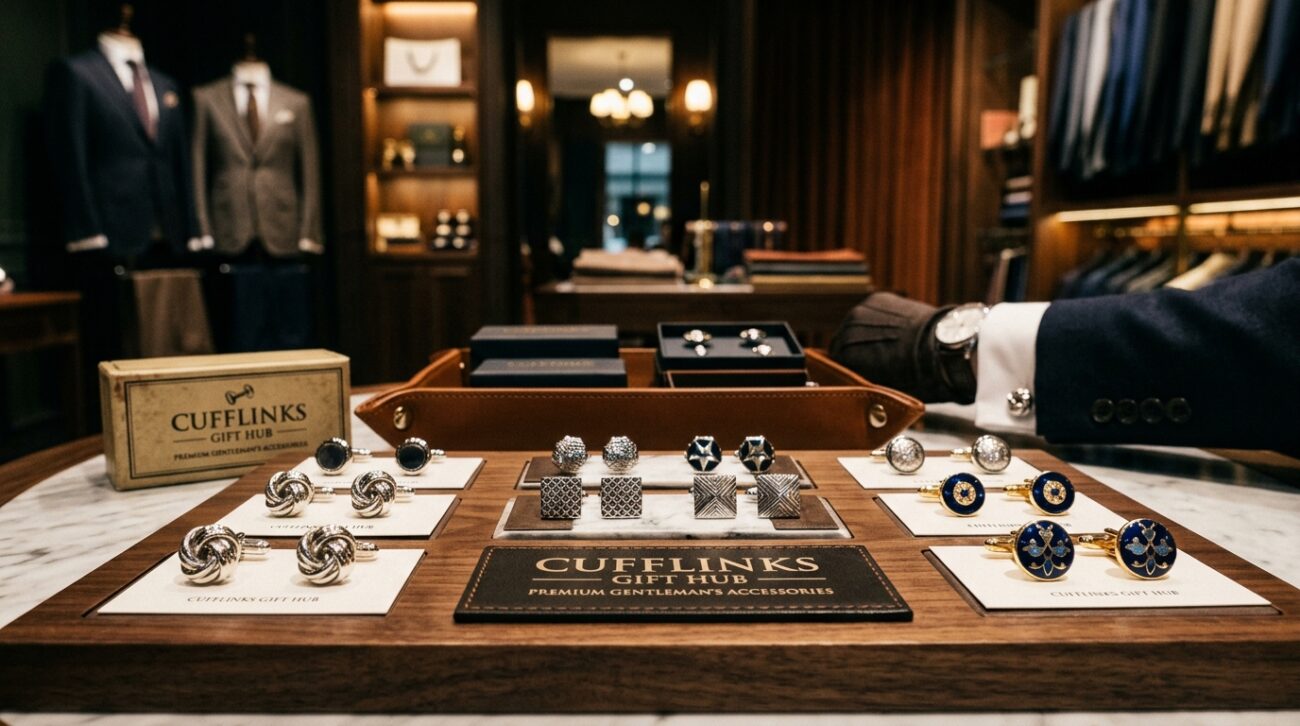
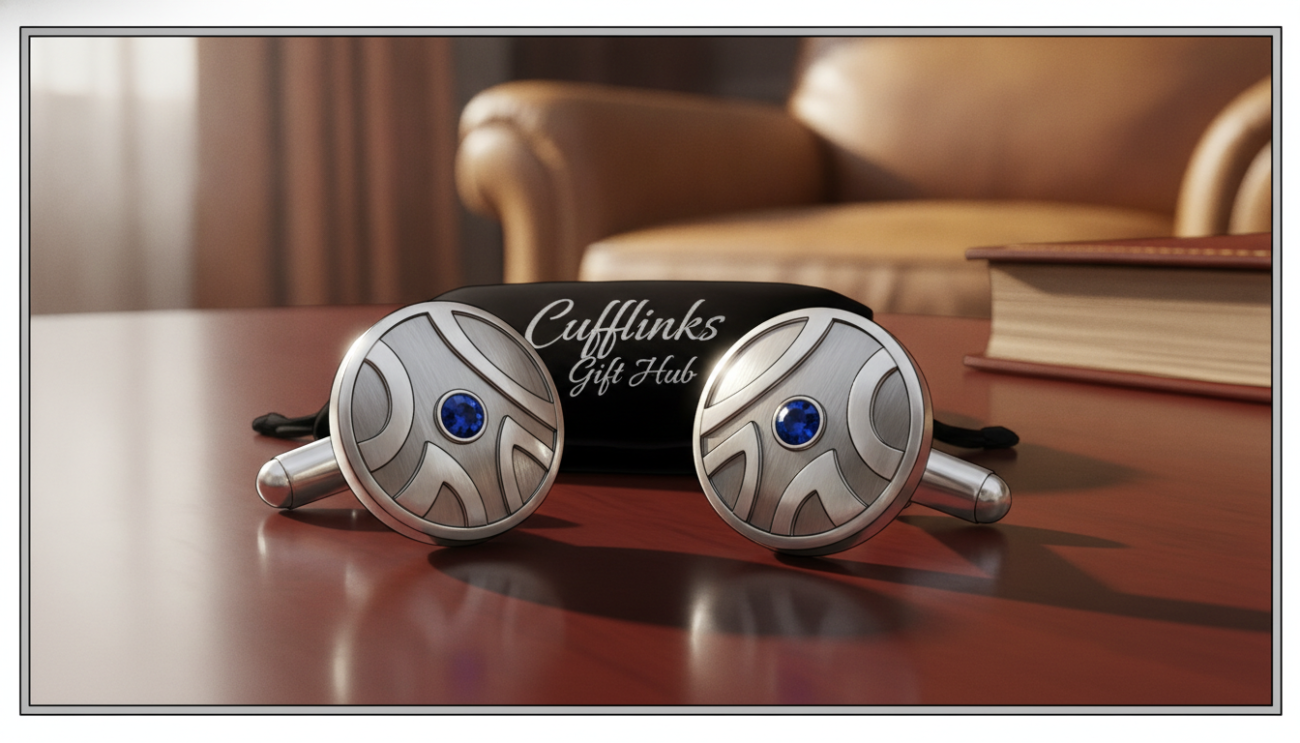
For buyers who want genuinely elegant, event-ready tuxedo cufflinks without navigating large department stores, Cufflinks Gifthub is worth a direct visit. The collection includes classic formal designs, mother-of-pearl faces, onyx-set pairs, and polished silver options, positioned at mid-range UK price points. The gift-ready presentation also makes it a practical choice if the cufflinks are for a groom, a groomsman, or a guest attending their first black-tie event. Browse the formal and dress cufflinks section directly to filter by occasion rather than scrolling through novelty designs.
Caring for your formal cufflinks by material
Silver and white metals
Silver tarnishes with air exposure over time. Wipe regularly with a soft polishing cloth and use a gentle silver cleaner for more stubborn tarnish; dry completely before storing, and keep pairs in an anti-tarnish pouch between events to slow oxidation.
Delicate materials: mother of pearl and onyx
Mother of pearl is delicate: use a slightly damp soft cloth only. No soaking, no ultrasonic cleaners, no harsh chemicals. The surface can cloud or crack if treated harshly, so less is always more with this material. Onyx also needs gentle handling. A soft dry or barely damp cloth is sufficient; avoid abrasive cloths that can scratch the polished surface.
Gold and enamel finishes
Gold-plated or gold-fill pairs respond well to mild soap and warm water; rinse and dry thoroughly with a soft cloth straight away to prevent water marks. Any enamel-detail pieces should only ever be wiped with a damp soft cloth, as polish will strip the finish over time.
For storage, individual compartments in a cufflink box prevent pairs from rubbing against each other and scratching. Keep them in a cool, dry place away from humidity and direct sunlight; both accelerate tarnish on silver and can fade or crack delicate stone inlays over years of storage. With the right care, a quality pair of formal cufflinks can look as good years down the line as the night you first wore them. For practical cleaning and maintenance tips, see this article on how to clean and maintain your cufflinks for longevity.
The right cufflinks make the whole outfit land
Choosing black tie cufflinks comes down to three decisions: material, closure style, and how they coordinate with the wider formal look. The traditional choices, mother of pearl, onyx, silver, gold, endure because they genuinely work in a formal evening context. They are not arbitrary rules; they are the result of generations of considered formal dressing. For a broader historical and practical perspective, this definitive guide to cufflinks is an informative resource.
Whether you are dressing for a one-off dinner or investing in a pair to wear for years, this one small detail registers with everyone in the room, even those who could not articulate exactly why your outfit works so well. For elegant, event-ready formal cufflinks at considered UK price points, explore the dress cufflinks collection at Cufflinks Gifthub, where everything arrives occasion-ready and gift-ready in equal measure.
The next black-tie invitation deserves a cufflink choice made with this level of care.