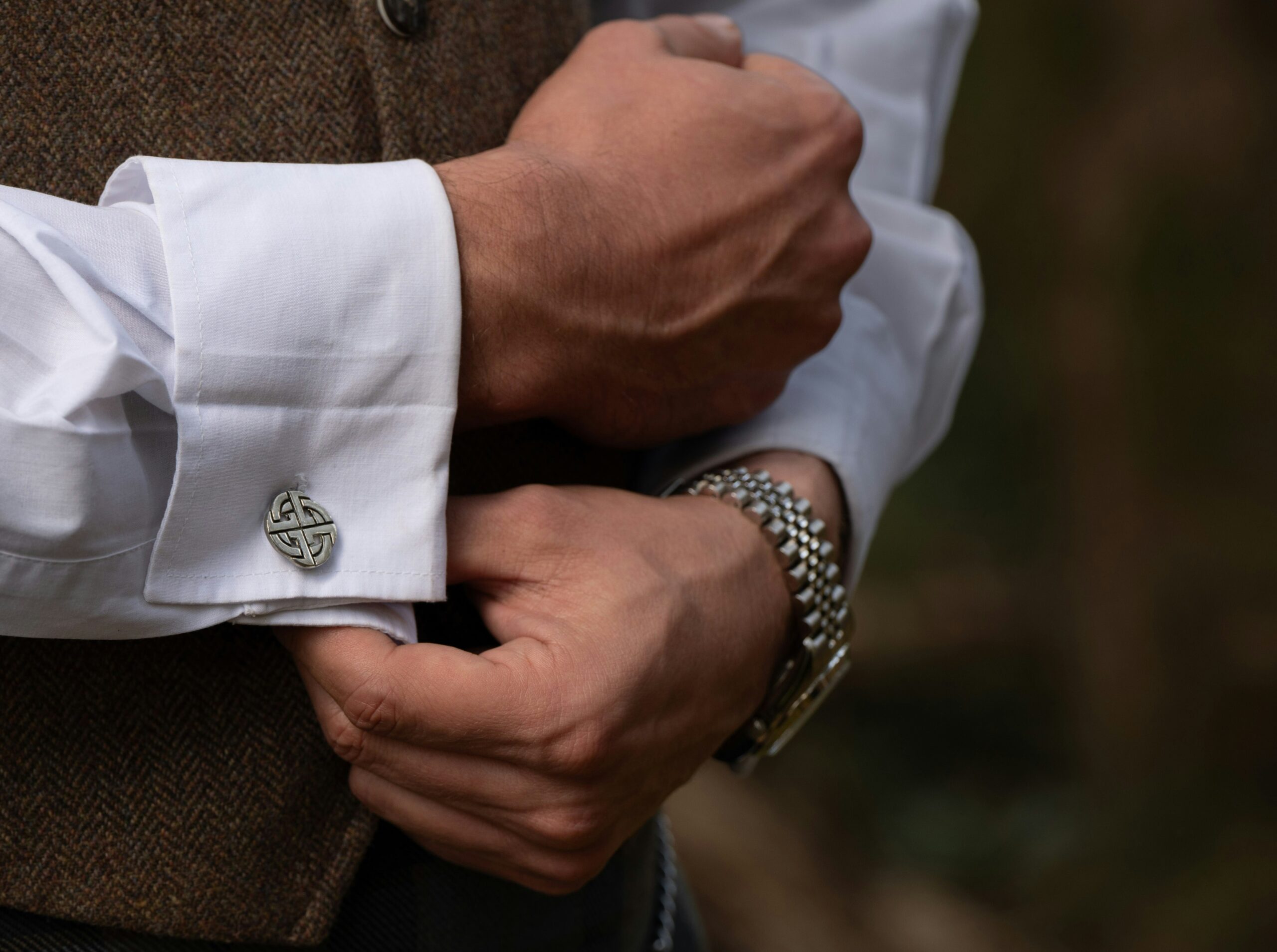
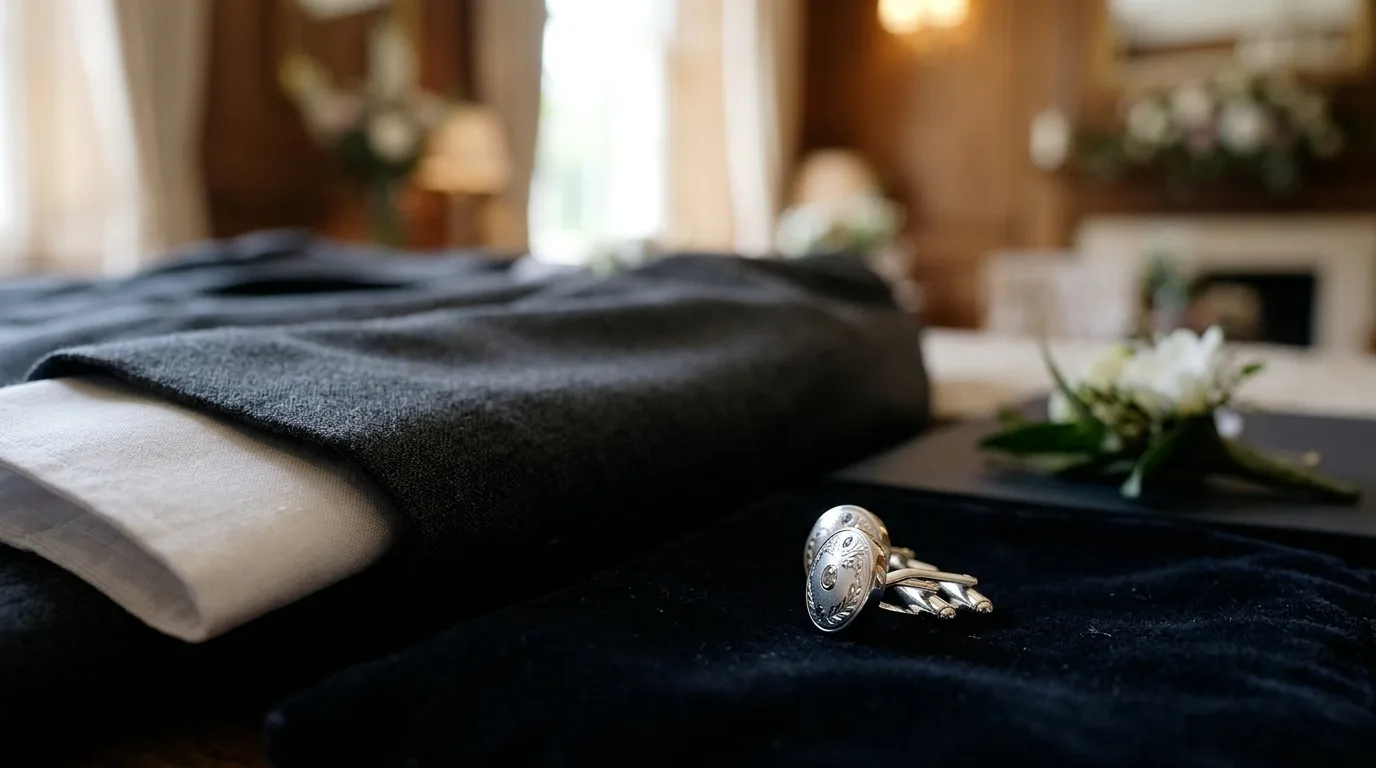
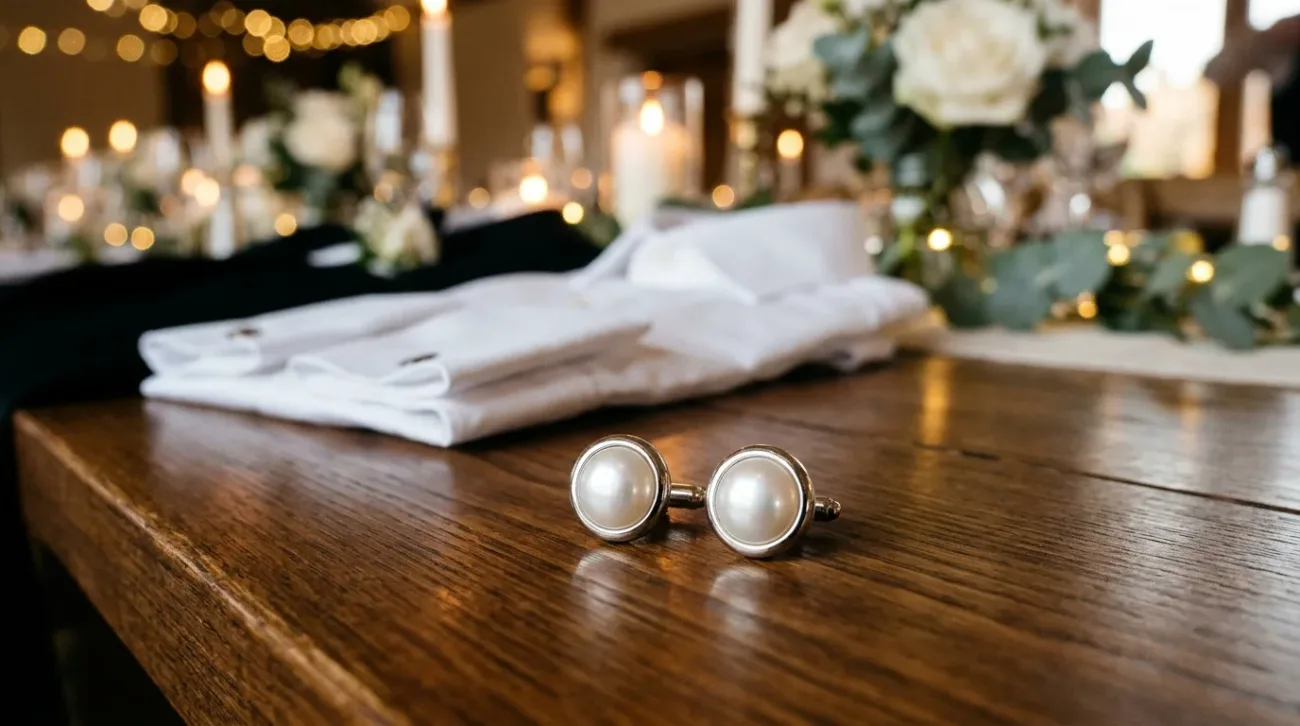
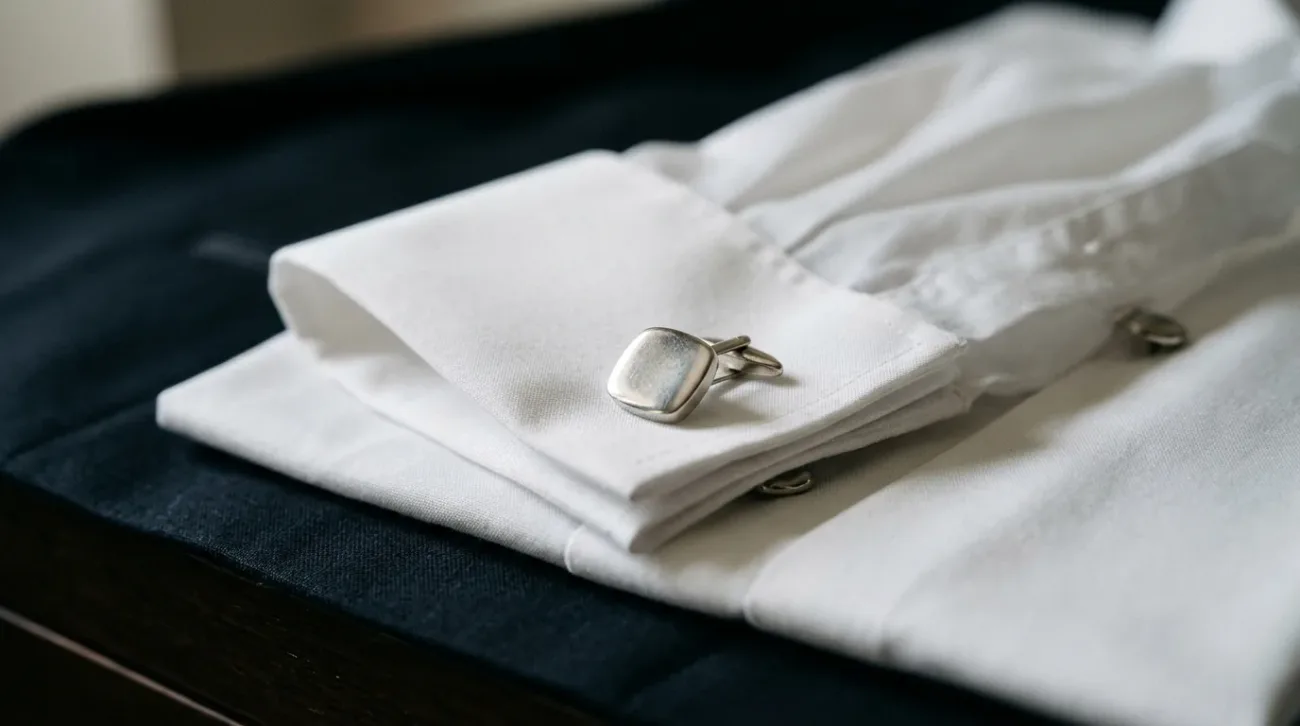
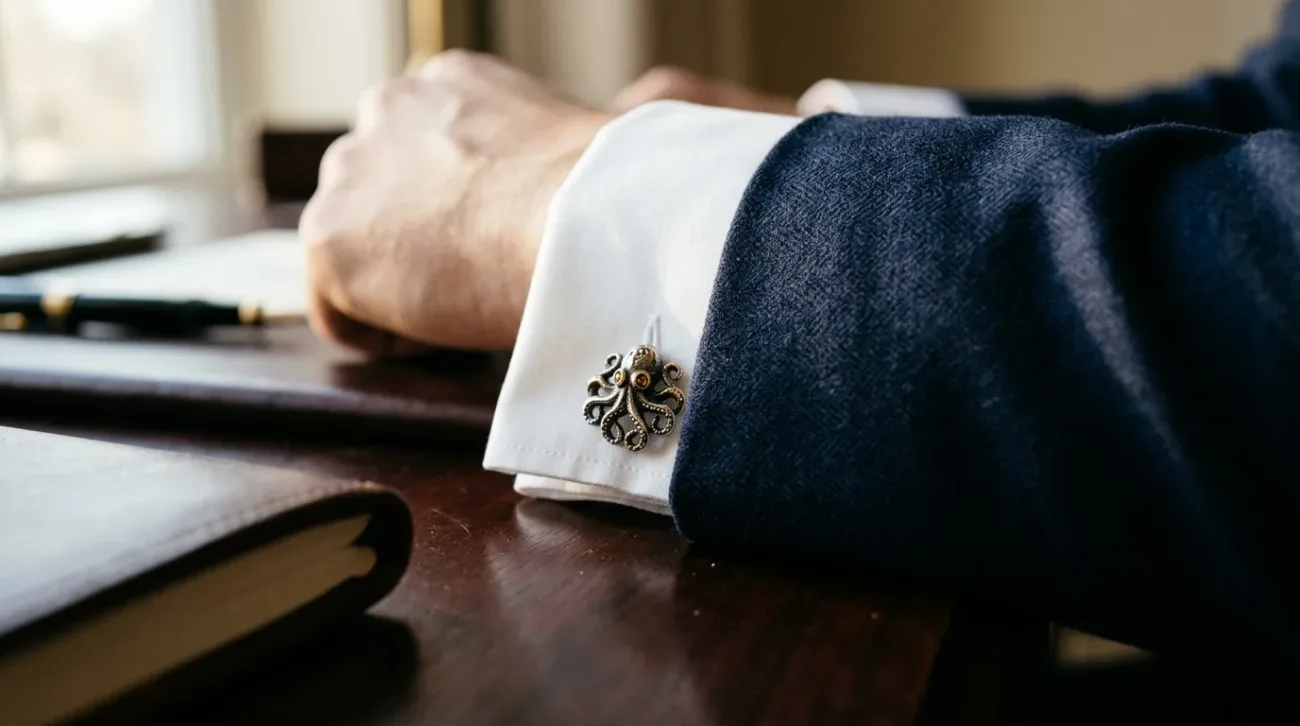
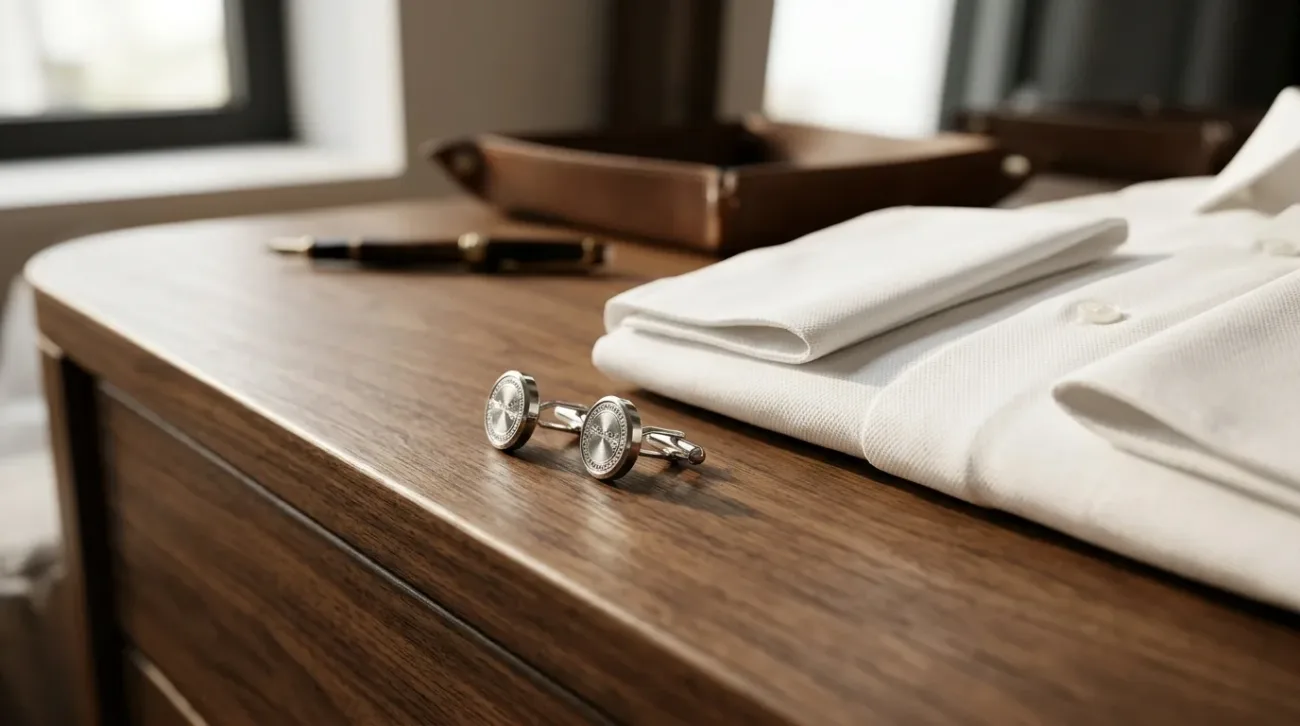
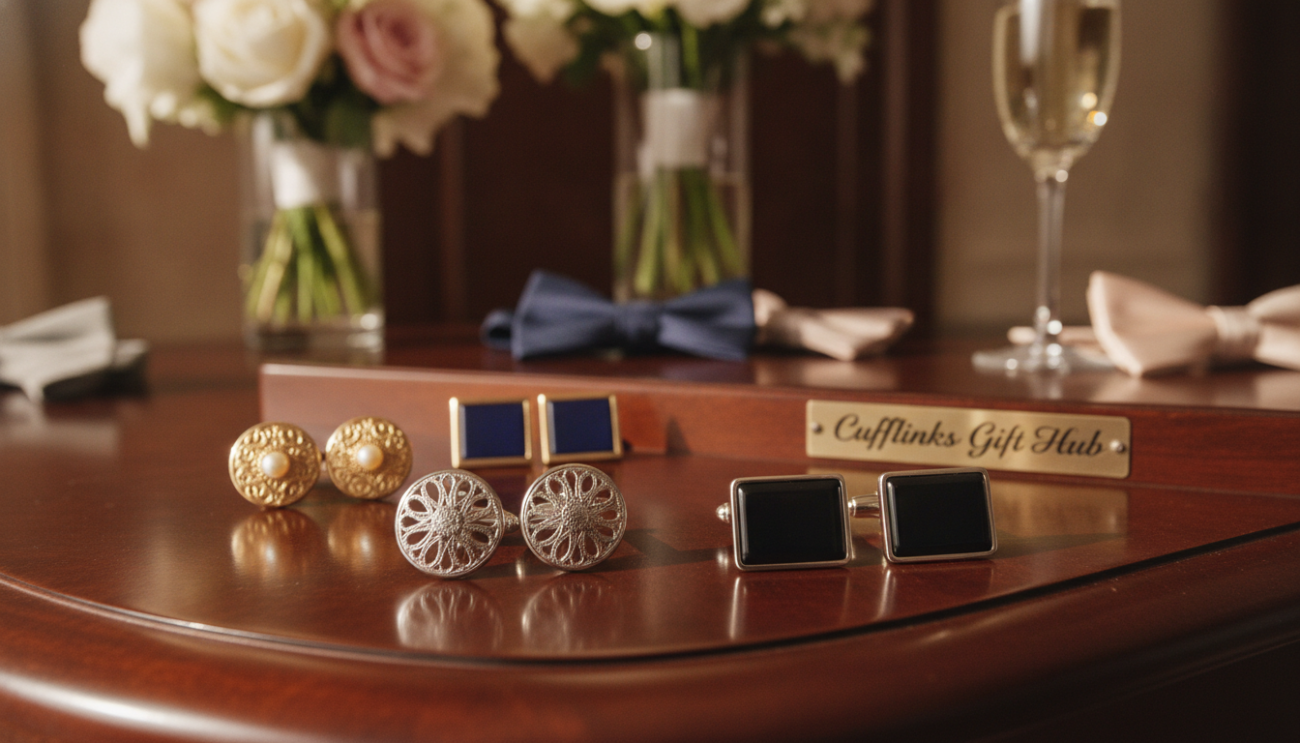
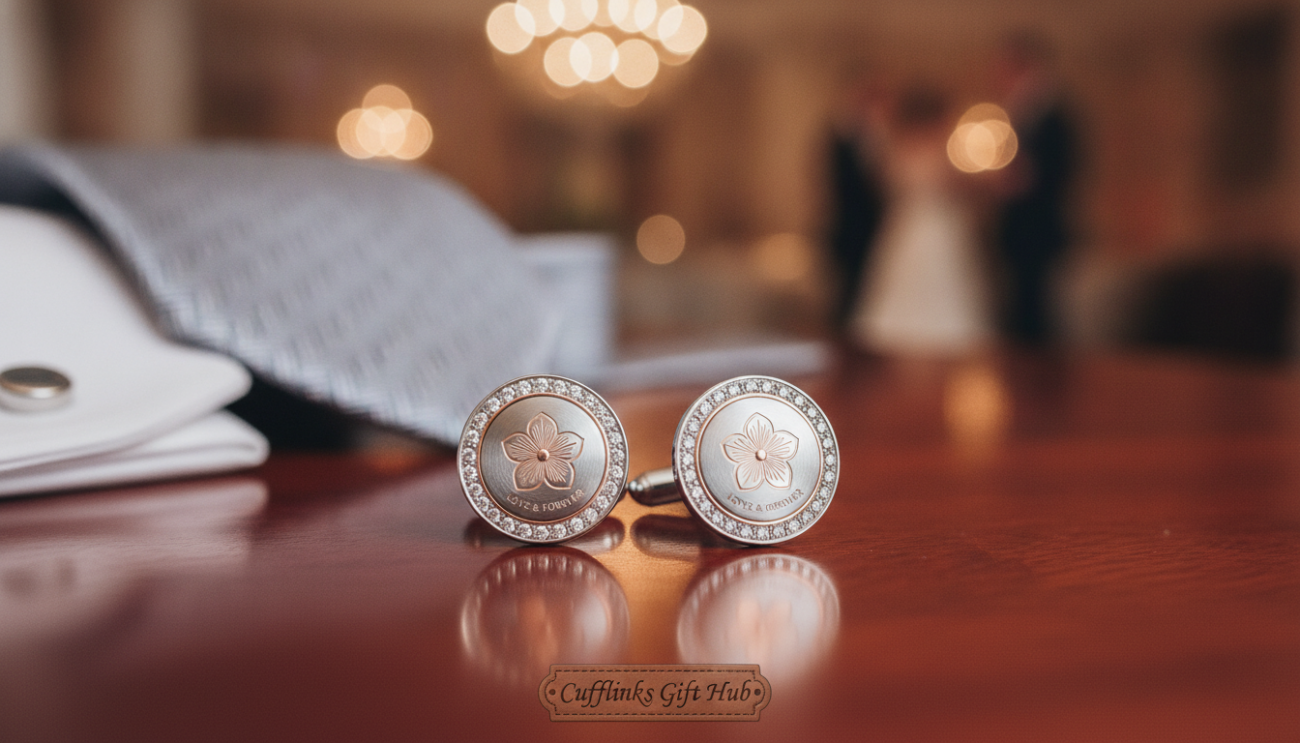
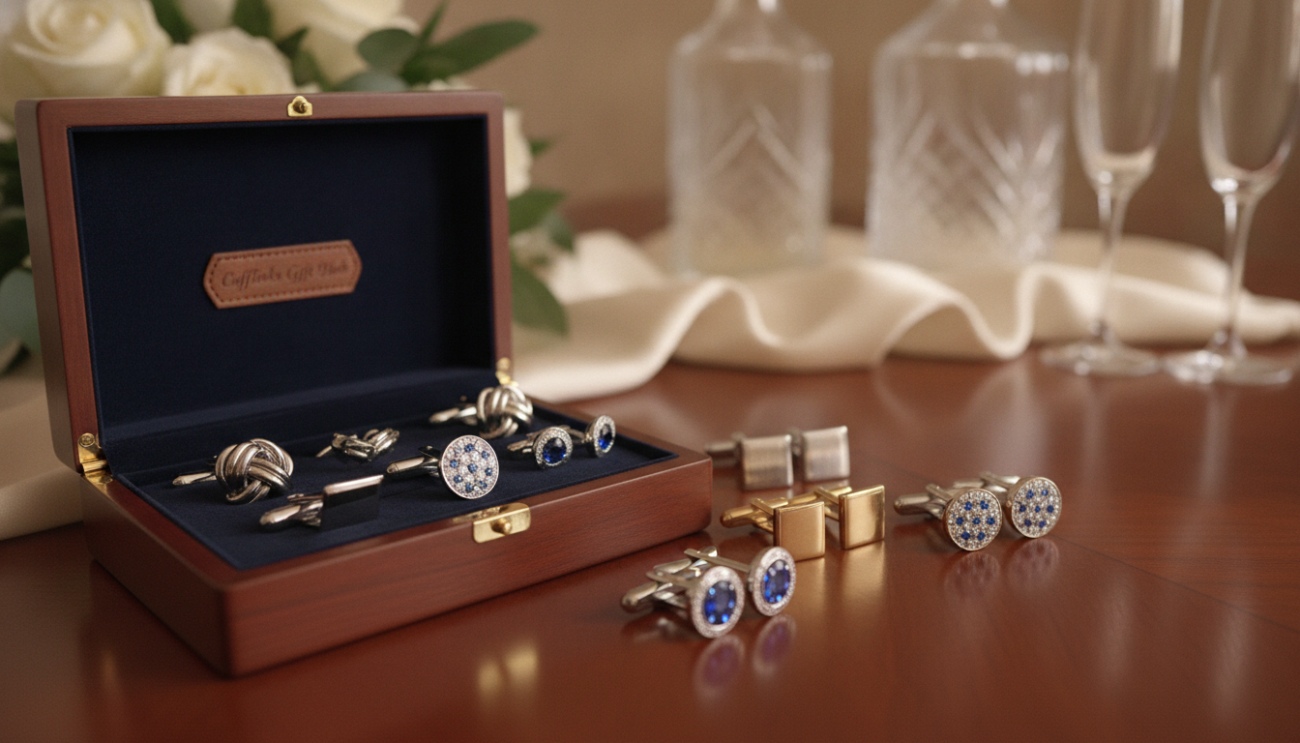
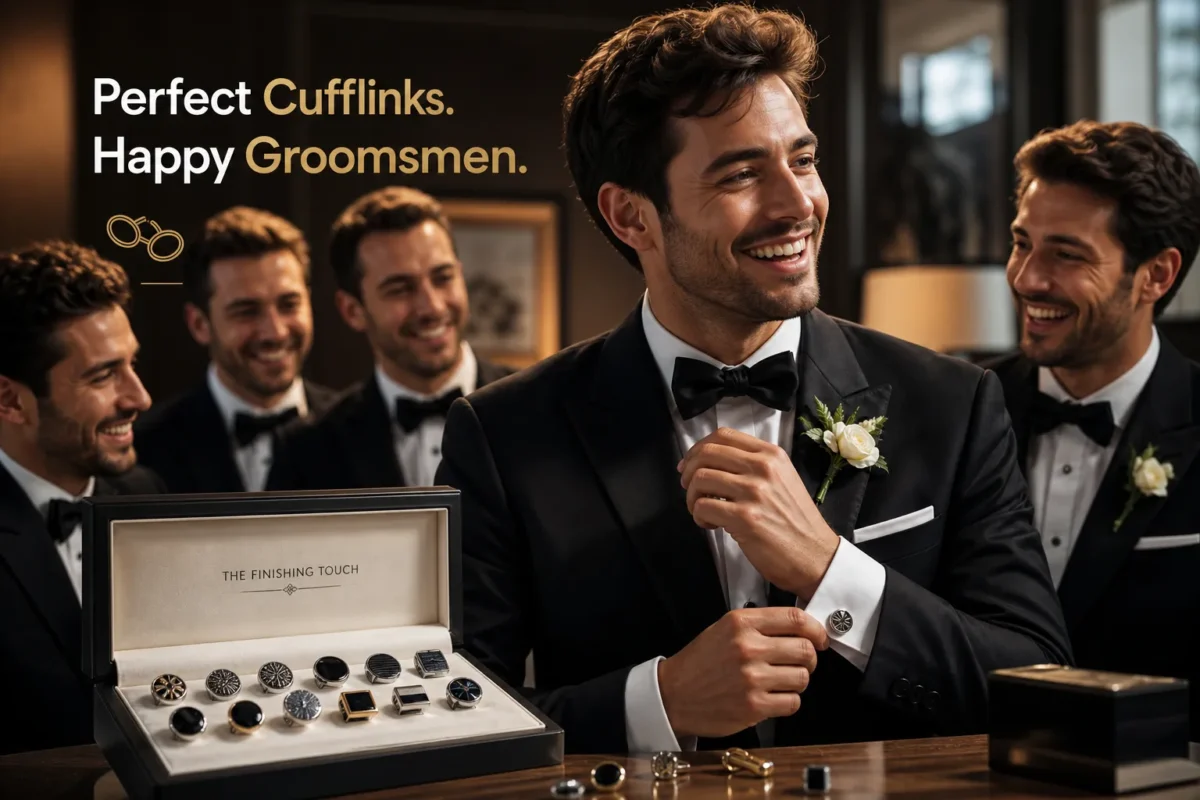
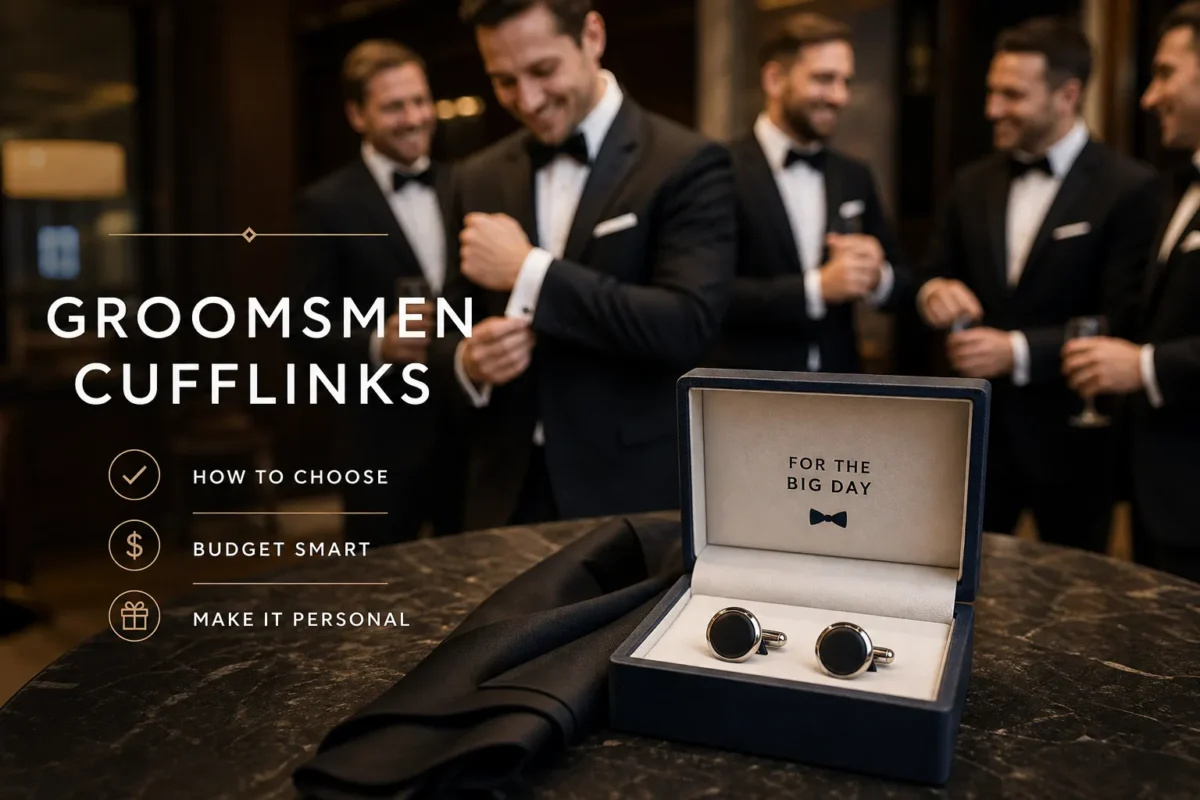
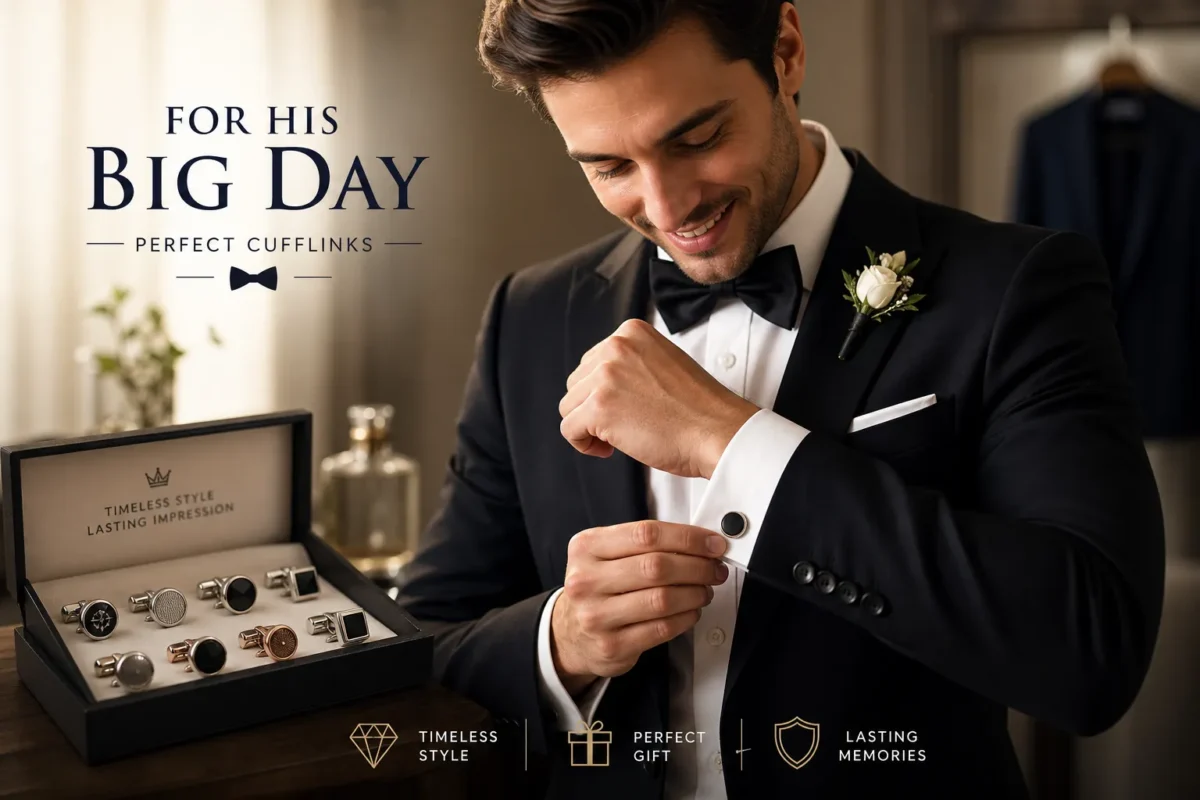
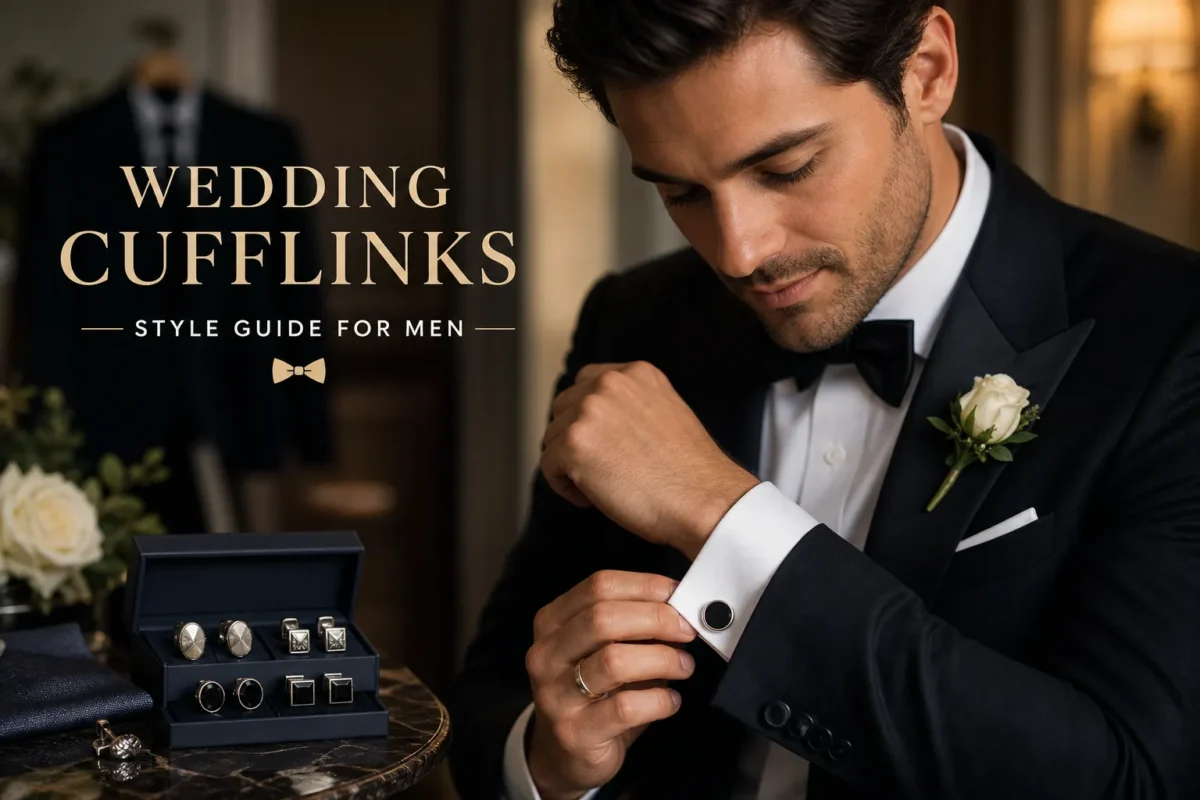
Choose a refined pair that suits the wedding’s formality, your role and the metals already in your outfit. A wedding day stays with us through small details, and cufflinks can become one worth remembering. Our aim is to help you find a pair that feels right during the ceremony and still earns a place in your wardrobe afterwards. Think about how the design will sit beside your suit, shirt and tie, then make room for a detail with personal meaning. Elegance lives in restraint, not in adding more accents. Let personal meaning show through one considered detail rather than a collection of competing accents.
Key Takeaways
- Choose a pair that suits the wedding’s formality and your role.
- Check that your shirt cuff can take cufflinks before buying a pair.
- Use the outfit’s existing colours and metals to guide your finish.
- Coordinate the wedding party through shared details, not identical outfits.
- Choose a design with lasting appeal if you want to wear it again.
How Do I Choose Cufflinks for a Wedding?
A simple, polished pair in a finish that belongs with your outfit is the most adaptable choice for a wedding. A French cuff, also called a double cuff, is a double-layer shirt cuff that folds back and fastens with cufflinks. Start with the whole outfit, then weigh your role, the dress code, the colour palette and any personal meaning you want to include.
A restrained design is the safest starting point for a groom, wedding-party member or guest. Gold and silver both work well when their finish sits naturally beside the suit and other accessories. A clean shape can suit a formal ceremony, a classic reception or a more relaxed celebration. The right detail should feel like part of the outfit, rather than an afterthought.
Keep the design as understated as the dress code requires, and let one personal detail make it your own.
Our wedding cufflink selection advice can help when you are weighing several styles. Consider whether the pair will suit more than one shirt, since that can make a thoughtful choice more useful. We can also think about how the design will appear in close photographs, where a small finish or shape may stand out.
Convertible cuffs can fasten with either buttons or cufflinks, while standard button cuffs are not designed for cufflinks. Those details matter when choosing a shirt, but the first decision remains the feeling you want the complete outfit to give. Keep the design as understated as the dress code requires, and let one personal detail make it your own.
Which Shirt Cuffs Can Take Cufflinks?
Check the shirt before choosing the pair, because cufflinks need a cuff made to accept them. French cuffs have buttonholes on both sides and are made to fasten with cufflinks. The shirt sets the boundary: a standard button cuff uses sewn-on buttons and is not designed for a cufflink.
Cufflinks fasten the shirt cuff, not the jacket. Look for the cuff’s buttonholes before getting dressed, and do not rely on the jacket sleeve to hold the jewellery fastening in place. These three cuff types cover the usual choices:
- French cuffs: a double-layer cuff with buttonholes on both sides, designed for cufflinks.
- Convertible cuffs: a cuff with a button and an extra buttonhole for cufflinks.
- Standard button cuffs: a cuff with sewn-on buttons, not designed for cufflinks.
Convertible cuffs give us the choice to wear buttons or cufflinks with the same shirt. Standard button cuffs are a different matter. Speciality cufflink adapters can work with some compatible button cuffs, but the shirt’s construction must suit the adapter.
Never force a cufflink through fabric. That can damage the shirt and still leave the fastening insecure. Check for a compatible opening or adapter design first, rather than assuming that any shirt cuff can take a link.
If a shirt has ordinary sewn-on buttons and no adapter-compatible construction, wear it as designed rather than forcing a link through.
Which Metal Finish Suits Your Wedding Outfit?
Silver is a natural choice for cool-toned tailoring, while gold brings warmth to tan, cream and ivory. Choose by tone, not by rule: the suit, shirt and other visible details all shape the effect. Sterling silver is cool-toned, while 9ct gold has a warmer look.
Echo a metal already in your outfit for a calm, joined-up finish. A silver watch case can sit well with silver or white-metal cufflinks, while a gold watch can give yellow gold a clear place. Rose gold offers a softer option across cool or warm colours. Mother of pearl adds gentle iridescence, especially beside a white shirt.
| Finish | Suit palette | Character | Accessory detail |
|---|
| Silver or white metal | Cool tones | Crisp and restrained | Echo a silver watch |
| Yellow gold | Warm tones | Warm and traditional | Echo a gold watch |
| Rose gold | Cool or warm tones | Softer and distinctive | Repeat the hue sparingly |
| Mother of pearl | Especially white shirts | Softly iridescent | Keep nearby accessories quiet |
A navy suit can take either a cool silver finish or a warmer metal, depending on the rest of the outfit. Grey, charcoal and black often make silver feel crisp. Tan, cream and ivory give yellow gold a natural warmth. These are useful guides, not fixed rules; a fine detail can bring two tones together.
Keep a tie bar, watch and cufflinks in a shared metal family when they sit close together. They do not need to match exactly, but strong differences can make the outfit feel less settled. Choose one metal family for the visible details, then allow colour or texture to provide personality.
Which Cufflink Design Fits the Wedding’s Formality?
The more formal the celebration, the more quietly the cufflink should complete the outfit. Black tie calls for polished, discreet designs, while a less formal wedding leaves more room for colour and texture. Let the occasion set the volume, so the design adds interest without taking over.
Simple shapes and established materials suit the widest range of wedding styles. A plain oval, quiet onyx or mother-of-pearl face can look considered without drawing the eye first. The wedding’s setting matters too: a refined city venue and an informal outdoor celebration may invite different levels of detail.
Black-Tie Weddings Call for Restraint
Choose a neat metal face, onyx or mother of pearl for a black-tie wedding. These options have a clear shape and a composed finish, so they sit comfortably with formal clothing. Avoid designs that rely on bright colour or a joke to make their mark.
Traditional Weddings Suit Classic Detail
A traditional ceremony welcomes classic metal or mother-of-pearl designs. A small oval, a smooth polished face or subtle enamel can add a personal note without changing the outfit’s form. Chain-link cufflinks have two decorative faces joined by a short chain, while a toggle-back design secures with a hinged bar.
For a little more context on classic and modern wedding cufflink styles, consider how each face works with the whole look. The best design is not always the most ornate one. A modest shape often keeps its appeal longer.
Relaxed Weddings Allow Subtle Personality
A relaxed wedding can make room for texture, gentle colour or a less formal material. Silk knots are lightweight and informal, and they suit an easy-going outfit better than a highly polished formal face. A discreet motif or a touch of enamel can add character while keeping the styling thoughtful.
Novelty designs belong only where the dress code and setting genuinely invite them. A playful pair may suit a relaxed gathering, but it can distract at a formal ceremony. If you are unsure whether a playful design fits the occasion, choose a timeless face you will want to wear again.
How Should the Groom and Wedding Party Coordinate?
A coordinated wedding party looks considered when the groom leads and the other pairs support his look. The groom can wear a more personal or detailed pair, while the best man and groomsmen use a simpler design. Shared details create unity without making every outfit identical.
Matching metal tones can bring the wedding party together without matching every cufflink face. The groom might choose a refined version of a shared style, with a distinctive finish or discreet personal touch. Groomsmen can wear matching pairs, or different faces that share one metal and design language.
| Role | Styling approach | Personal distinction |
|---|
| Groom | Lead with a refined pair | Distinctive finish or discreet personal detail |
| Best man | Follow the wedding-party style | A restrained individual variation |
| Groomsmen | Match or share a metal and motif | Simpler overall design than the groom’s |
| Guest | Respect the dress code | A classic pair that does not seek attention |
The best man can echo the groom’s style without wearing an exact copy. That small difference helps each person feel well dressed, while the wedding party still looks connected in group photographs. Guests need not join the shared style; a classic pair that respects the dress code is enough.
Some couples choose cufflinks as gifts, while others invite the wedding party to wear pairs they already own. Either approach can work if everyone knows the level of formality and the main shared detail. A simple plan is easier to follow than a strict dress rule for each person.
Our ideas for wedding cufflinks for grooms include ways to set the groom apart without overpowering the group. Agree the shared metal and level of formality before choosing individual details.
Should You Personalise Wedding Cufflinks?
A short engraving gives a meaningful pair a personal story without changing its overall character. Initials, a wedding date or a brief private message are common choices. Keep the message concise, so the pair still feels refined enough to wear beyond the celebration.
Reverse engraving is the discreet choice, while an inscription on the face is more visible. The best position depends on whether you want the meaning to remain private or become part of the design. A plain face gives a monogram room to show clearly.
| Engraving position | Visibility | Best suited to |
|---|
| Reverse | Discreet | Initials or a private message |
| Swivel bar | Visible while fastening | A short date or initials |
| Face | Most prominent | A simple monogram on a plain design |
A date can mark the wedding day without filling the whole face. Initials make the pair feel personal while keeping the words easy to read. A private message can be especially meaningful, though it should stay short enough to fit neatly.
Personalisation works best when it supports the design rather than competes with it. Think about what the wearer will want to see years later, not only what feels special on the day. Keep the wording brief enough to remain legible and meaningful well beyond the wedding day.
How Do You Fasten Cufflinks and Choose the Right Size?
A comfortable, secure mechanism and a face proportionate to the cuff make cufflinks easier to wear throughout the day. Toggle or bullet backs are straightforward to fasten, while chain links give a traditional double-sided design. Comfort matters as much as appearance when the pair will stay on for hours.
Cufflink faces typically measure 15-20 mm in diameter, but the cuff should guide the final choice. A smaller face can feel neat on a narrow cuff, while a larger one may suit a broader cuff. Double cuffs have four buttonholes to align, and cufflinks pass through the shirt cuff, not the jacket sleeve.
Select a Mechanism You Can Fasten Comfortably
Toggle-back cufflinks use a hinged bar that folds to pass through the cuff, then turns to hold the link in place. Bullet backs work in a similar practical way. Chain-link cufflinks have two decorative faces, and silk knots offer a softer, informal option.
Choose a mechanism you can manage without pulling at the fabric. A chain link moves more freely, while a toggle back holds a firmer line. Silk knots feel light and relaxed, making them less suited to the most formal outfits.
Keep the Face in Proportion to the Cuff
Use these steps to fasten the pair neatly:
- Fold the French cuff back.
- Align its four buttonholes.
- Pass the cufflink through so the decorative face sits outward.
- Secure the mechanism so the link lies flat.
Check that the face does not crowd the cuff edge or twist when your arm moves. A pair that lies flat feels more secure and looks cleaner beside the shirt sleeve. Fasten the pair before putting on the jacket, then check that each face sits flat against the cuff.
What Makes Cufflinks Right for Black Tie?
For black tie, pair understated cufflinks with a formal white shirt and a traditional dinner jacket. A white shirt with a Marcella front or fine pleats suits the dress code. Keep the details composed, with polished metal, mother of pearl or a simple black face beside the shirt.
Traditional black tie pairs a black or midnight-blue dinner jacket with formal eveningwear. Midnight blue can look darker than black under artificial lighting, making it a refined alternative. The cufflink should support the jacket and shirt, not introduce a bright focal point.
The GQ guide to black tie notes that midnight blue can appear darker than black in artificial light. This helps explain why both colours work well for evening dress. The finish of the cufflink can remain subtle, even when the jacket colour gives the outfit depth.
Mother of pearl brings a soft glow to a white shirt, while onyx offers a quiet dark contrast. A polished metal face can also sit comfortably beside the shirt’s formal front. These classic materials leave room for the tailoring to lead.
A standard wedding suit gives us more room for colour or a personal design than black tie does. For evening dress, the cleanest choice is usually a small, restrained detail. Keep the wrist detail as composed as the rest of the evening outfit.
When Should You Leave Cufflinks Off?
Leave cufflinks off when the dress code is relaxed or the shirt is designed to fasten with buttons. Cufflinks are optional rather than essential for a casual wedding. Dress for the occasion, rather than adding formality that the setting does not call for.
Standard button cuffs are designed for sewn-on buttons, not cufflinks. The appropriate buttons are the straightforward choice for that shirt. A formal wedding can also make novelty designs feel out of place if they draw attention away from the occasion.
These are three clear cases for leaving the pair at home:
- A casual dress code where cufflinks add no useful formality.
- A shirt made to close with ordinary sewn-on buttons.
- A formal wedding where novelty designs would distract from the occasion.
Novelty designs may suit a relaxed celebration, but the same humour can feel jarring at a formal ceremony. Think about the room, the clothing and the tone of the day before choosing a playful detail. Style should feel at ease with the occasion.
A relaxed event may need no cufflink at all. If the shirt has a button cuff, use its sewn-on buttons instead of trying to change its purpose. Treat novelty designs as a choice for a genuinely informal setting, not a way to challenge a formal dress code.
Are Wedding Cufflinks a Thoughtful Gift?
Cufflinks make a thoughtful wedding gift when the design reflects the recipient as well as the occasion. A partner might give the groom a pair, or the groom might thank the groomsmen with a wearable keepsake. Personal meaning lasts when it belongs to the person who receives it.
Choose a pair the recipient can wear again for anniversaries and other formal occasions. Initials, a wedding date or a short message can make the gift more personal. A simple design often has more chances to leave its box than a novelty pair chosen only for one day.
The best man and fathers may also appreciate a pair that marks their role in the celebration. The couple might choose a design that feels connected to the day, while still matching the recipient’s taste. A small, well-made piece can carry a warm memory without demanding attention.
A gift does not need an elaborate message to feel considered. A familiar shape, a favourite colour or a modest engraving can make the choice feel thoughtful. For more ideas about choosing cufflinks for the best man, consider what he would enjoy wearing beyond the wedding.
Choose a pair whose meaning will endure even when the wedding suit is no longer worn.
How Can You Prepare Cufflinks for the Wedding Day?
Prepare the pair before the wedding morning, so the final details feel calm rather than hurried. Order cufflinks when the suits are ordered, as that gives the choices time to fit the outfit planning. A little practice helps, especially if the wearer has not fastened cufflinks before.
Practise with the chosen pair the night before, and pack one spare pair in case a link goes missing. Bespoke personalisation may need additional planning, so leave room for that when organising the wedding details.
Use this simple checklist:
- Order cufflinks alongside the suits.
- Practise fastening the chosen pair the night before.
- Pack one spare pair.
- After wearing, wipe the cufflinks with a soft cloth and store them separately.
The practice run can help the wearer get used to the movement and check the shirt works with the pair. Keep the spare somewhere easy to find, rather than buried beneath other items. A separate pouch or box helps stop the finish rubbing against other accessories.
A soft cloth and separate storage are simple habits that help preserve the finish for future occasions.
After the wedding, take a moment to wipe the cufflinks before putting them away. That small act helps keep the pair ready for another formal day, rather than leaving marks or dust to build up.
Conclusion
The right wedding cufflinks are the pair that feels natural with your outfit and meaningful to you. A well-proportioned design should suit the shirt, the dress code and the person wearing it. We do not need to choose the loudest finish to make a lasting impression; one personal detail can be enough.
Before making the final choice, check the shirt cuff and the outfit you plan to wear. That simple check can prevent a last-minute mismatch and help the pair feel settled from the ceremony onwards. Choose a style you can see yourself wearing again, not one that only makes sense for a photograph.
Check the shirt cuff and the wedding dress code, then choose a pair you will be pleased to wear again.
FAQ
When not to wear cufflinks?
Skip cufflinks when the dress code is casual or the shirt is designed for sewn-on buttons. A standard button cuff closes with its own buttons, so a cufflink adds no useful function there. Do not force a link through an incompatible cuff, as this may damage the fabric. A relaxed wedding may call for no cufflink at all.
How should cufflinks go on?
Fold back the double cuff, align the buttonholes, pass the link through with its decorative face outward, then secure it flat. The face should sit on the outside of the cuff, with the fastening resting neatly underneath. Check that the cufflink does not twist or pull the fabric before putting on your jacket.
What do cufflinks say about a man?
Cufflinks can show attention to detail and personal taste, but they do not signal one fixed personality. A classic metal face may feel formal, while a small colour detail can add character. The best choice reflects the wearer and suits the event, rather than trying to make a statement on his behalf.
What are the etiquette rules for wearing cufflinks?
Wear cufflinks with a cuff designed to take them, match their design to the event’s formality and keep formal wedding styles restrained. A tidy, well-fitted shirt helps the pair sit neatly. Cufflinks belong on the shirt cuff, not the jacket sleeve, and should not compete with the rest of the outfit.
Do men wear cuff links anymore?
Yes, cufflinks remain a considered choice for formal shirts and occasions. They add a small point of personal style and can make a wedding outfit feel complete. Ordinary button cuffs remain practical for everyday dressing, so cufflinks are an option for the right shirt and moment, not a daily requirement.
What can I use instead of cuff links?
Use the sewn-on buttons on a standard button cuff. They are made to close that type of shirt and need no extra fastening. A double cuff needs cufflinks or a compatible speciality adapter, so ordinary buttons are not a direct substitute for that shirt style.
Do cufflinks go on your shirt or jacket?
Cufflinks pass through the shirt cuff, never the jacket. They fasten the cuff’s buttonholes and should sit flat against the shirt sleeve. The jacket covers part of the cuff, but it does not hold the cufflink in place. Fasten the pair before putting on the jacket for easier dressing.
What does it mean when someone gives you cufflinks?
Cufflinks are often a personal gesture of appreciation or a keepsake, especially when chosen or engraved for the recipient. A pair may mark a wedding role, carry initials or simply suit the person’s taste. The meaning comes from the care behind the choice, and the recipient can wear them again for future formal occasions.