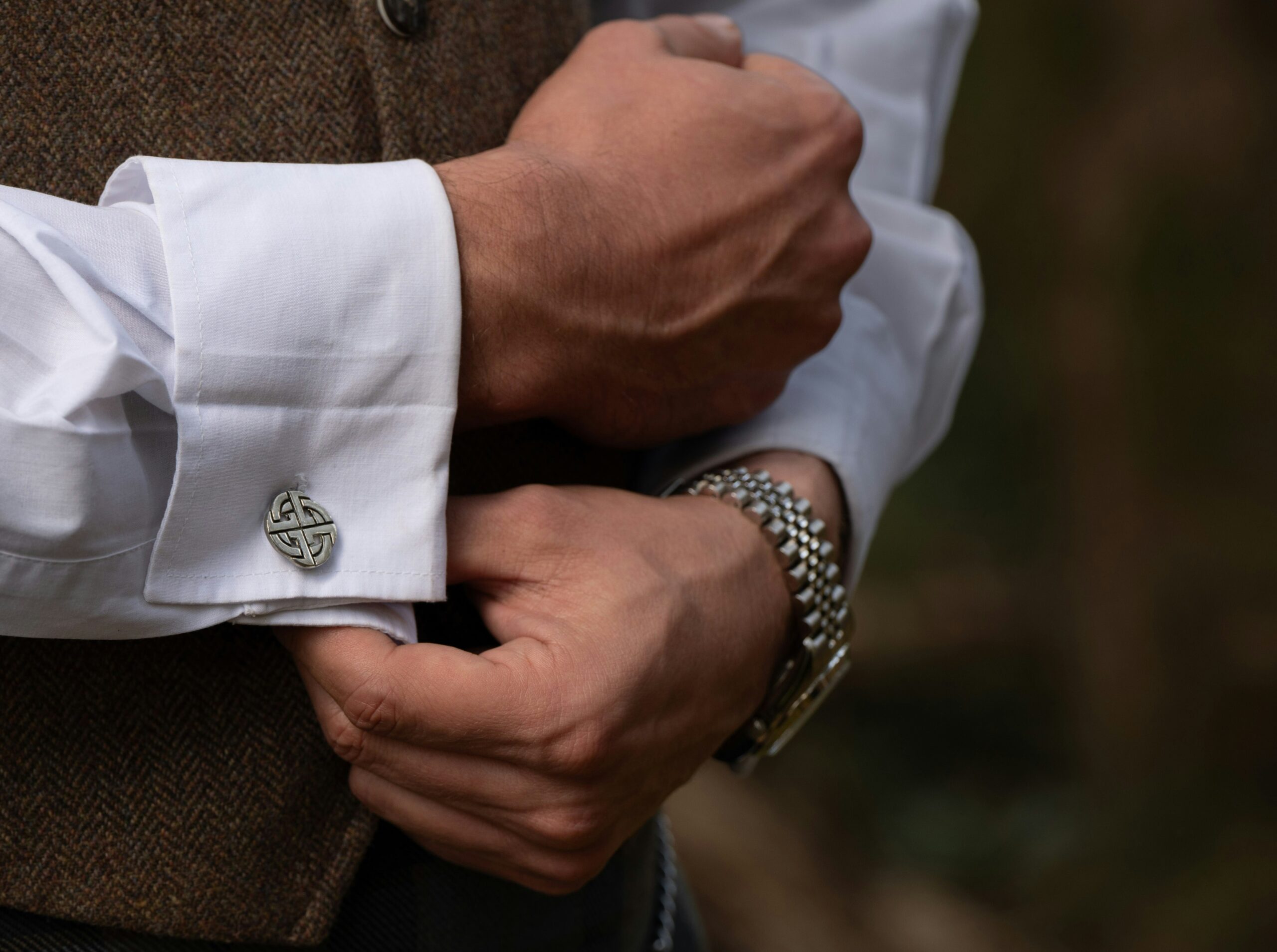
Wild Animal Cufflinks: Refined Style for Every Occasion

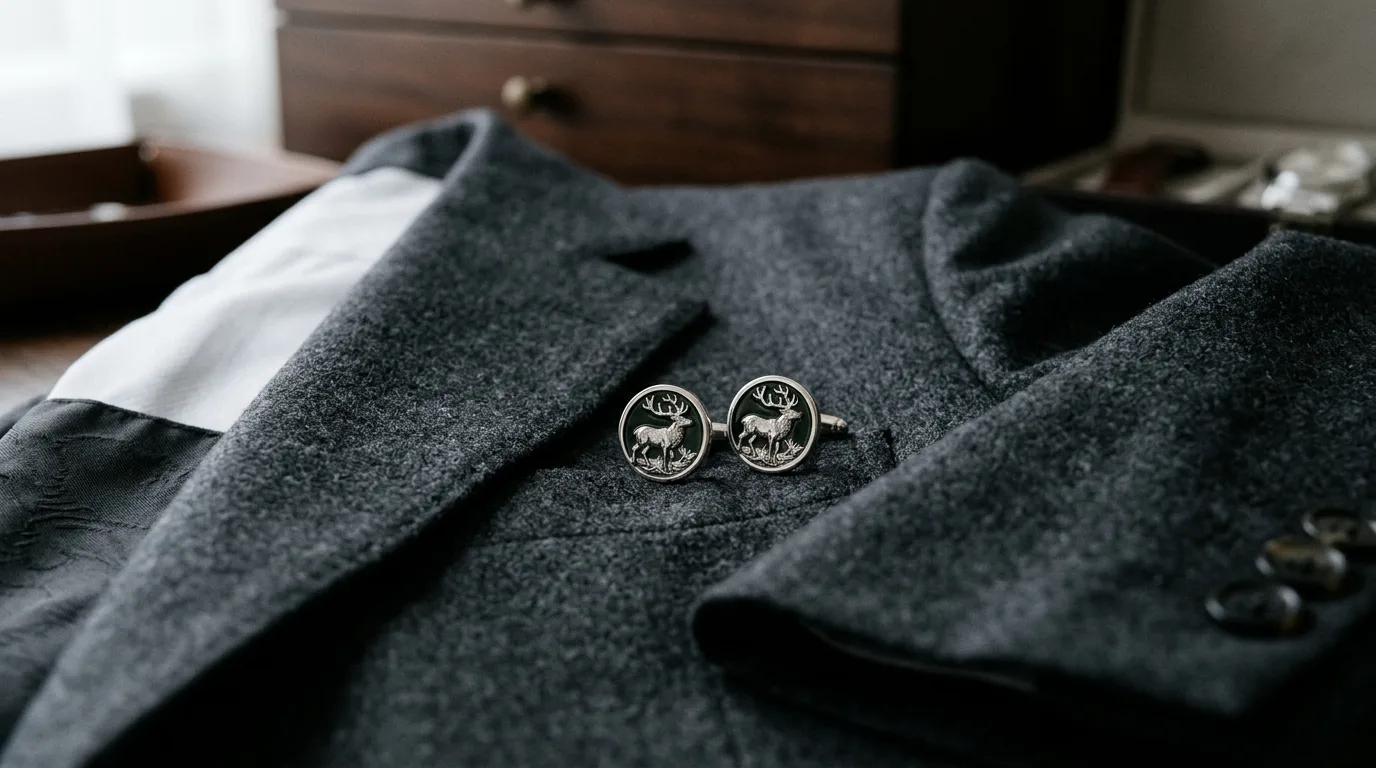
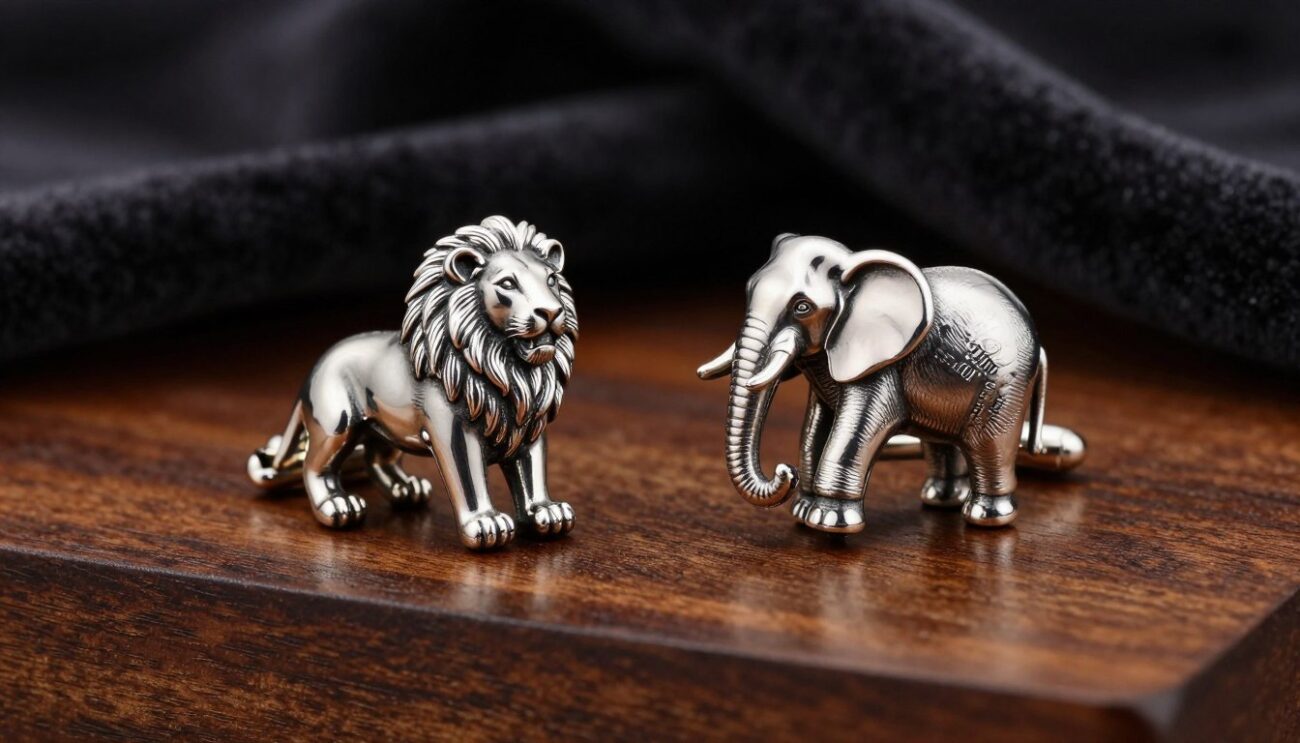
Wild animal cufflinks bring a personal, refined accent to a formal outfit. The right motif can feel equally at ease with everyday tailoring. We choose accessories to express our personal style, not to compete with the whole outfit.
A familiar animal can hold a private meaning, recall a favourite place or simply make a thoughtful gift. Worn with a suit, the detail feels considered; paired with relaxed tailoring, it brings a lighter note. A French cuff is a shirt cuff folded back on itself and fastened with cufflinks.
Good design balances a distinct motif with a finish that works across formal occasions and less structured dress. We can explore the collection with an eye for pieces that feel true to the wearer, rather than chosen for attention alone.
Key Takeaways
- Choose a motif with a personal connection.
- French cuffs take cufflinks; buttoned single cuffs do not.
- Match the design’s scale to the shirt and jacket.
- Check metal descriptions and marks before choosing a finish.
- Let a distinctive detail suit the occasion and wearer.
How Do Wild Animal Cufflinks Add Character to Formal Style?
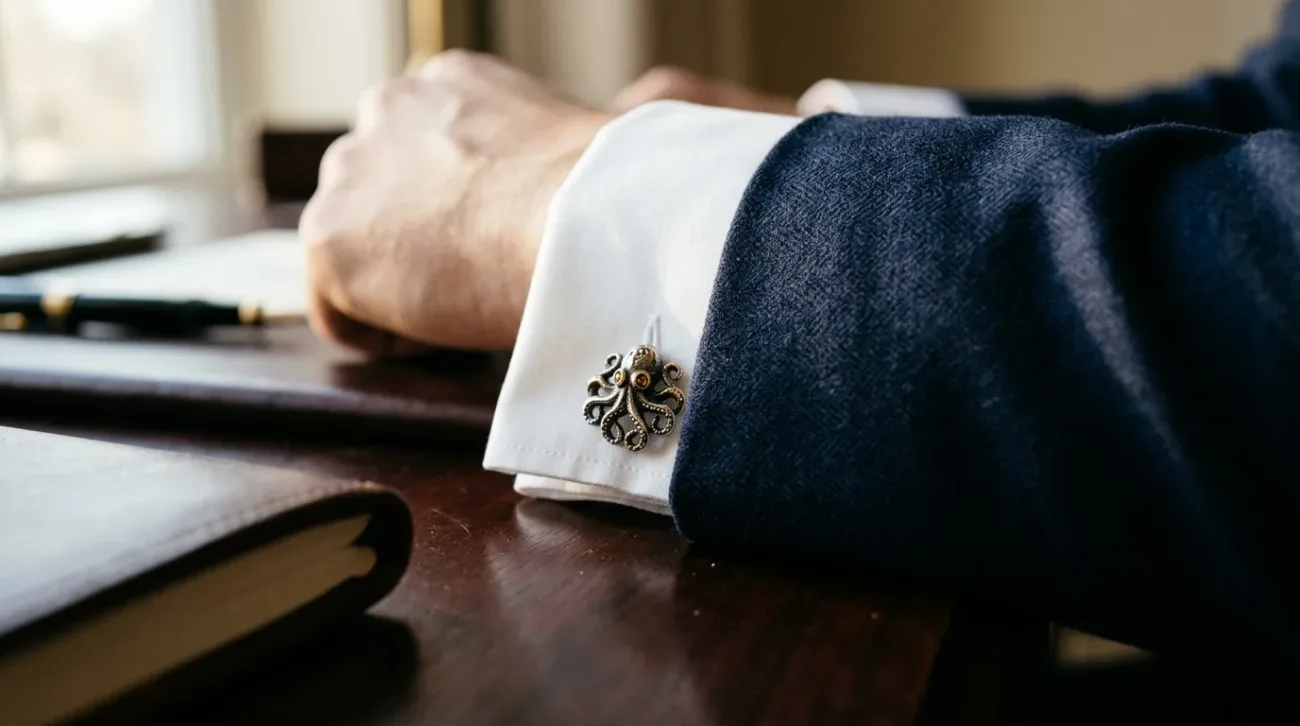
French cuffs are the natural choice when we want an animal motif to add character to formal or business dressing. The folded edge gives a pair a neat frame, while a subtle design can sit comfortably with a suit. The shirt cuff must have holes for cufflinks, rather than buttons alone.
French Cuffs for Formal and Business Dressing
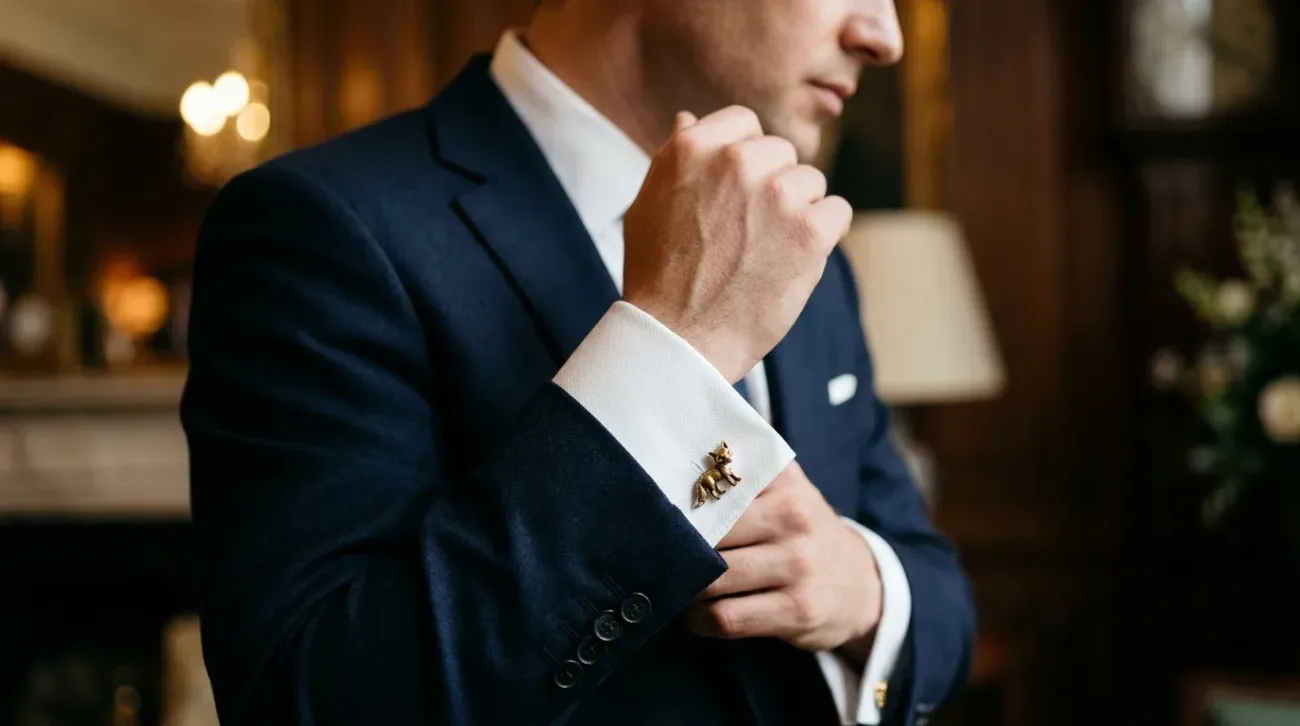
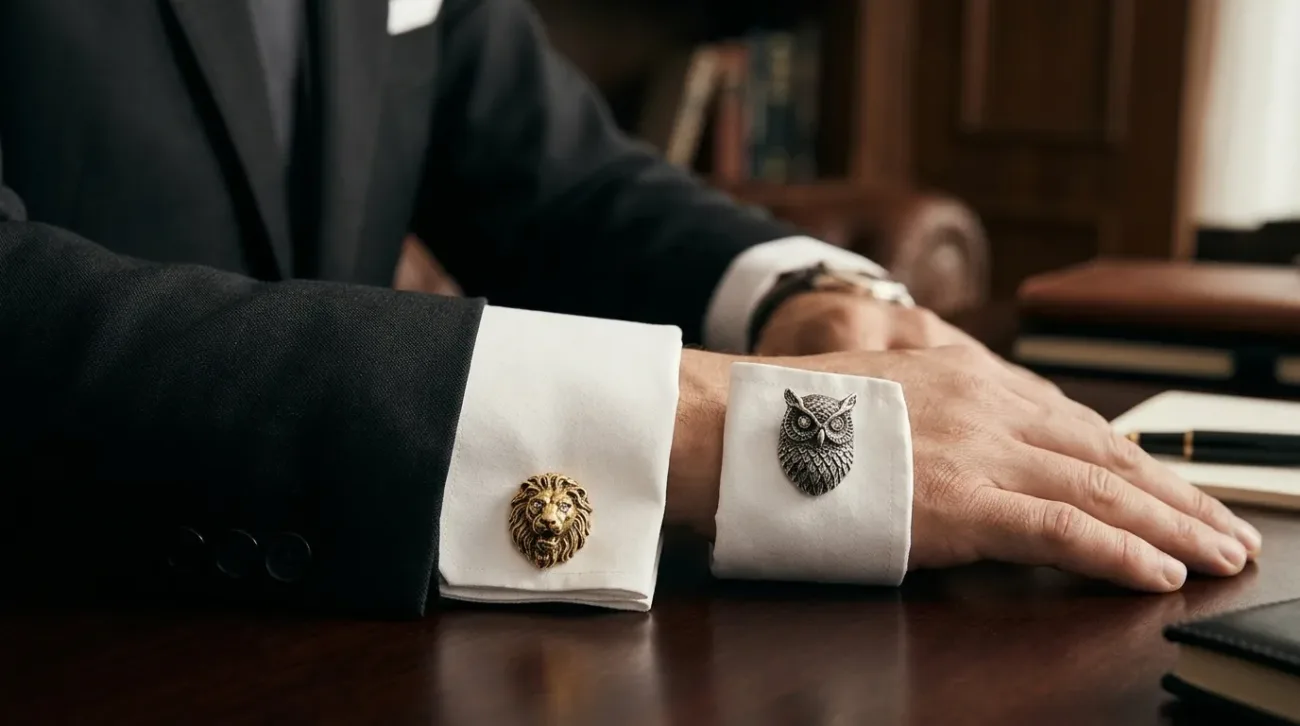
A French cuff is folded back and fastened with cufflinks or silk knots. It suits black tie and business wear, and can also work in some casual settings. A French cuff styling guide explains how the fold creates its formal look.
Single cuffs are accepted for white tie, while double cuffs are the standard choice for black tie. The fold adds a clean line at the wrist, so the design can be expressive without taking over the outfit. For more outfit ideas, we can explore wild animal styles for formal and smart-casual looks.
A buttoned single cuff is not made to take cufflinks; its buttons and holes serve a different fastening.
Choosing a Proportion That Sits Well
A standard-size cufflink is about 16mm in diameter, a useful guide when choosing a motif. Most French cuffs have four holes per cuff, which allow the cuff edges to meet and fasten securely. The scale should suit the shirt and the wearer’s usual accessories.
Shirts with French cuffs are designed for cufflinks, unlike buttoned single cuffs. Some shirts and jackets create a sharper line at the wrist, while softer tailoring leaves more room for a visible detail. A French-cuff style guide also covers the cuff’s use beyond formal dress.
Allow about a quarter to a half inch of shirt cuff to show beneath a jacket, blazer, sport coat or sweater. Check that the shirt cuff sits neatly beneath the jacket sleeve, with a visible but measured reveal.
Which Animal Design Makes the Right Gift?
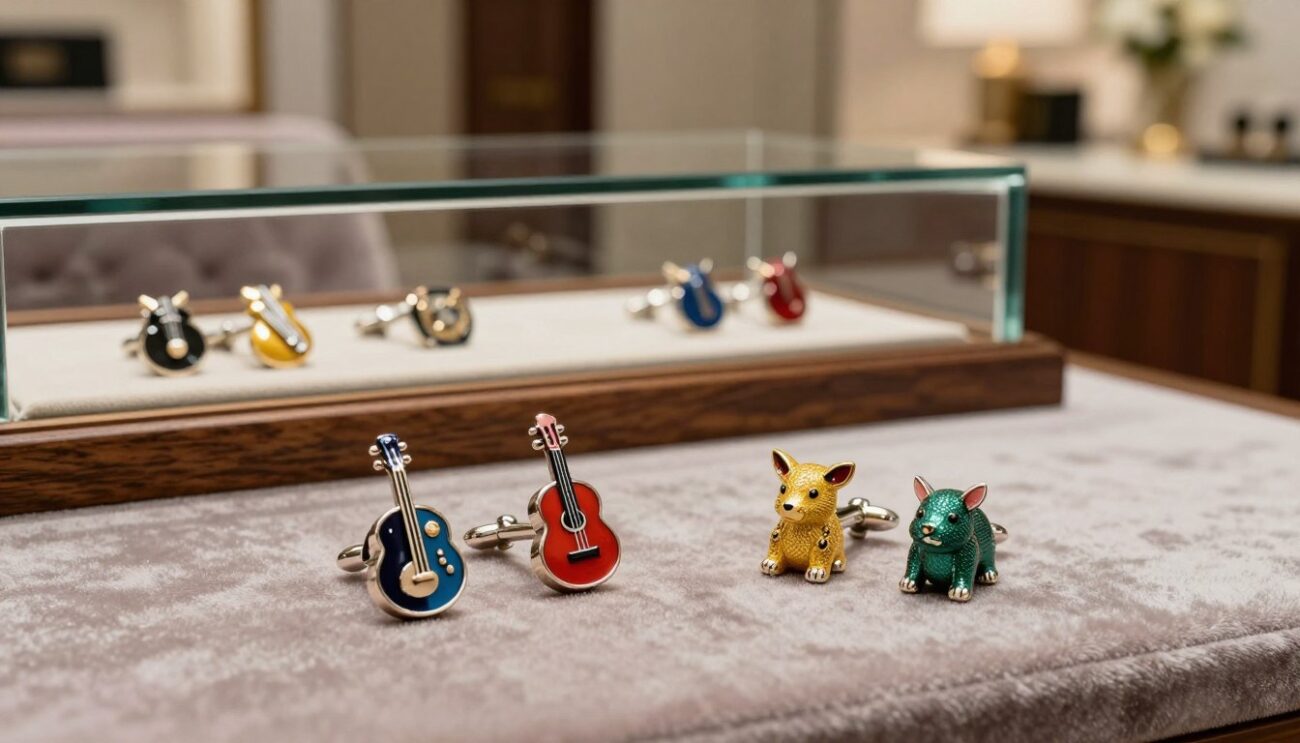
The best gift design reflects a recipient’s interests, from countryside pursuits and pets to playful details. A recognisable shape can make the personal connection clear without making the accessory feel like a novelty. Choose a motif for the person, not just for its surprise value.
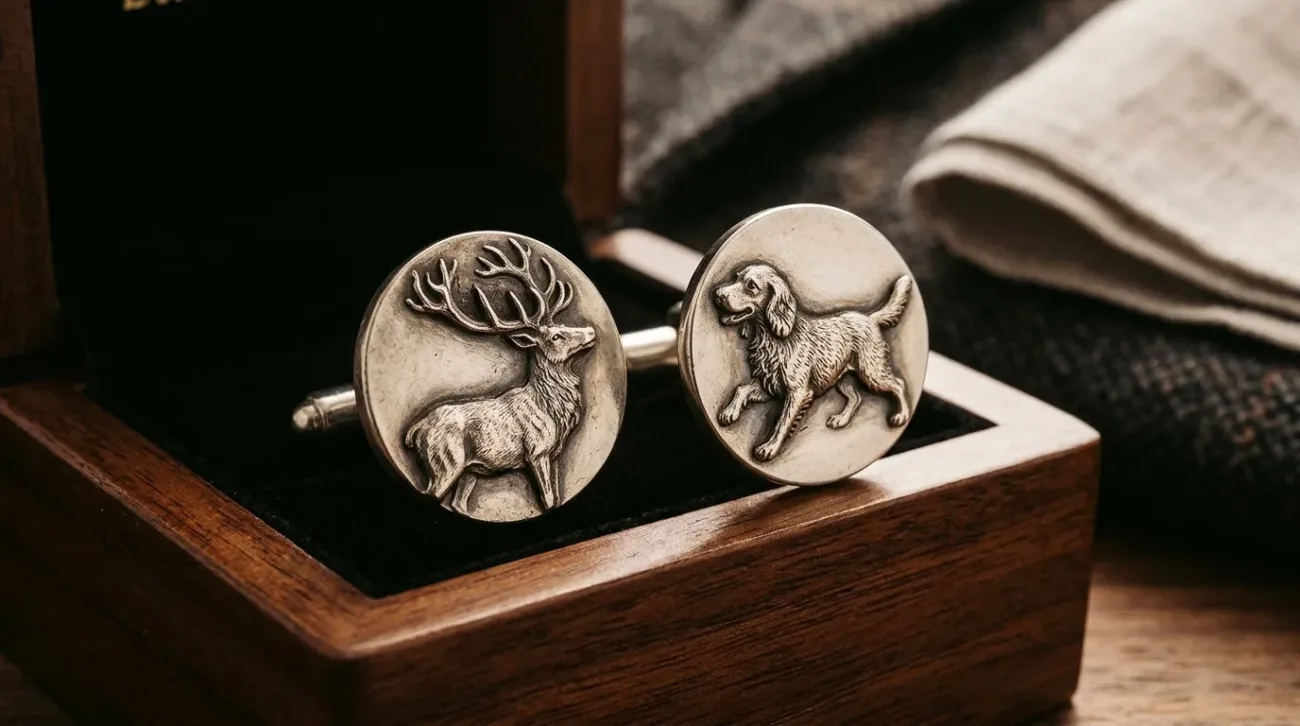
Four designs offer distinct ways to make that choice:
- Stag: for someone drawn to countryside interests.
- Red grouse: for a recipient with field-sport connections.
- Dog: for someone whose favourite animal is a pet.
- Snail: for a playful conversation piece.
Animal cufflinks can suit birthdays, Father’s Day, Christmas and groomsman gifts. We can explore animal and bird designs for more options, including familiar pets and wild creatures. A gift feels more thoughtful when its design reflects a real interest, rather than simply standing out.
When a close likeness matters, check the pictured breed or animal shape before choosing a pair. A dog’s outline, for example, may be more important to the recipient than the metal finish. The Debrett’s guide to country pursuits gives context to field-sport and countryside interests.
Distinctive motifs are not right for every taste, so novelty alone should not decide the gift. When the recipient’s taste is understated, choose a familiar motif with a quieter silhouette.
What Should You Know About Gold and Silver Finishes?
A gold or silver colour does not by itself tell us whether a cufflink is solid precious metal, plated or filled. A hallmark is the official UK set of marks that confirms precious-metal fineness and assay. Read the material description and marks together before judging a finish.
Solid Gold, Gold-Plated and Gold-Filled Marks
Gold plating is a surface layer of gold over another metal, which may be base metal or silver. It does not prove what metal forms the cufflink’s body. GP, GEP and HGE indicate plating; GF and RGP indicate gold-filled or rolled-gold construction.
Gold animal cufflinks may be solid gold, gold-plated or gold-filled, so read the description and examine the marks. Silver animal cufflinks also need a clear material description; check for sterling silver fineness and a complete hallmark where required. A bare fineness number is not a complete UK hallmark.
| Description | Common marks | What the mark indicates |
|---|---|---|
| Solid gold | 375, 585, 750, 916, 990, 999 | Gold fineness |
| Gold-plated | GP, GEP, HGE | Gold surface layer over another metal |
| Gold-filled or rolled gold | GF, RGP | Filled or rolled-gold construction, not solid gold |
UK gold fineness standards include 375, 585, 750, 916, 990 and 999 parts per thousand. Sterling silver is 925 parts per thousand. Our guide to cufflink materials covers other common choices.
UK Hallmarks and Weight Exemptions
UK hallmarking exemptions apply below 1.0g for gold, 7.78g for silver, 0.5g for platinum and 1.0g for palladium. Above the relevant weight, an item described as precious metal must meet the rules. The GOV.UK hallmarking guidance covers these requirements.
A UK hallmark has three compulsory marks: the sponsor’s or maker’s mark, the metal and fineness mark, and the Assay Office mark. The four Assay Offices are in Birmingham, Edinburgh, London and Sheffield. The date letter has been optional since 1999.
In the course of trade or business, describing an unhallmarked article above its exemption weight as wholly or partly precious metal is an offence.
Truthful descriptions such as gold-plated may be used, and hallmarking rules cover online sales as well as shops. For a precious-metal description above the applicable exemption weight, look for the complete UK hallmark rather than relying on a fineness number alone.
Conclusion
A well-chosen animal motif offers a confident point of difference without compromising the polish of a considered outfit. The right design reflects the wearer’s interests and feels suited to the formality of the occasion.
We can make a more assured choice by comparing each design with its stated materials and finish. That small check helps the gift feel personal, or gives our own wardrobe a detail we will enjoy wearing.
Browse our collection, then choose the design and finish that feel most naturally yours.