One in three British men say a small accessory changed how others saw them at work or a wedding.
This short guide helps you pick a lapel pin that feels like you. You’ll learn the difference between a badge-style emblem and a purely fashion-led piece. You’ll also see where to wear it—on the upper left lapel, by the buttonhole—and how to keep the angle neat.
Think of pins as subtle power moves. Chosen well, a small accessory sharpens your outfit rather than screaming for attention. We’ll cover types, matching to jackets and colours, and what to buy for key UK occasions.
By the end of this page you’ll feel confident to shop ranges from vintage flowers to statement designs, place orders that suit your wardrobe, and wear your choice without feeling costume-y.
What a lapel pin is and why you’d wear one
A small detail on your jacket can change the whole look and the message you send. On a suit, the folded flaps of fabric under the collar are the lapels. The left side often has a buttonhole that once helped fasten the front against wind and rain.
Where your lapel sits and the buttonhole’s purpose
The buttonhole sits on that left flap. Originally functional, it now holds a boutonnière or a decorative fastener neatly in place. Knowing this makes placement logical rather than arbitrary.
Style versus symbolism
A decorative fastener can be purely fashion, lifting a plain suit with subtle colour or texture. By contrast, a badge signals membership or support and is often used by public figures and clubs.
“Small details tell the bigger story.”
Vintage comeback
Classic pieces have returned as rules loosen and men embrace personal expression. The trend gives you licence to experiment — but choosing context-aware pieces keeps your look confident, not costume-y.
Types of lapel pins: which style suits you
Knowing the options helps you choose with intent. Below is a quick tour of styles so you can match a piece to your wardrobe, event and mood.
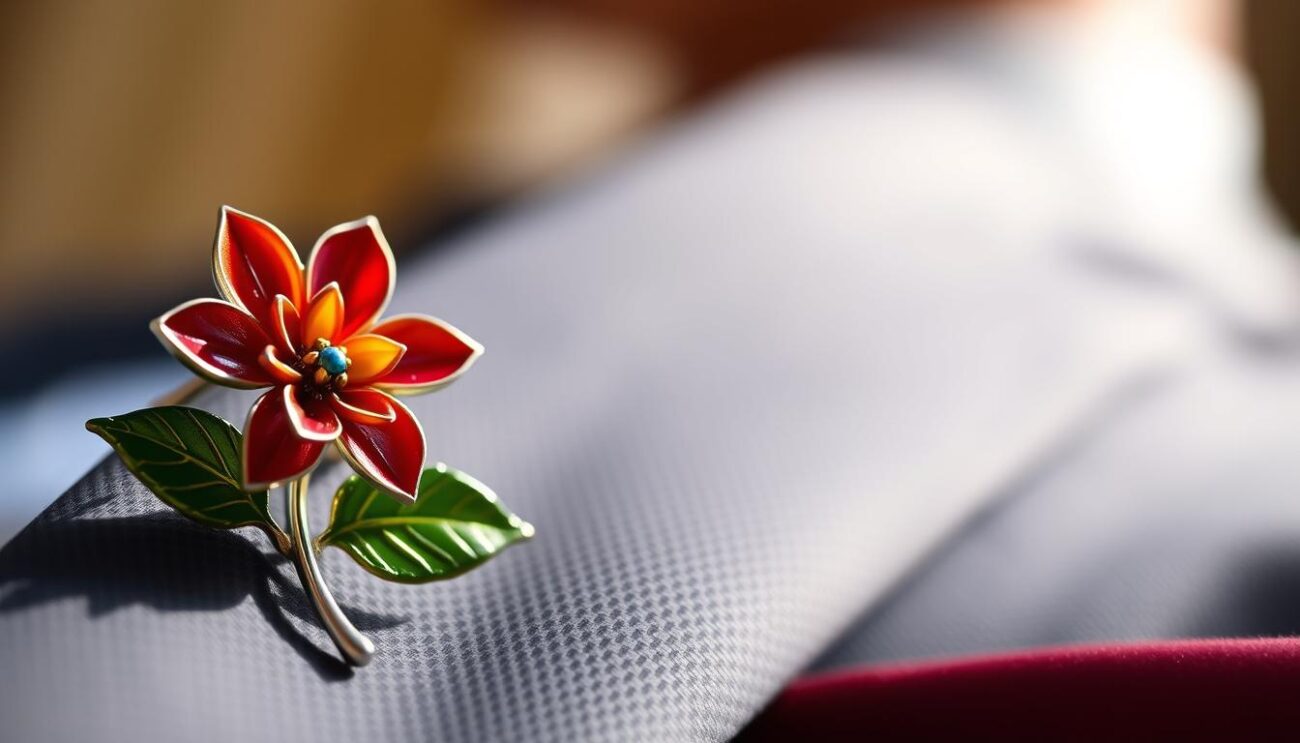
Flower pieces and rose styles for formal flair
Fabric flowers — often silk, linen, satin or cotton — give a sharp, formal touch without the perishability of cut blooms.
Rose lapel choices add traditional charm; pick a compact size so the detail enhances, not overwhelms, your jacket front.
Boutonnières versus reusable flowers
Real boutonnières suit weddings and formal rituals. They are perishable but authentic.
Reusable flower designs copy that effect and work across multiple events. They are practical and easy to store.
Enamel, mini badges and everyday personality
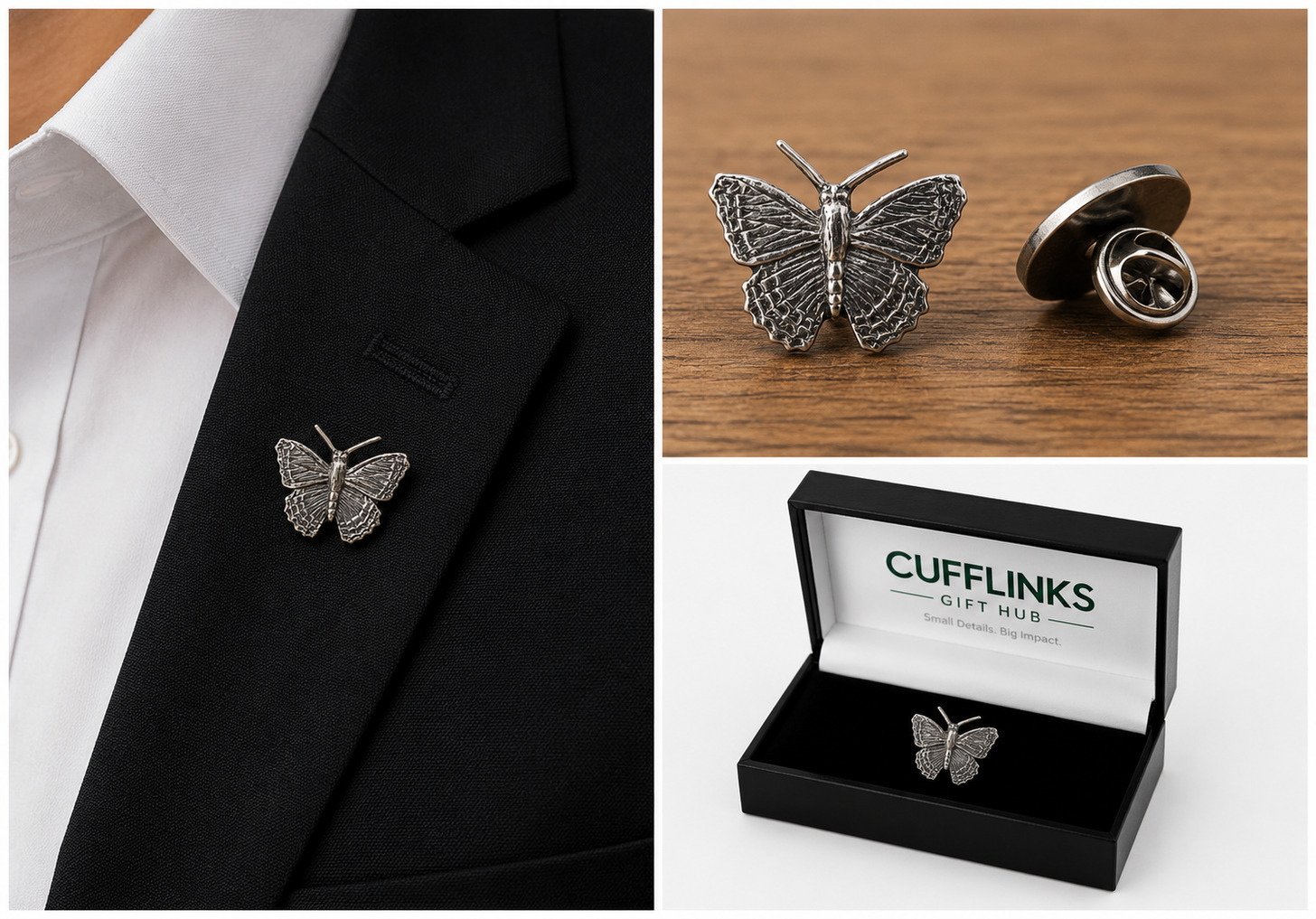
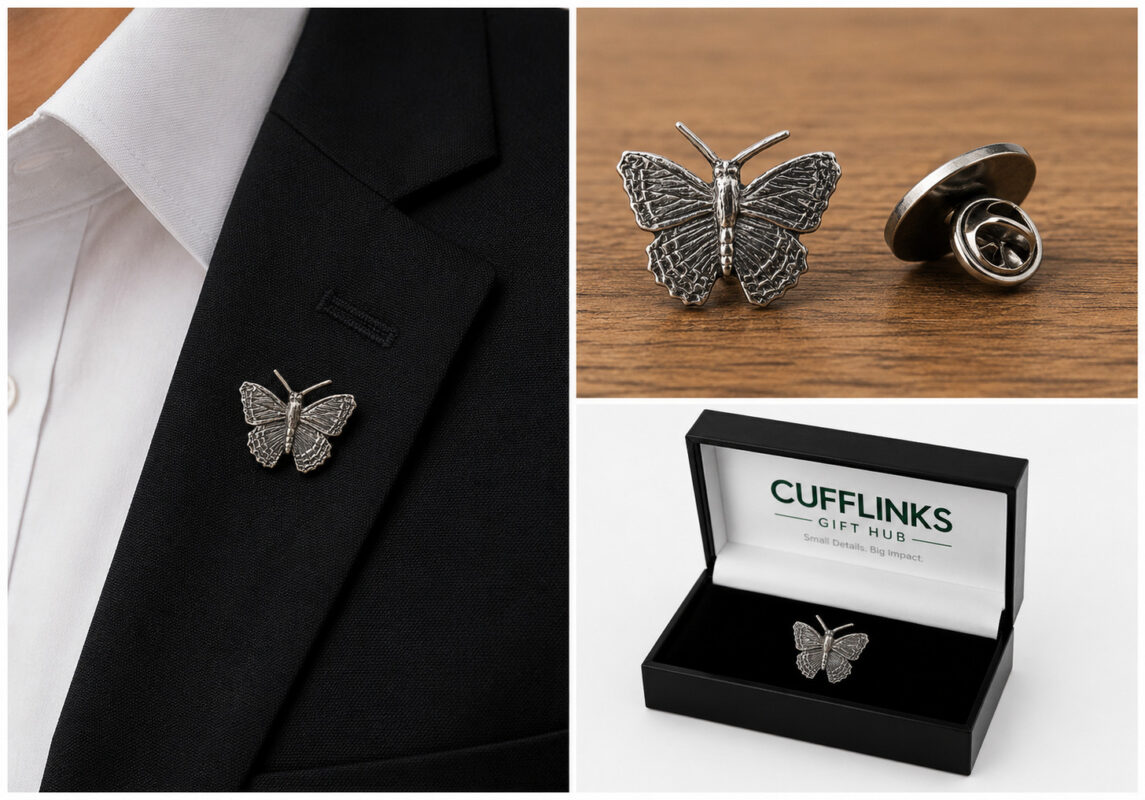
Hard or soft enamel mini pins attach with butterfly, rubber or magnetic backs. They are subtle, office-friendly and a safe first buy.
Stick stems in gold or silver
Stick styles use a long stem and sliding fastener for exact placement. Gold and silver options feel classic and precise.
Brooches, vintage pieces and statement choices
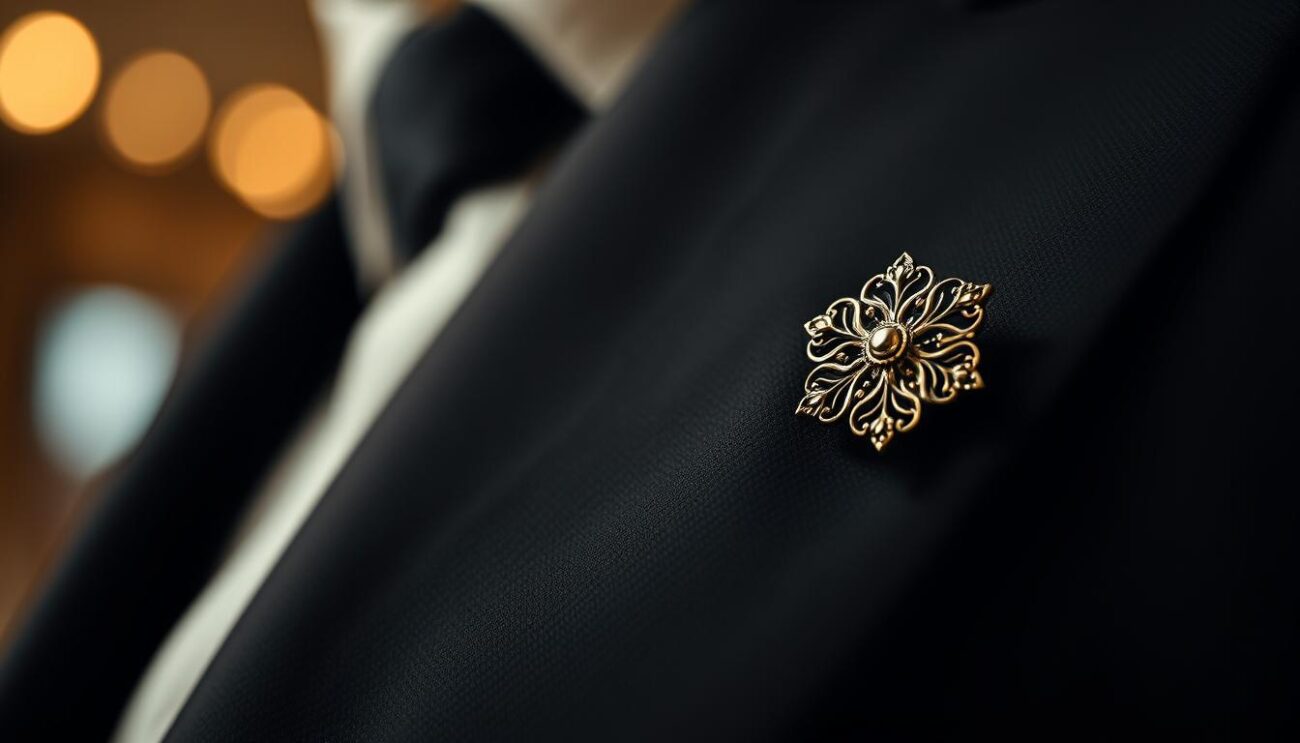
Brooches and vintage finds make a deliberate statement. Keep tailoring clean and limit other metal to avoid a costume effect.
Feather, skull and novelty designs
Bold motifs like feather lapel styles or a small skull work if the rest of your outfit is restrained. One statement detail at a time keeps the look confident.
How to wear and position your lapel pin
Placement and angle turn a tiny detail into a polished finishing touch.
Left-lapel rules for jackets and suits
Wear the accessory on the upper left lapel, near the buttonhole or where one would be. This applies to a suit, blazer, coat or tuxedo. Even double-breasted jackets follow the left-side convention.
Getting the angle right
Keep the visible stem parallel to the lapel edge. A straight alignment looks intentional, especially with longer stems or stick styles.
Fastener choices
- Butterfly: secure and easy to remove for heavier metal designs.
- Rubber: common on enamel pins for comfort and discreet hold.
- Magnetic: gentle on fabric but check strength for outerwear.
- Stick-pin: classic for gold or silver stems; needs careful handling.
Buttonhole vs pin-through and fabric care
If your jacket has no working buttonhole, ask a tailor to add one for the best finish. Pinning through fabric is possible but can leave permanent marks.
Care tip: Avoid repeatedly using the same puncture point on delicate weaves and knitwear. Minimise re-pinning to keep jackets looking their best.
| Situation | Recommended fastener | Notes |
|---|
| Heavy metal badge | Butterfly | Secure; good for formal events |
| Enamel mini pins | Rubber or magnetic | Comfortable for daily wear; magnetic avoids holes |
| Stick-pin styles (gold/silver) | Metal stem with clasp | Classic look; mind fragile fabrics |
Choosing a lapel pin that matches your suit and accessories
Start with metal, then colour and scale — that order makes selection simple.
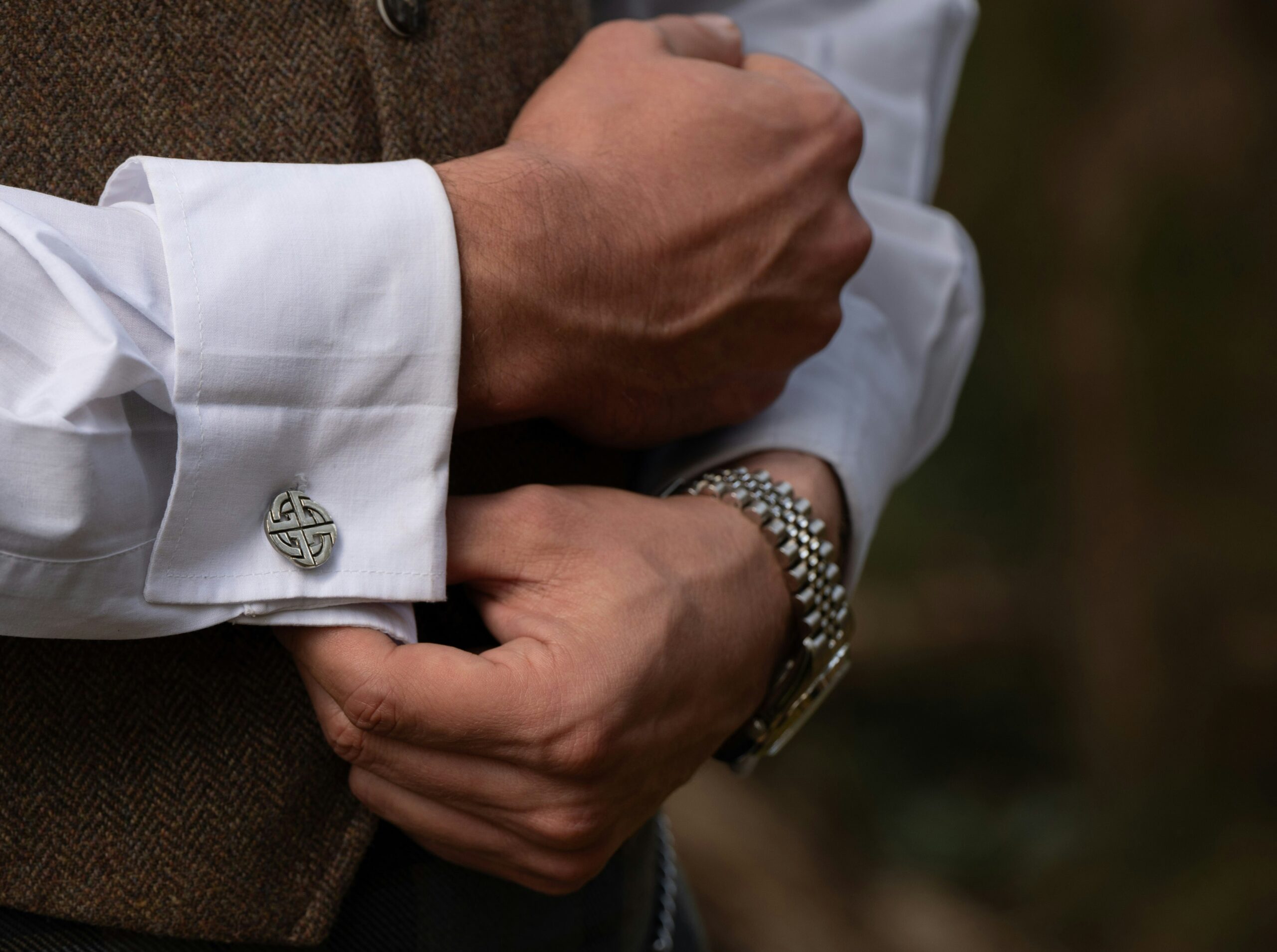
Metal matching made easy: pick either gold or silver for all hardware. Match your lapel pin with cufflinks, tie clip, watch and rings so the metals read as one deliberate choice. For black suits and tuxedos, a single metal keeps the look sharp.
Colour comes second. If your tie is patterned, choose a simpler pin. If your suit and tie are plain, you can try a bolder flower or enamel pin. Bright pins work best with a neutral shirt to avoid clashes.
Suit colour pairings
Black white is classic: stick to monochrome or matching metal accents for formal events. Grey gains depth from metallic or grey-toned pins. Navy suits accept lighter or darker blue tones and subtle contrasting metals.
Size and proportion
Less is more. Choose a pin that sits comfortably on your jacket without crowding the chest. Larger flower or brooch styles change balance; use them only when the rest of your outfit is restrained.
| Situation | Rule | Quick cue |
|---|
| Patterned tie | Simpler pin with matching metal | If/then: patterned tie → plain pin |
| Plain suit | Feel free to go bolder with colour or flower styles | If/then: plain suit → bolder pin allowed |
| Formal black suit | Monochrome accessories, matched metal | Keep metals uniform |
| Everyday navy/grey | Echo a tone from your pocket square or tie | Choose one colour to repeat |
Final thought: aim for harmony so the small detail guides attention to your face, not away from it. A thoughtful approach keeps your pins feeling intentional and stylish.
What to buy for key occasions in the UK
A considered accessory can solve the “what to buy” question for weddings, work and formal evenings. Below are quick, practical choices so you can shop faster and wear your selection with confidence.
Weddings
Boutonnières often use real blooms for the ceremony. Fresh flowers need timing and care, so order near the day. For consistency across groomsmen choose reusable flower lapel pins to match colours and avoid last-minute problems.
Black tie and tuxedo events
Keep things restrained. A single white blossom or a small, classic metal piece reads as elegant. Minimal designs look more expensive on a tuxedo. Aim for matched gold or silver hardware with your cufflinks and watch.
Everyday and office wear
Go for subtle enamel or small metal designs that sit well with a tie and remain professional. These are practical, low-maintenance and easy to order online for daily use.
Remembrance and medals
Wear poppies on the left in the run-up to 11 November. Civilian medals must sit on the left, fixed to a horizontal bar in one row, the most senior to the wearer’s right. Do not combine medals with a pocket square; let medals speak for themselves.
Conclusion
Carry a single, considered detail and your whole outfit will read as curated, not accidental. Less is more: under-do the accessory and let your tailoring do the talking.
Quick checklist: wear it on the upper left lapel with a clean angle, choose one clear hero detail, and match metals — gold with gold, silver with silver — for a cohesive finish.
Start with a subtle option for everyday wear, then add a statement piece once you feel confident. When you shop by occasion or wardrobe colour you avoid buys you never wear.
If product pages fail to load and you see “page blocked”, “page blocked extension” or “blocked extension”, try disabling extensions or follow standard disabling extensions steps in your browser so the page loads properly.
Be deliberate. A single, restrained detail should elevate your look, not distract from it.
FAQ
What is a lapel pin and why would you wear one?
A lapel pin is a small decorative accessory worn on the chest of a jacket. You wear one to add personality, signal affiliation or complete a formal outfit. Pins can be purely stylish—like a floral motif to complement a pocket square, or symbolic, such as a remembrance poppy or organisation badge.
Where is the lapel on a suit jacket and what is the buttonhole for?
The lapel sits on the front edge of your jacket, above the breast pocket. The buttonhole is traditionally used to secure a flower or pin without piercing the fabric. If the hole is decorative only, you can use a stick-fastener or magnetic back to avoid damage.
When is a pin fashion and when is it an affiliation or badge?
If you choose a floral design, feather motif or geometric enamel piece, it’s usually a style choice. Medals, regimental badges and remembrance pins carry meaning and should be worn with respect. Consider the setting: the office and formal ceremonies often call for subtler, more respectful choices.
Why are vintage pins back in modern menswear?
Vintage accessories add character and a sense of history to your look. Collectible brooches, antique cufflinks and retro badges provide a unique point of interest and pair well with tailored jackets for a curated, individual style.
What styles should I consider: flower lapels, enamel pins or stick pins?
Flower options—including rose-inspired designs and boutonnière-style pieces—work well for weddings and formal events. Enamel and mini badges suit everyday wear. Stick pins in gold or silver lend a classic, tailored finish when positioned precisely on thicker fabrics.
Are boutonnières different from flower lapel alternatives?
Yes. Boutonnières use fresh flowers and are traditional for ceremonies; they’re temporary and need care. Reusable flower lapel accessories offer the same formal look without wilting—ideal if you want longevity and ease of use.
How do I wear and position a pin on a jacket?
Place it on the left side, near the buttonhole or just above the breast pocket. Keep it parallel to the lapel’s edge and proportionate to your jacket size. Aim for a neat, balanced look rather than something that draws undue attention.
What fasteners are available and which should I choose?
Common fasteners include butterfly clutches, rubber backs, magnetic mounts and stick-pin closures. Use rubber or magnetic backs for delicate fabrics to reduce holes. Stick pins work well with sturdy materials like tweed or thick wool.
What if my jacket has no working buttonhole?
You can stitch or have a tailor open a functional hole, or simply use a magnetic back or stick pin that secures through the fabric. For delicate or knit jackets, choose magnetic options to prevent damage.
How can I avoid marks and holes on delicate jackets and knitwear?
Use magnets or rubber-backed pins, and test on an unseen seam first. Avoid adhesive solutions on fine materials. For heirloom suits, attach pins temporarily to an underlayer like a waistcoat or pocket square.
How do I match metal tones with cufflinks and other accessories?
Coordinate metals, choose gold pins with gold cufflinks and a matching watch or tie clip, or stick to silver for a cooler palette. Consistency keeps your outfit polished and cohesive.
How do I match colours with my tie and pocket square?
Pick a pin colour that ties into one element of your outfit: a hint of the tie hue or a shade from your pocket square. Keep contrast subtle for formal looks and bolder for casual ensembles.
Which pin sizes suit different suit colours like black, grey and navy?
For black and navy, medium or small designs work best to preserve formality. Light grey allows a slightly larger or more colourful piece. Ensure the size complements lapel width to avoid overpowering your jacket.
What should I choose for weddings and boutonnière traditions?
Grooms and groomsmen often wear a fresh boutonnière on the left. If you prefer a lasting option, choose a high-quality flower lapel replacement in silk or enamel that matches the bridal palette.
What are appropriate pins for black tie and tuxedo events?
Keep it restrained: a small floral stud or a discreet enamel motif works best. Avoid novelty pieces and loud statement designs; aim for elegance and subtle coordination with your cufflinks and watch.
What pins work for everyday office wear?
Subtle enamel badges or mini motifs express personality without distracting. Choose understated colours and slim profiles that sit flat against your jacket for a smart, professional finish.
Where do I wear remembrance poppies and formal medals?
Always on the left chest, above the pocket area. Place medals according to official guidelines, keeping them clean and properly mounted. For remembrance events, ensure your poppy sits respectfully and securely.
Can novelty pieces like skulls or bold statement designs look stylish?
Yes, if you balance them with restraint. A single bold accessory can work for creative or casual events, but avoid pairing it with too many competing elements. Quality finishes—gold or silver plating—help maintain a refined feel.
Do you offer advice on coordinating accessories like pocket squares and cufflinks?
Yes. Match metal tones and echo one colour or pattern from your tie or pocket square in the accessory. That small link creates a coordinated ensemble without appearing overly matched.
How do I care for and store vintage pieces or plated metals?
Store items in a dry, padded box and avoid humid conditions. Clean plated metals with a soft cloth and mild cleaner made for jewellery. For delicate vintage items, seek professional restoration to preserve patina and structure.