
Blog
How to Wear Cufflinks: A Step-by-Step Beginner’s Guide

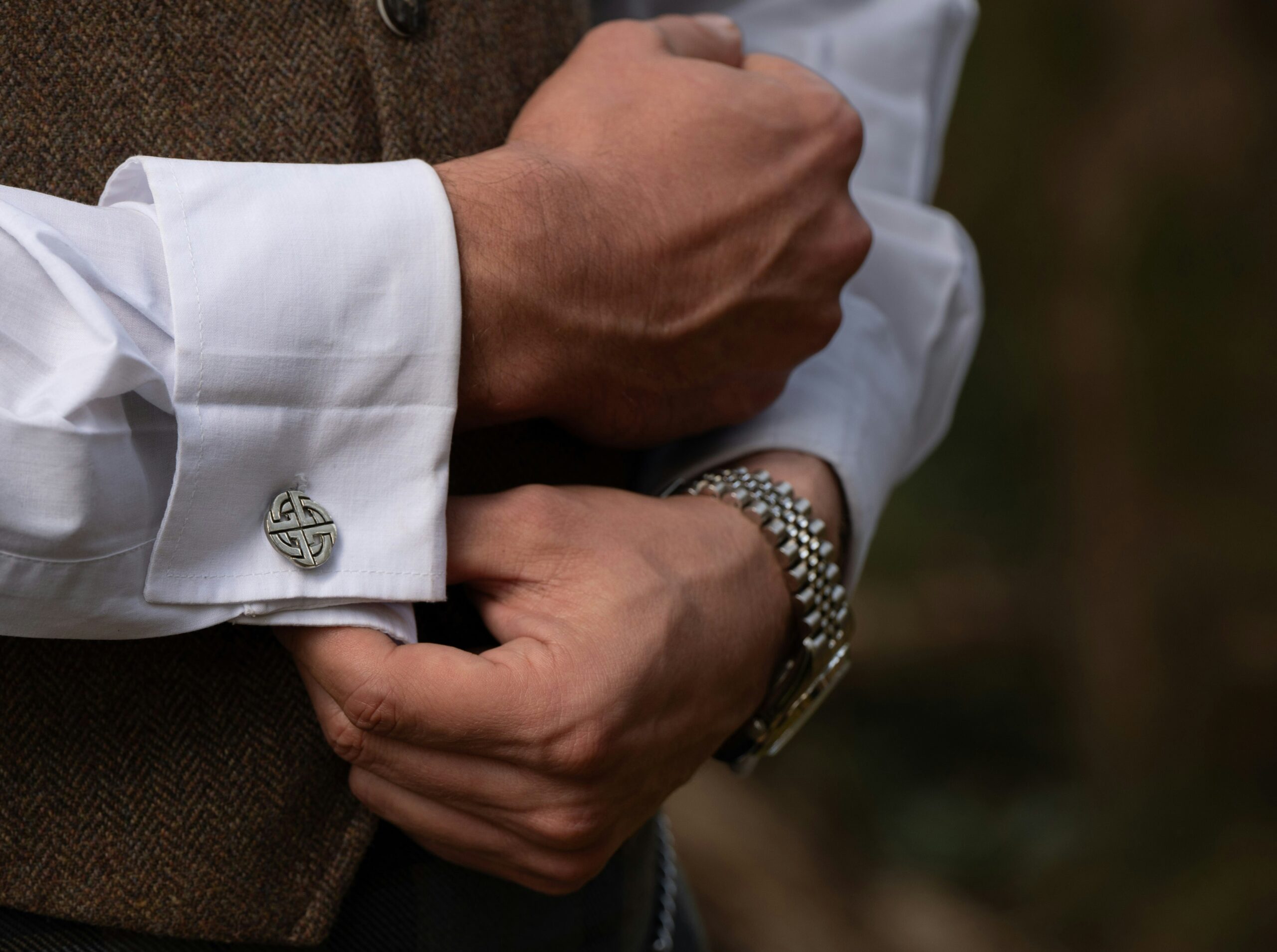
Picture this: you’ve just opened a gift box to find a beautiful pair of cufflinks. Maybe it’s the morning of a wedding, or you’re dressing for an important interview. You hold them in your hand, look at your shirt cuffs, and realize you have no idea what to do next. This moment happens to more people than they’d ever admit out loud, and it’s exactly why knowing how to wear cufflinks properly is worth a few minutes of your time.
At Cufflinks Gifthub, first-time wearers reach out regularly with exactly this question. It’s one of the most common requests we receive, which is precisely why this guide exists. By the time you finish reading, you’ll know which shirts actually work with cufflinks, how to fasten every major backing style, how to orient them correctly, and how to wear them with confidence to any occasion, from a board meeting to a black tie dinner.
1. First things first: does your shirt actually take cufflinks?
This is the step most beginners skip entirely, and it causes more frustration than anything else in the process. No amount of technique matters if you’re starting with the wrong shirt. There are three cuff styles worth knowing about, and only two of them work with cufflinks.
French cuffs (also called double cuffs): the classic option
A French cuff, sometimes called a double cuff, is an extra-long cuff that folds back on itself to create two layers of fabric. These cuffs have no buttons of their own. They are designed exclusively for cufflinks, and the four aligned buttonholes created by that folded double layer are what make insertion possible. French and double cuffs are the standard style intended for cufflinks in tailoring, if your shirt has these wide, fold-back cuffs, you’re already set up perfectly for cufflink wear.
Convertible cuffs: the flexible middle ground
Convertible cuffs come with a functioning button, but they also include a second hidden buttonhole or slit that allows a cufflink to be used instead. To wear cufflinks with a convertible cuff, you simply bypass the button and use that secondary opening. Unlike French cuffs, convertible cuffs don’t fold back on themselves, so the insertion technique is slightly different, but the result looks sharp and polished from the outside.
Why standard button cuffs don’t work
A standard single-button barrel cuff, the kind found on most everyday dress shirts, has no secondary buttonhole. There’s nowhere for a cufflink post to pass through. Attempting to force one through will only damage the fabric. If your shirt has a single button at the cuff and nothing else, save the cufflinks for a different shirt.
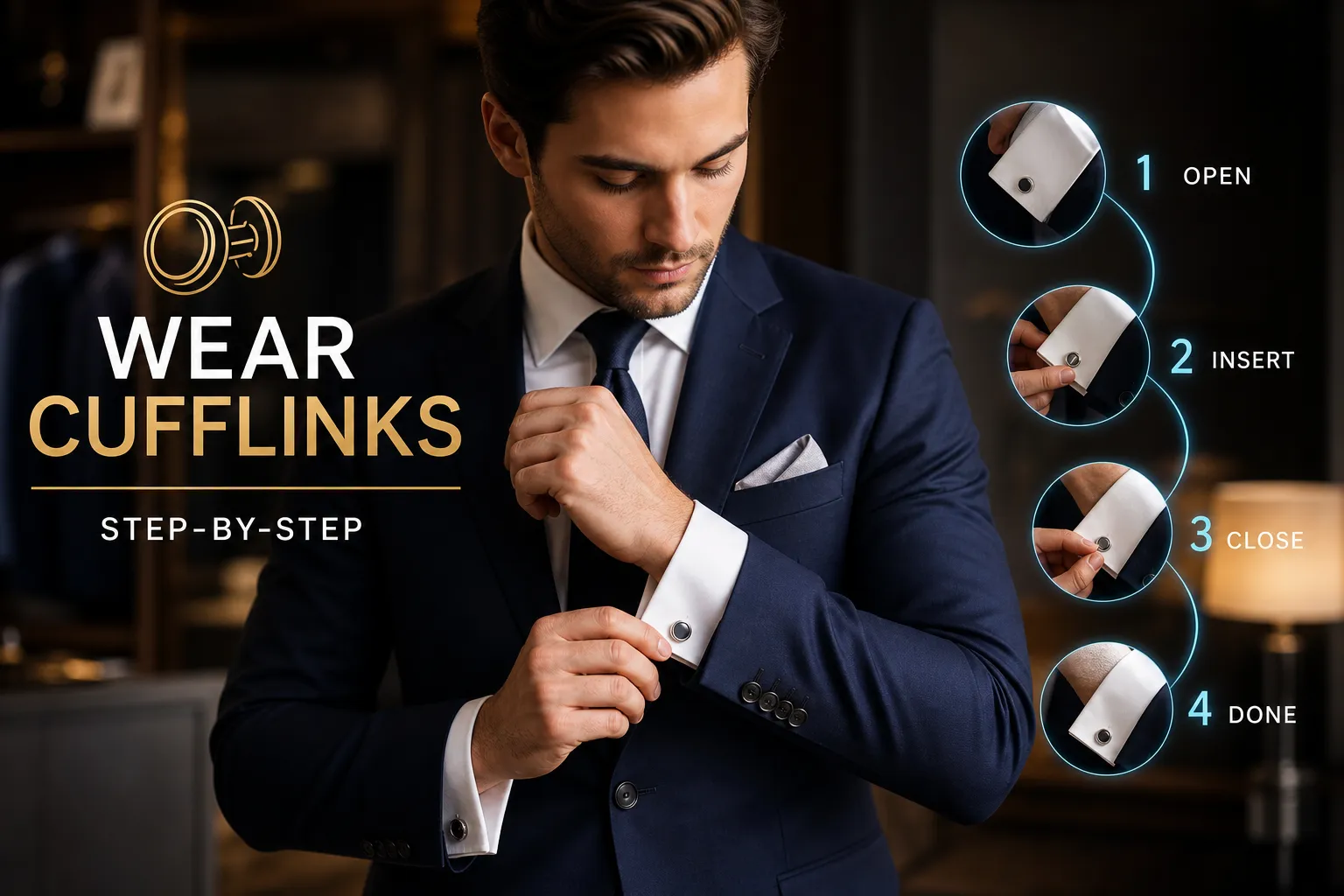
2. How to wear cufflinks: the step-by-step process
Putting on cufflinks is a skill most people pick up quickly, often under a minute once you’ve run through it a couple of times. If you want a quick visual refresher on the motions, resources that walk through how to put on cufflinks can be helpful. The process varies slightly depending on your cuff style, so it’s worth covering both scenarios clearly.
How to wear cufflinks on French cuffs
Follow these steps in order and the process becomes straightforward:
- Unbutton the cuff completely and unfold it so the full length of fabric is flat.
- Fold the cuff back on itself so both layers are even and all four buttonholes align. This step is critical. Misalignment here is the number one source of frustration for beginners.
- Bring the two sides of the folded cuff together with the holes lined up face to face.
- Insert the cufflink post through all four aligned holes from the outside of the cuff toward the inside.
- Secure the backing using the appropriate mechanism for your cufflink style (covered in the next section).
- Adjust the cuff so it sits flat and neat against your wrist with no bunching.
Fastening cufflinks on a convertible cuff
The technique here is simpler because no folding is required. Keep the cuff in its normal single-layer shape and align the two buttonholes so they face each other. Bypass the button, insert the cufflink post through both holes from the outside, then secure the backing. The finished result should look the same as a standard buttoned cuff, just held together by the cufflink instead.
One habit that makes everything easier
Put your cufflinks in before you put the shirt on, or at minimum before you button the shirt fully. When the shirt is still open, you have room to maneuver both hands freely. Trying to fasten cufflinks with the shirt already tucked and buttoned turns a simple task into an awkward wrestling match with your own wrist.
3. How each cufflink backing works
This is the section most guides skip, even though it’s where beginners get stuck most often. Different backings operate differently, and understanding each mechanism takes the uncertainty out of cufflink fastening entirely.
Bullet back and whale tail: the most common types
Both are toggle-style backings that pivot to lock the cufflink in place, and both use the same underlying principle: narrow to go in, wide to stay put. For a bullet back cufflink, the small cylindrical toggle sits parallel to the post during insertion. Once it passes through the holes, you rotate it 90 degrees so it sits perpendicular to the post and can no longer slide back out. For a whale tail cufflink, the flat fan-shaped toggle is aligned inline with the post during insertion so it passes through the cuff easily, then is flipped perpendicular, roughly 90 degrees, once it’s on the inside of the cuff to lock it in place.
Fixed back cufflinks: simple but specific
Fixed backs are rigid posts with no moving parts. The post itself is shaped so it can pass through the buttonhole at a slight angle, then straighten once it’s on the inside of the cuff to hold position. These often feel a touch loose when first worn, but they’re perfectly secure during normal wear. No rotating, no flipping: just angle, insert, and straighten.
Chain link cufflinks: a straightforward classic
Chain-style cufflinks consist of two decorative faces connected by a short length of chain, with no locking mechanism required. One face sits on the outside of the cuff, one on the inside, and the chain runs between them through the buttonholes. Thread it through and you’re done. These are a classic choice for formal black tie events because of the elegant drape and movement the chain creates.
4. Getting the orientation right and mistakes to avoid
Orientation is where most people second-guess themselves, especially when the cufflink has a directional design, a monogram, or a themed motif. The rules are simple and consistent.
Which side faces out and which way is “up”
The decorative face always points outward, away from the wrist. The post or toggle sits on the inside of the cuff where it can’t be seen. For cufflinks with a design, monogram, or image, orient it so the motif reads correctly to someone facing you, not to you looking down at your own wrist. When your arm hangs naturally or bends at the elbow, the design should appear right-side up to an observer. For abstract or symmetrical designs, orientation is entirely a non-issue.
The five mistakes beginners make most often
Most cufflink problems trace back to a short list of errors:
- Using the wrong shirt type. If the shirt doesn’t have the right cuff style, no technique will help. Check before you dress.
- Forcing the post through misaligned holes. Take an extra second to align the fabric layers before inserting, it saves real frustration.
- Forgetting to lock the backing. After insertion, always confirm the toggle has rotated or clicked fully into place, or the cufflink can work loose during wear.
- Wearing the decorative face toward the wrist. Easy to do in dim light. A quick glance in a mirror catches it immediately.
- Skipping the final adjustment. Take five seconds to smooth everything flat before moving on, a bunched cuff undermines an otherwise sharp look.
5. Wearing cufflinks for different occasions: a quick style guide
Once the mechanics feel natural, the more enjoyable question becomes which cufflinks to wear and when. Technique gets you dressed correctly; style choices make the difference between looking put-together and genuinely memorable.
Black tie and formal events
Black tie calls for restraint. Double cuffs are the correct choice here, paired with a silk or fine cotton dress shirt and simple silver or gold cufflinks with clean geometric shapes or plain faces. Chain link and fixed back styles are among the most traditional options for this level of formality, in keeping with established formalwear etiquette. The guiding principle is simple: let the cufflink complement the outfit rather than compete with it. For white tie events specifically, chain link cufflinks are considered the most traditional choice by most formal dress codes, though some etiquette guides also accept high-quality fixed or bullet-back styles at black tie. For additional formalwear tips on how to wear cufflinks with evening attire, consult specialist guides that focus on black tie conventions.
Business and office wear
Professional settings give you considerably more room to express personality. A quality convertible cuff shirt with polished but distinctive cufflinks works well in most business environments, from finance to creative industries. Subtle nods to personal interests in a cufflink design fit naturally here without disrupting professional expectations. The key is keeping the rest of the outfit clean so the cufflinks can do quiet, interesting work.
Adding personality once you’ve got the basics down
Once cufflink fastening feels effortless, the real enjoyment begins. Interest-themed designs covering everything from aviation to music to sport offer an easy way to inject genuine personality into formal wear without straying outside any dress code. At Cufflinks Gifthub, the catalog covers a wide variety of themes, from classic novelty and animals through to specific sports and musical instruments, making it straightforward to find a pair that reflects the wearer rather than just filling the cuff. If you’re exploring styles and want a broader overview, an ultimate guide to cufflinks is a useful place to discover different types and inspirations.
How to wear cufflinks with confidence: you’re ready
You now have everything you need. You know which shirts work and which don’t, how to fold and align a French cuff correctly, how to fasten bullet back, whale tail, fixed back, and chain link styles, how to orient any design so it reads the right way, and what common mistakes to watch for and fix on the spot.
Cufflinks are a genuinely simple accessory once the initial uncertainty clears. A well-chosen pair, worn correctly, does something that almost no other shirt detail manages: it signals that the person wearing it paid attention. The learning curve is short, and after the first couple of wearings, the whole process becomes second nature.
Remember that wedding morning or interview we started with? Next time you open that gift box, you’ll know exactly what to do. The last step, finding cufflinks that actually mean something to the wearer, is the most enjoyable part of all. Whether you’re dressing yourself or choosing a gift for someone else, learning how to wear cufflinks correctly is only the beginning.